


Waziri’s Sack: Foreigners Not Impressed

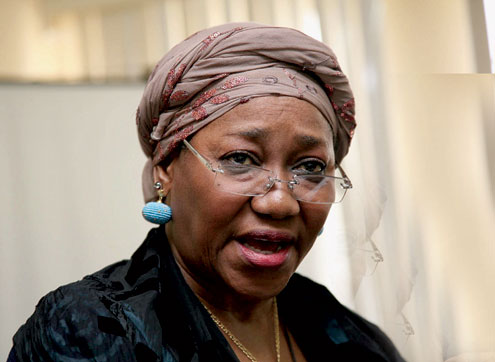
The removal of Mrs Farida Waziri as the Chairman of the Economic and Financial Crimes Commission, EFCC by President Goodluck Jonathan yesterday seems not to be enjoying as much support from foreigners as it is from local commentators.
Foreign reactions to the sack of the retired Assistant Inspector General of Police from the EFCC appeared lukewarm and indifferent. Some foreign commentators described Waziri’s sack as an old gimmick to woo investors to the country, adding that much remain to be done to truly fight corruption in the country.
They submitted that former President Olusegun Obasanjo did a similar thing nine years ago when he removed the country’s head of police, Tafa Balogun while travelling abroad to convince investors that he was serious about fighting corruption.
President Jonathan has just done the same thing by sacking Waziri while travelling to France for an investors’ forum. The sacking of Waziri, they posited, was timed to give the impression that the the administration was actually serious about the fight against corruption whereas the facts on the ground does not support this.
Corroborating this, Chris Albin-Lackey, a senior researcher for Human Rights Watch, a US-based rights group says Nigeria needs broad institutional reforms in its fight against corruption.
He submitted that the decision to fire the chairman of the country’s anti-corruption commission will not solve the agency’s long-standing problems and that Nigeria must carry out broad institutional reforms if the country is to make real progress in its fight against corruption.
“I think the real important thing to bear in mind is that however one feels about Waziri, firing her isn’t going to make things that much better or worse for the EFCC unless the government starts to tackle some of the institutional reasons why that institution’s role in the fight against corruption has been a bit disappointing,†he said.
Albin-Lackey said the Nigerian government’s failure to give reasons for Mrs. Waziri’s dismissal points to one of the major problems that the EFCC has had — executive interference.
“The president should not be able to fire the chairman of the EFCC at will without even explaining why it is happening. As long as the head of the commission can be stopped by the president for no reason, it’s not going to be able to be independent and be able to do its job in any kind of respected manner,†Albin-Lackey said.
He said Nigeria’s “weak and overburdened judiciary†has also been an obstacle to the effective prosecution of corruption cases.
“The institutions that it [EFCC] has to work in order to do its job, in order to effectively prosecute anyone, have to be made more functional. A lot of the EFCC’s most important cases have been bogged down literally for years in procedural delays in the courts. And unless the courts are empowered and also pressured into handling some of these cases in more expeditious manner, justice delayed will continue to be justice denied,†Albin-Lackey said.
Waziri was replaced with Ibrahim Lamorde, who was previously the EFCC’s Director of Operations.
Albin-Lackey said it was not also clear whether the sudden firing of Mrs. Waziri was an indication of President Jonathan’s renewed commitment to fight corruption.
“As to whether this signals a good or bad change on the part of the president and his policies toward the fight against corruption, it really all depends on what happens next. If this is followed up by nothing, then I think it’s pretty hard, it’s pretty hard to interpret as a good sign, but if Waziri’s firing is followed by serious reforms to address some of the things that prevented the EFCC from working as well as it could, then there will be reason to be optimistic,†Albin-Lackey said.
Comments