


Subsidy: Evil Day Postponed

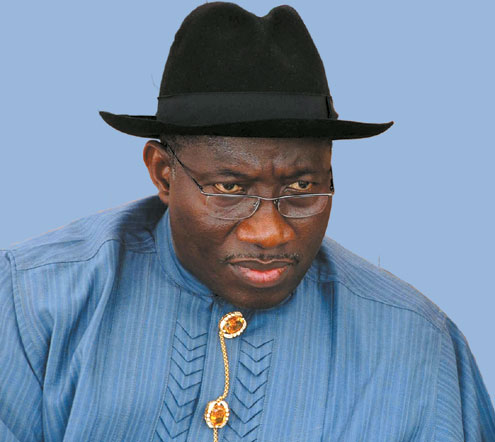
President Goodluck Jonathan makes good his intention to remove subsidy on petroleum products despite opposition from Nigerians. But when exactly will this take effect
The fact, however, is that as the years pass by, the number of Nigerians taking active interest in the annual Appropriation Bill continues to diminish. Most Nigerians now consider the annual trip to the National Assembly for the presentation of the budget by the President as no more than fulfilling a ritual.
However, a flickering interest in the budget for 2012, was sparked off by the President when he submitted Government’s 2012-2015 medium term expenditure framework, MTEF, and Fiscal Strategy Paper to the National Assembly some months ago. A key proposal in the document is the stoppage of subsidy as a way of completing the deregulation of the downstream sector of the oil industry. The President had argued in the proposal that over N1.3 trillion presently being spent on the subsidy of petrol would be saved and that the extra money would come in handy for government in funding infrastructure. The information that government had made up its mind on the removal of subsidy sparked off loud grumblings, especially among civil society groups, labour unions, religious leaders and opposition political parties. Two weeks ago, the two chambers of the National Assembly, preparatory to the coming of the President for the presentation of the budget proposal, sat to consider the three-year medium term framework during their plenary. The debate on the expenditure framework in both chambers was eventually reduced to one of support or non-support of stoppage of subsidy. The Senate was divided down the middle on the debate, with most of those from the South-South supporting the move while those from the northern part of the country opposed it.
But in the lower chamber, the answer was a thunderous no by the members. “The proposal on fuel subsidy removal as contained in the revised Fiscal Strategy Paper is premature. Sources other than savings from the proposed subsidy removal should be explored,†the House said. Perhaps in a bid to let the President know that the House had not changed its stand on the issue despite the lobbying that followed its earlier declaration, Abayomi Kako Are, a member, came to the budget presentation session last Tuesday donning a cap on which ‘Fuel Subsidy Stays’ was engraved. Though Are sat where Jonathan could see him as he mounted the dais to read the budget speech, the message conveyed by the cap seemed not to have registered with the President, except for the fact that he adroitly avoided making any reference to subsidy in his speech. But the President more than conveyed his intention with his failure to appropriate funds for payment of subsidy unlike in the previous years’ budget. About N240 billion was appropriated for subsidy payment in the 2011 budget, for example, though government said over N1 trillion has been spent so far for the purpose. And since it is unconstitutional for government to spend money without appropriation, it in effect means government has no plans for payment of any shortfall in the cost of importation of petrol. The non-provision of funds for subsidy payment in the proposed budget appeared to confirm reports that the President, as a result of his inability to get the support of most members of the National Assembly during a series of consultations, had decided to use executive fiat to carry out the action. Confronted with the issue of removal of subsidy when she briefed journalists on the breakdown of the Budget proposal last Wednesday, Ngozi Okonjo-Iweala, minister of finance, was evasive, insisting that the President was still consulting with various stakeholders before deciding his next line of action. Still some of the lawmakers who spoke to journalists immediately after the presentation of the budget insisted that the Appropriation Bill had to be fully scrutinised before any conclusion could be drawn on the subsidy issue. “…One cannot conclude right now that the issue of subsidy removal is there or not until one has thoroughly looked at the document. But I can tell you that if the thing is there, we will remove it,†Femi Gbajabiamila, House Minority Leader, said. However, another member, Victor Ogene affirmed that the President had no powers to remove the subsidy on fuel by Executive fiat. Also speaking at a forum in Ekiti State last week, Senator Babafemi Ojudu, who said removal of subsidy would further increase the country’s poverty level, asked Nigerians to rise up and use all constitutional means to resist it. “As a senator who is daily assailed by requests from my constituents, I know that family incomes are the best measure of our living standard. It is a painful realisation for me that there is very little that I can do to salvage the hardship of my people, but what I will never do is to fail to register my opposition to the removal of the oil subsidy, because it is a catalyst for sustained economic irregularity,†said Ojudu, adding that he would vote against subsidy removal and also mobilise his colleagues at both chambers of the National Assembly to do so.
It was gathered last week that the President may be banking on using the majority position of Peoples Democratic Party in both chambers of the National Assembly to ensure that the Budget proposal is not bogged down over arguments on subsidy.
While Nigerians wait to see how the lawmakers will handle the issue, there was instant reaction to the budget presentation at petrol stations across Nigeria barely 24 hours after. In Abuja, for instance, long queues suddenly emerged across the city even as many outlets, including those owned by the Nigerian National Petroleum Corporation, NNPC, refused to sell petrol to motorists in obvious anticipation of announcement of a new, higher price for the product. The same situation was reported in Lagos. NNPC’s spokesperson,Levi Ajuonuma, attributed the fuel queues to “unfortunate rush by some marketers and consumers to mop up enough products in anticipation of the envisaged take-off of the deregulation exercise which they believe will commence with Tuesday’s budget presentation by Mr. Presidentâ€.
For the better part of last Wednesday, marketers of petroleum products were also locked in a meeting with the Petroleum Products and Pricing Regulatory Agency, PPPRA, which is responsible for fixing prices of petroleum products. The speculation was that the subsidy era was over, with the President skirting pronouncement on the issue at the National Assembly. However, Reginald Stanley, Executive Secretary, PPPRA, told journalists that the meeting with oil marketers was convened to allocate import permits for the fourth quarter of 2011––October to December. This would enable marketers to import fuel. Just like the Minister of Finance, the PPPRA helmsman also refused to comment on the likely date of subsidy removal.
Analysts said the fact that the PPPRA still allocated import permits for the fourth quarter implies that government may not stop subsidising petrol until the end of March 2012. Some marketers at the forum told journalists that government has not told them that it will not pay the differentials between the cost of importation of petrol and the regulated price; hence they will for now maintain the pump price.
Also, last Wednesday the President continued his consultations with different stakeholders on the subsidy issue when he, alongside Vice-President Namadi Sambo and some members of his cabinet, met with leaders of the National Association of Nigerian Students, NANS. “The President discussed the issue of the removal of fuel subsidy, but for us, it wasn’t our priority as the NANS Senate has set up a committee on the issue,†said Dauda Muhammed, NANS President, who led his colleagues to the meeting. He said the Association was keener on how to end the ongoing strike by university lecturers so that students can return to school. The President had in the past few weeks held many of such consultations with different stakeholders ostensibly with the purpose of sounding out their opinion on the plan to end subsidy. But in a real sense, the ‘consultations’ were more like ‘briefings’, designed to get the support of the critical and most vocal stakeholders to buy into the planned subsidy removal.
Just like he told the student leaders last Wednesday, President Jonathan has always argued that there is at present a huge disparity between Nigeria’s capital and recurrent budgets. He cited the proposal he submitted to the National Assembly last Tuesday which has 26 per cent as capital expenditure component and 74 per cent recurrent. The President has also pointed out that government most times even borrowed to finance the 26 per cent capital budget annually because of the huge budget deficit government is compelled to implement. Last year, the Federal Government borrowed N852 billion to finance the deficit in the budget while the finance minister has announced that another N794 billion will be borrowed to finance the deficit in the 2012 budget. President Jonathan has also emphasised that the situation in which Nigeria has to borrow to carry out capital projects as well as part of its recurrent expenses portends great dangers ahead.
The President’s deployment of the high debt profile to justify the removal of the subsidy does not have any basis in reality. According to sources at the Debt Management Office, Nigeria’s total debt and deficit financing are still within tolerable threshold. Nigeria’s total debt as at October was $40 billion, with the external component standing at less than $5 billion. In real terms, the borrowing levels have not reached frightening levels like in Greece or Italy or even the USA, where they outstripped the GDP. Nigeria’s ratio of debt to GDP is 19 per cent, still far from the 40 per cent threshhold, for Nigeria’s economic peers.
Sources at the meeting of the President with civil society groups two weeks ago told journalists that, try as he did at the meeting which lasted three hours, he was unsuccessful in convincing them. The activists argued that the government would be spending far less on petroleum products if there was transparency in the subsidy administration and asked government to tackle corruption that has engulgfed the process. They asked the President to end his fixation on subsidy removal which would result in untold hardship for Nigerians. They also advised the President not to go ahead with his plans to use executive fiat to stop subsidy, vowing to take to the streets if he did so.
Even elder statesmen like former head of state, General Yakubu Gowon weighed in, advising the President to stop his plan to remove subsidy. He urged the government to ensure that all the nation’s refineries are functioning at full capacity before carrying on with the policy. Over 80 per cent of petrol consumed locally is imported.The absurdity of the subsidy scam has been that the NNPC also collects subsidy for fuel produced in Nigeria. Industry sources told this magazine that in recent years, the contribution of local refineries to domestic consumption ranges between five to 20 per cent. This was due to mismanagement of the refineries over the years, as the turnaround maintenance of the oil refining facilities has in itself become an avenue for stealing billions of dollars from the public purse. There have been allegations that a cabal benefitting from continuous importation of refined petroleum products is at the root of non-functioning of the refineries.
Government’s claim that at N65, pump price of petrol in Nigeria is about the lowest in the world has also been faulted. Investigations revealed that petrol sells for the equivalent of N58.40k in Iran, N30.66k in Kuwait, N32.12k in Qatar, N17.52k in Saudi Arabia, N54.02k in the UAE, and N15.95k in Libya. According to Esele, in such countries, the subsidy is directed straight at the refineries, especially when there is a sudden spike in price of crude oil. Industry analysts told this magazine that many countries also subsidise their petroleum products, but in Nigeria’s case the subsidy goes to foreign refineries. By subsidising production at the refineries, the prospect of corruption is eliminated. He explained that the country is also exporting jobs to foreign countries with its reliance on imported products. It will appear that rather than seeking the opinion of the different stakeholders about his plans on subsidy, the President is only informing them of his plans.
Despite these arguments, the Presidency has gone ahead to prepare a document on why subsidy must be removed, what the gains that will be made on savings from the policy will be spent on, and ways to mitigate the potential effects on Nigerians. This was contained in a document tagged Subsidy Reinvestment and Empowerment Programme, which argued forcefully that the removal of fuel subsidy next year is inevitable if the economy is to be kept afloat and necessary investments in infrastructure carried out. This magazine learnt that the document was, about two weeks ago presented to some leaders of opposition parties at a meeting with the President and some members of his cabinet. It was indicated in the document that Nigeria spent N3. 655 trillion to subsidise fuel between 2006 and 2011, which amounted to 30 per cent of the total expenditure, 118 per cent of the capital expenditure, and 4.18 of GDP for the period. It was also argued in the document that subsidy does not get to the poor; that the middle and upper classes are the real beneficiaries, and that it is clearly unsustainable. “With total crude oil production of approximately 2.5 million barrels per day, Nigeria has a significantly lower GDP per capita. Nigeria’s GDP per capita is around $1200 per year, with over 167 million in population.
The government has also worked out how much a litre of petrol is likely to cost after the removal of subsidy. It was noted for instance, that the landing cost of a litre of PMS at present is about N123 per litre, based on an average crude oil price of US$113.98 per barrel. The price will come to N139 if the cost of distribution, bridging and profit margins of N15.72 per litre is added. It was speculated in the document that in 2012, the landing cost of a litre of PMS is estimated at N104/litre, based on a crude oil price of US$90pb. If the cost of distribution bridging and profit margins of N15.72/litre is added, the effective cost will be N120 per litre. At a projected price of $90 per barrel, it is estimated that the total projected subsidy savings per annum would be N1.3 trillion. Federal Government’s share of the savings would be N633, while states and local governments would receive N349bn and N269bn respectively as additional revenue annually. For example, Federal Government indicated that the savings would facilitate additional investments in the power sector, roads, transportation, water and even in the downstream petroleum sector. Federal Government argued that the savings would also lead to a reduction in the extent of borrowing needed to finance projects and meet its other statutory obligations, thus helping to address the problem of budget deficit.
On the social safety nets, the government said it will invest in public works and employment schemes, maternal and child health, mass transit programmes and vocational training and skill acquisition schemes. This magazine gathered that the document was presented to governors at last week’s meeting of the National Council of State. Of course, the governors, who have been crying for increased revenue, had no problems in supporting the move to end the regime of fuel subsidy.
No better indication that the governors are fed up with the whole subsidy issue has cropped up than the events that have played out at the monthly meeting of Federation Accounts Allocation Committee, FAAC, in recent months. States’ accountants-general and commissioners for finance refused to take their portions of the federal allocations in protest at the amount deducted as subsidy for petrol. “I support deregulation because I will be able to save N50 billion annually. If I have that, I would be able to transform Jigawa and its entire citizenry into a first class state,†Governor Sule Lamido of Jigawa State recently told journalists. But as convincing as those arguments might sound, the fact is that not many Nigerians trust the Federal Government and the governors to keep to their word.
This aside, there is no doubt that the increase in price will result in unbearable hardship for Nigerians as the NLC said in its reaction to non-provision for subsidy payment in the 2012 budget. “In particular, the exclusion of fuel subsidy in the budget is not only tragic, but a declaration of war on the Nigerian people. Thus, the Nigerian people will have no choice but to confront this challenge,†the Congress said in a statement signed by Lakemfa. It also argued that the “anti-people’s budget†was designed in accordance with the dictates of the World Bank and International Monetary Fund, IMF, and their local cronies. NLC further noted that, added with other policies being introduced by government like increased tariff on electricity, planned mass sack through merging of parastatals, re-introduction of toll gates, refusal to adequately fund education, and refusal to implement the minimum wage agreement, the policy will only succeed in bringing more hardship to Nigerians.
The Congress appealed to President Jonathan to reconsider his stand, while also urging the National Assembly not to pass the budget. “No one should underestimate the general mass poverty, unemployment and discontent that has increased bottled-up anger in our polity,†NLC added, even as it vowed to lead Nigerians to resist the planned subsidy removal. The Congress had indicated that it will meet this week to fashion out its plan of action for resisting the policy. Other civil society and professional groups have also indicated that they will join in the protest to ensure that government did not have its way. But with the information that the policy may not take off until the end of next quarter, the evil day, it seems, has been postponed for now.
visit www.thenewsnigeria.com for more stories
—Oluokun Ayorinde/ Abuja
Comments