


Fashola signs a life-changing law in Lagos

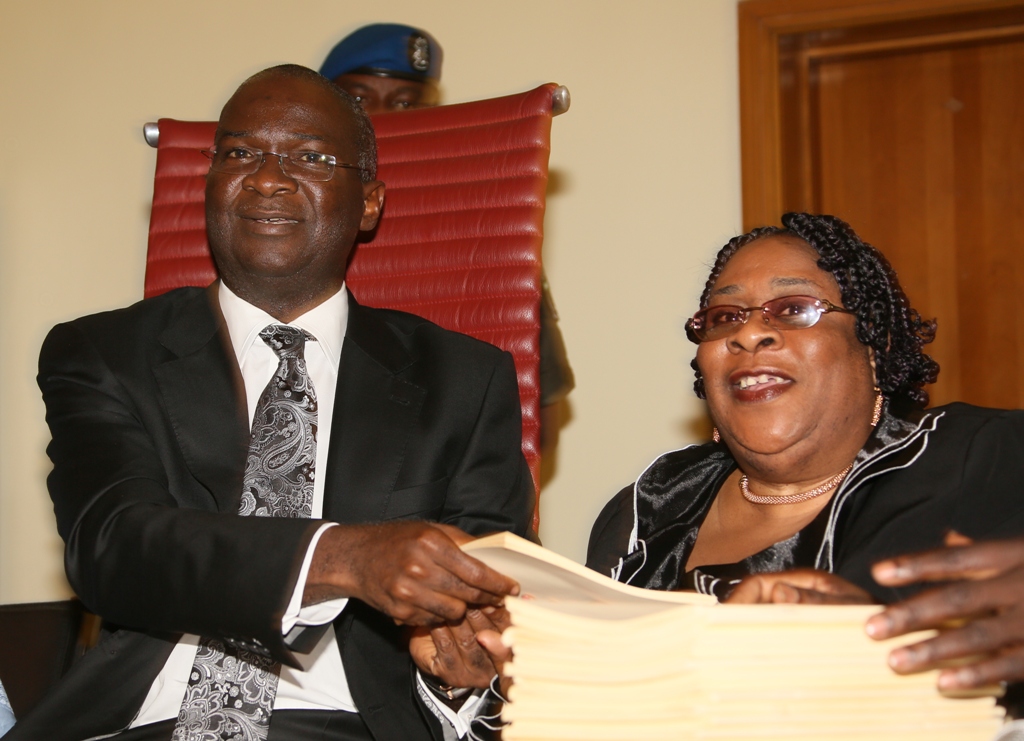
If you live in Lagos, Nigeria or you have a plan to visit, you had better read the new Lagos State Road Traffic law unveiled today by Governor Raji Fashola.
Afterall, an old maxim says “ignorance of the law is no excuse”, especially when you observe the law in the breach.
Although the law will regulate traffic operation and management and compel motorists to be more law abiding and keep to traffic rules, it also touches other areas of living in Lagos, in such a way that the governor said it will make the road safer for residents, improve their life expectancy and solve their environmental, public health, safety issues and many of the insecurity challenges now affecting them.
The Governor who assented the bill at the Banquet Hall of Lagos House, Ikeja before a large gathering made up of the Speaker of the State House of Assembly, Rt Hon Adeyemi Ikuforiji, the Chief Judge of Lagos State, Justice Ayo Philip and members of the State House of Assembly said his government provided the law because of its belief that transportation is a critical hub of civilization since as he said, life will be improved if the State gets transportation right.
“Many things in our life will be improved such as cost of food, life expectancy, health and so many. I believe that if we succeed with this law, our state will change for the better.
The law he said became necessary to bring back decency in our people saying “Different people come into Lagos and we see them openly urinating and defecating on the road and this must stop. People hanging clothes to dry on our highways and bus stops must desist because the traffic and sanitation officers will go out and enforce the sanitation laws. The traffic law is only a metaphor to other laws that the State Government will enforce”, he emphasized.
According to the state’s Attorney-General and Commissioner for Justice, Mr. Ade Ipaiye, the law gives the Lagos State Traffic Management Authority (LASTMA ) the power to apply breath, blood and urine specimen testing on any driver to detect drunk-driving or driving under the influence of drugs.
The Attorney-General, who said the Law operates alongside the already existing traditional road traffic rules and offences including driving without due care and attention, stated also that the Law empowers LASTMA to demand psychiatric evaluation of any person who drives against the normal flow of traffic or fails to comply with any provision of the law at the offender’s cost, if in the opinion of any LASTMA officer, such is necessary for the purpose of determining the person’s ability to operate a motor vehicle.
According to the Justice Commissioner, the Law also bars anybody from operating a motorcycle or tricycle without a Rider’s Card issued by MVAA, without wearing a standard protective crash helmet, carrying more than one passenger at a time, while a pregnant woman, a child below the age of 12 or an adult carrying heavy load on his head should not be carried as passenger at all.
“Anybody caught in this act risks an imprisonment of three years or community service and forfeiture of the vehicle while the passenger will also be prosecuted except such a passenger is a child”, the Attorney General said.
Schedule 111 to the law, Ipaiye said, specifically excludes anybody from riding motorcycle, driving tricycle or propelling a cart on Lagos – Ibadan Expressway, Apapa – Oshodi Expressway, Ikorodu Road, Agege Motor Road, Funsho Williams Avenue, Eko Bridge, 3rd Mainland Bridge, Carter Bridge, Lagos-Badagry Expressway, Victoria Island-Lekki-Epe Expressway and all bridges not earlier mentioned, adding, however, that where motorcycles are permitted, they can only operate between the hours of 6.00 a.m. and 8.00 p.m.
Also, according to the Commissioner, all motorcycles below 200cc engine capacity shall not be used or operated on bridges or carriage roads with two or more lanes in the opposite directions while mail distribution or other courier service motorcycles exempted from route restriction by the Ministry of Transport can only operate if they have 200cc or above engine capacity, carry prescribed number plates and identification, fitted with proper mail cabin and do not carry passengers.
The Commissioner said the penalties for neglect of traffic signs, traffic light and traffic directions or driving against on-coming traffic, include forfeiture and imprisonment for one year for first offender and three years and forfeiture for subsequent cases if found guilty.
On the Law as it applies to the Bus Rapid Transit BRT), sirens etc., Ipaiye listed the offences to include, driving on BRT lane, parking within 15 metres of a road intersection, using sirens and other noisy devices in a vehicle, driver or conductor on duty failing to wear the prescribe uniform or identification tag, driving or being driven on unauthorized routes and herding or allowing cattle, sheep, goats or other animals on the road.
Other areas taken care of by the new law include driving an unregistered, unlicensed vehicle or vehicle without valid identification mark, an offence which attracts a penalty of N20, 000 for first offender and N30.000 or three years imprisonment or both for subsequent offences and conditions for use of trailers where the law now bars trailers from entering or travelling within the Lagos Metropolis between 6.00 a.m. and 9.00 p.m. although fuel tankers and long vehicles for carrying passengers are exempted. Any trailer contravening the law will be impounded and N50.000 fine imposed or imprisonment for six month for the driver.
According to the law, it is henceforth an offence to sell alcoholic drinks, herbal or pharmaceutical drugs within 100 metres of a bus stop, terminus or motor park; hawk, vend or offer for sale any item of goods or services or beg or solicit for alms or engage in cleaning windscreens or any part of a vehicle on the highway or bridge. Other offences include displaying of wares on walkways, dropping or picking of passengers on fast lanes or undesignated bus-stop by commercial vehicles.
LASTMA is also empowered by the new law to designate as bus lanes for priority service, a side of Ikotun-Ejigbo-Cele Expressway, Iyana-Ipaja-Agege, Pen Cinema, Ojodu -Berger; Iyana-Ipaja-Idimu-Iyana-Iba Roundabout, Iyana-Idimu-Ikotun, Berger-3rd Mainland-Tafawa Balewa Square, Iyana-Oworo-Anthony-Oshodi-Mile 2-Apapa, Sango-Iyana-Ipaja-Oshodi and Orile Iganmu-Mile 2- Okokomaiko roads, during peak hours of 6.00 a.m. to 10.00 a.m. and 4.00 p.m. to 9.00 p.m.
The Attorney General said provisions of the new law would apply to public officers or other persons in the service of the State explaining that for the purpose of proceedings for an offence in connection with any official vehicle, any person other than the driver, the person nominated by the Department in whose service the vehicle is used, shall be deemed to be the person actually responsible unless it is otherwise proved to the satisfaction of the court.
Also, the law bars all traffic officers from demanding, willfully condoning, conniving, abetting or receiving gratification in cash or kind from any person to circumvent the provisions of the law while contravention by any officer will attract summary dismissal and prosecution under the ACL Law. Vehicle inspection Officer are also empowered under the law to inspect, control, regulate and enforce road worthiness standards, pre-registration inspection, emergency services, issuance of Road Worthiness Certificates, testing for license or riders’ card etc, the Attorney General said.
LASTMA is also empowered by the new law to designate as bus lanes for priority service, a side of Ikotun-Ejigbo-Cele Expressway, Iyana-Ipaja-Agege, Pen Cinema, Ojodu -Berger; Iyana-Ipaja-Idimu-Iyana-Iba Roundabout, Iyana-Idimu-Ikotun, Berger-3rd Mainland-Tafawa Balewa Square, Iyana-Oworo-Anthony-Oshodi-Mile 2-Apapa, Sango-Iyana-Ipaja-Oshodi and Orile Iganmu-Mile 2- Okokomaiko roads, during peak hours of 6.00 a.m. to 10.00 a.m. and 4.00 p.m. to 9.00 p.m.
The Attorney General said provisions of the new law would apply to public officers or other persons in the service of the State explaining that for the purpose of proceedings for an offence in connection with any official vehicle, any person other than the driver, the person nominated by the Department in whose service the vehicle is used, shall be deemed to be the person actually responsible unless it is otherwise proved to the satisfaction of the court.
Also, the law bars all traffic officers from demanding, willfully condoning, conniving, abetting or receiving gratification in cash or kind from any person to circumvent the provisions of the law while contravention by any officer will attract summary dismissal and prosecution under the ACL Law. Vehicle inspection Officer are also empowered under the law to inspect, control, regulate and enforce road worthiness standards, pre-registration inspection, emergency services, issuance of Road Worthiness Certificates, testing for license or riders’ card etc, the Attorney General said.
The event was graced by Judges of the State High Court, some members of the State House of Assembly, State Commissioner of Police, Umaru Manko, Service commanders of the Navy, Airforce, Army and State Security Service as well as officials of LASTMA and Vehicle Inspection Unit (VIO).
Comments