


Committee kills Nigeria’s state police idea

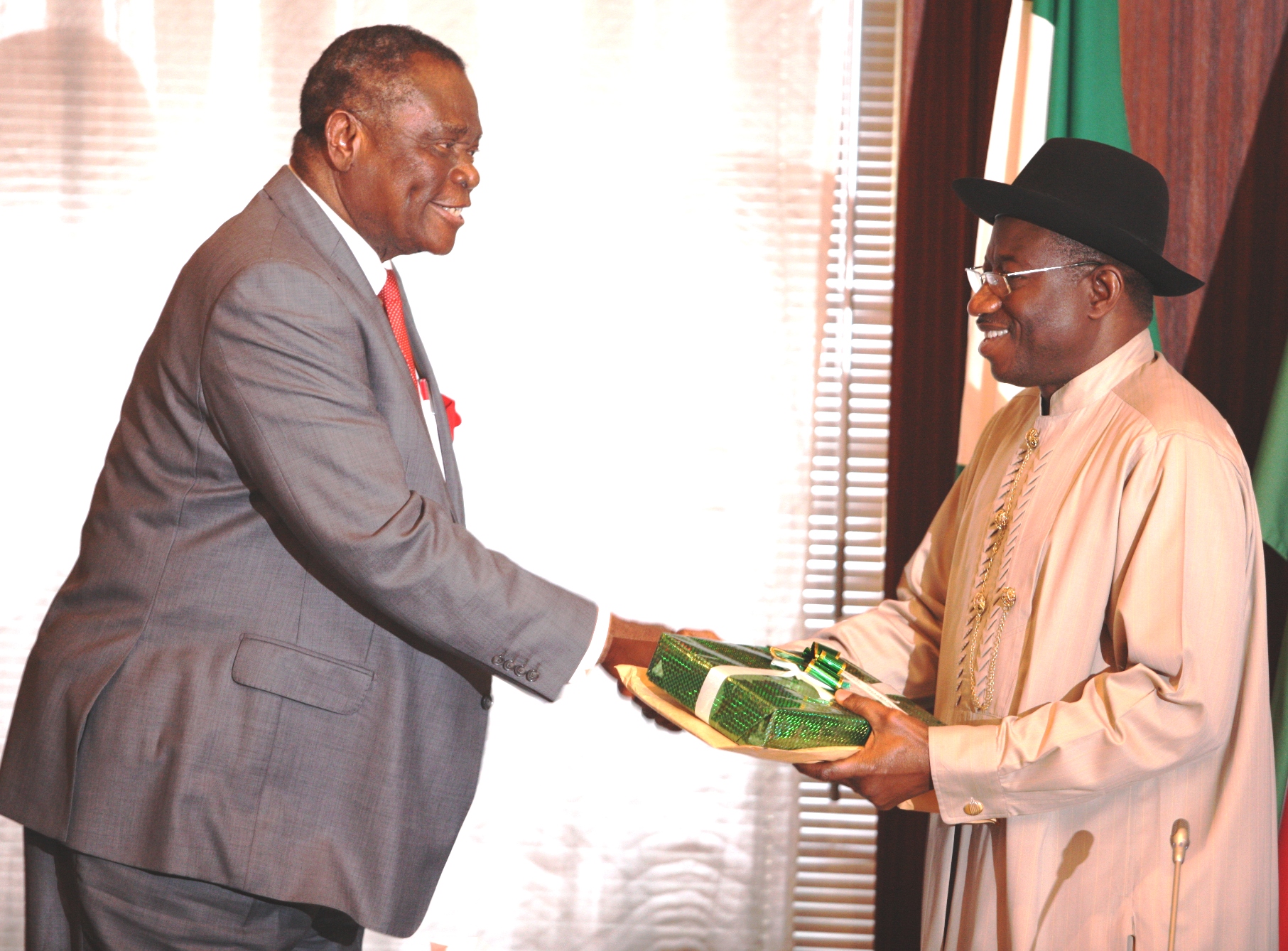
Canvassing the same shop-worn arguments, the retired DIG Parry Osayande led Presidential Committee on re- organisation of the Nigerian Police Force on Tuesday joined the group of those opposed to the popular clamour for the establishment of states’ funded police in Nigeria.
The Committee which submitted its report to President Goodluck Jonathan warned against the establishment of state police in Nigeria with the argument that the move can lead to break up of the country, without supplying proof of how this could happen.
In addition, Osayande also told journalists that many states do not have the financial wherewithal to fund their own police. He spoke to reporters after submitting the report to President Jonathan.
Rather, the Committee advocated for reforms which will involve restructuring of the way the Police is being funded and strengthening of the Nigeria Police Council. “A stronger and more efficient National Police Council with effective participation of state governors; financial autonomy and better professionalism for the police will cancel demands for state police” stated Osayande.
The committee asked government to uphold the recommendation of the M.D. Yusuf 2008 committee on the reform of the Nigeria police stipulated joint funding of the law enforcement agency by the three-tiers of government.
It argued that federal budgetary allocation cannot meet the needs of the Police.
The Committee also advised that the police be empowered to determine its priorities, draw its budget based on its needs and be held accountable for the use of such funds against the current practice of “envelope system” of budgeting in which the Ministry of Finance provides a budget template.
It recommended that the fiscal and financial responsibility of the Force should be vested on the Inspector-General of Police.
The Presidential Committee also recommended the scrapping of the Ministry of Police Affairs and merging of parallel organisations carved out of the Force.
While presenting the report, Osayande said it is the view of his committee that the ministry had no constitutional role assigned to it, but was given control of the Police budget.
“The Ministry determines Police projects and awards its contracts, including organising and running training programmes involving billions of naira with no input from the Police who are the end users. `This is an aberration, which has led to abuse, misapplication and hemorrhage of the limited resources made available to the Police,’’ Osayande said.
It also recommended that units carved out of the Police should be merged with the Force.
The Committee identified such units as the intelligence arm of the Police carved out to create the State Security Services (SSS), the Highway Patrol units carved out create the Federal Road Safety Commission (FRSC) and the ICPC and EFCC carved out from the Criminal Investigation Departments (CID) of the Police and the Nigeria Security and Civil Defence Corps (NSCDC).
“The committee, therefore, recommends that some of the duties taken away from the Police be returned as they are an integral part and still remain the constitutional duties of the Nigeria Police Force. Consequently, the ICPC, FRSC and NSCDC should be immediately merged with the Nigeria Police Force,’’ he said.
It further noted that the staff of organizations that are parallel to the Police are better remunerated.
The Committee noted that while the Inspector General of Police earns N711, 498 per month, the DG, SSS salary per month is N1.336 million while the Executive Chairman of EFCC earns N1.5 million per month. The disparity in salary, it said is not a reflection of the higher responsibility attached to the Office of the IGP.
It also recommended the revision of the salaries and overall welfare and condition of service of the Police arguing that poor remuneration and weak institutional governance are the two factors that have predisposed police officers in “engaging in criminal and anti-social schemes for self help and survival.’’
Comments