


BOKO HARAM: Jonathan’s Phantom Peace Move

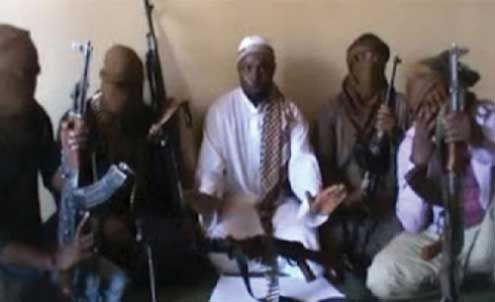
Although the Federal Government has admitted to making moves to engage Boko Haram in talks, there are certain mines in the way to seeking peace, even as the sect affirms it is not ready to parley with government
For some months, the idea of dialogue between the two major combatants filtered out like a tale from beer parlours. It was so because Boko Haram, an Islamic sect that has turned Nigeria into a boiling cauldron, and the Federal Government, which also responded with force, appeared like two parallel lines. On the other side of this conflict are poor Nigerians, adherents of the two major faiths, Islam and Christianity, who suffered, and still do, incalculable collateral damage. But the Federal Government, for the first time, has admitted, through the Information Minister, Labaran Maku, that it was ready to dialogue with the sect, a move the latter vehemently dismissed.
Clearly, there are certain mines strewn on the way to peace, which the two sides, according to concerned Nigerians, ought to remove so that the level of insecurity in the country could be reduced.
Since 2009, activities of Boko Haram have put the country on the hot spot of the world map. So far, over nearly 2000 lives have been lost. From drive-by shootings in Maiduguri, Borno State, its initial area of operation, in 2010, the group moved into suicide bombings on strategic facilities in the Federal Capital Territory. The Nigeria Police Headquarters and the United Nations building were the notable public buildings it hit in Abuja.
In fact, Boko Haram was responsible for at least 450 killings in Nigeria in 2011 and over 620 deaths in the first half of this year. On 22 April 2011, the sect freed 14 prisoners during a jailbreak in Yola, Adamawa State; on 16 June 2011. Between 4 November 2011 and 16 February 2012, it carried out series of attacks in Kano and Kaduna.
In June this year, which the sect had promised would be a bloody month, suicide bombers struck at three churches in Kaduna State, killing 50 worshippers. The same month, over 130 perished in Plateau State as a result of inter-religious conflict sparked by an attack carried out by the sect. And in Okene, Kogi State, 16 members of the Deeper Life Bible Church were gunned down during Bible study.
The state of insecurity, especially in the North, has deteriorated, so much that many have fled their homes. Many prominent northerners have abandoned their palatial mansions in troubled northern cities to live in Abuja, Lagos, Port Harcourt and other southern cities, where they believe they would be safer. And to affirm its commitment to violence, in the samer month of June, the Islamic sect issued a release, through its spokesman, Abu Qaga, stating: “The Nigerian state and Christians are our enemies and we will be launching attacks on the Nigerian state and its security apparatus as well as churches until we achieve our goal of establishing an Islamic state in place of the present secular arrangement.”
“We launched these attacks to prove the Nigerian security wrong and to debunk their claim that we have been weakened by the military crackdown. We are keeping tabs on all comments being made about us… Let no one make any entreaty to us when we perfect our plan and start our operation, especially against journalists,” it said in a release.
The international community is concerned about the slide to anarchy in northern Nigeria. For example, the United States Congress, on 10 July, invited the President of the Christian Association of Nigeria, CAN, Ayo Oritsejafor, to address it. He told the legislators: “By refusing to designate Boko Haram as a foreign terrorist organisation, the United States is sending a very clear message, not just to the Federal Government of Nigeria but to the world that the murder of innocent Christians and Muslims who reject Islamism — and I make a clear distinction here between Islam and Islamism — are acceptable losses.”
“It is hypocritical for the United States and the international community to say that they believe in freedom and equality when their actions do not support those who are being persecuted,” he told the House Foreign Affairs Committee. The Holy See has not been left out in showing concern. Said Pope Benedict XVI recently, “I appeal to leaders for an immediate end to the killing of so many innocents…It is my hope that the various components of Nigerian society will collaborate so as not to start down the path of revenge, and that all citizens will cooperate in building a peaceful and reconciled society, in which everyone’s right to freely to profess their faith is fully protected.”
Indeed, the cancellation of the durbar during the last Sallah celebration in some parts of the North, especially Kano and Zaria, was as a result of high level of insecurity. For the first time in the recent histories of Zaria and Kano emirates, the popular durbar festival, during which the Emir rides on horse back around the city was cancelled. Although the Kano Emirate cited the fragile health of Alhaji Ado Bayero, its emir, as an excuse not to hold the durbar, findings by this magazine showed that it was actually because of the security challenges in the ancient city.
Worried by the inability of the military and police to contain the sect, the northern governors, Arewa Consultative Forum and many other stakeholders, including the Sultan of Sokoto, Alhaji Sa’ad Abubakar, have constantly clamoured for dialogue in a bid to end the insurgency that has paralysed the economy and social activities in the North. But all the calls and pleas for a ceasefire to enable dialogue to take place have fallen on deaf ears.
When he assumed office in June this year, the newly appointed National Security Adviser, NSA, Colonel Sambo Dasuki (retd), said in Damaturu, the Yobe State capital, that the president is fully committed to finding a permanent solution to violence in the country.
As he put it: “Government is committed to bringing an end to the security challenges and there is the need to put heads together to bring a final end to the situation as we want to go back to normalcy and, move forward.”
He added that if one considers the colossal collateral damage these confrontations cause due to the unconventional methods of the insurgents, “the option of resolution through dialogue and negotiation should be pursued as a priority” because he did not see “how anybody is benefiting out of this.” He advised traditional leaders to also make sure that peace returns to their various communities.
Last Thursday, the Northern Governors Forum inaugurated a 41-man peace committee, members of which include traditional rulers, the clergy – Christian and Islamic – academics, retired military men, businessmen and former public officers. At the inauguration, the Niger State governor, Babangida Aliyu, who is also the chair of the forum, charged members “to fashion out strategies to address the disturbing state of insecurity and proffer practical and enduring solutions” to the insecurity in the region. The main term of reference of the committee is “to engender the restoration of the most desired peaceful co-existence, unity and development in the entire region”.
Members of the committee include, the Lamido of Adamawa, Dr. Barkindo Aliyu Musdafa; Emir of Ilorin, Alhaji Ibrahim Sulu Gambari; Emir of Yauri, Zamfara State, Alhaji Zaiyanu Abdulahi; the Ngolong Nas, Plateau State, Nde Joshua Y. Dimlong; Sheik Ahmed Lemu and the Bishop of Sokoto Diocese of the Catholic Church, Rev. Matthew Hassan Kukah. Others are Chief of Defence Staff, Gen. Martin Luther Agwai; wife of former Chief Justice of Nigeria, Muhammadu Uwais, Hajiya Maryam; Mrs. Aisha Oyebode, daughter of former Head of State, Gen. Murtala Muhammed – who is representing the Murtala Muhammed Foundation; and a retired police chief, Abubakar Tsav. How far the committee can go to restore peace remains to be seen. Already, the move by the northern governors has come under heavy criticism from many indigenes of the troubled region. They say the failure to appoint a large number of commoners to the committee may have made the move a failure right from the off.
Hopes for peace were raised sky-high when the Voice of America, VOA, reported last Tuesday that a purported spokesman for Boko Haram, one Habu Mohammed, said the group and the Federal Government were in direct talks on ways to end violence in the North. According to the VOA, Mohammed, who claims to be a deputy to Boko Haram leader, Sheikh Abubakar Shekau, said in a statement that the group decided to initiate the peace moves in response to numerous public appeals for peace in the country.
The VOA said a senior Nigerian official, speaking on condition of anonymity, confirmed the talks to VOA.
While Maku did not deny the report, perhaps not to jeopardise the process, he said government also heard it on radio.
But Maku came out clearer last Wednesday, when he said the Federal Government accepted to dialogue with Boko Haram, in order to arrest insecurity in the country as soon as possible. In his words: “We have accepted dialogue as a way of bringing the (insecurity) situation to an end as quickly as possible. We have always called on those engaging in violence to stop because violence can’t solve any problem. So we welcome the decision to dialogue.”
But this hope for dialogue was shattered when Boko Haram responded with a bellicose message, denying its readiness to hold talks with government. According to a statement issued by the sect. The group said it was a ploy to confuse and change the perception “people in this region have about this holy war of Jihad we are fighting”. It added: “By the grace of Allah, they will not succeed on us. To us, there is no difference between those fighting us with arms and those with pen/tongue.”
The group further accused those claiming to be its representatives of collecting money from government. “We heard that they are collecting huge amount of money using dubious means. We are calling on them to fear God and repent before they fall into the hands of Allah’s soldiers. They should stop cheating Islam.”
Boko Haram claimed that it never engaged in any attempt at dialogue except one brokered by Dr. Ibrahim Datti, which it said was not direct. “It was through one journalist, Ahmad Salkida…And since that failed, we have not done anything like that. We have also heard that Dr. Ibrahim Datti has also entered another plot to that effect; we are calling on elderly people to hold their respect and not dent their image,” the group warned.
It, therefore, called on the Nigerian government not to expect any dialogue, except it changes from secular to Sharia system. The group vowed: “There is no single day that Mujahideens will stop fighting in Nigeria until that is achieved and we are hopeful to triumph over Nigerian government.”
There is no doubt that government has hit a brickwall in its attempt at negotiation, a development that may make further peace moves difficult. Analysing what went wrong in the past and how to chart a way for the future, Comrade Shehu Sani, a human rights activist who, along with former President Olusegun Obasanjo, made the first attempt at holding talks with Boko Haram, identified government’s preference for use of force as an impediment to peace. He said, there has been a lack of sincerity on the part of government, which has made peace moves elusive. Sani said when there was a parley between former President Olusegun Obasanjo and the group in Maiduguri, the former president, after listening to their suggestions, promised that government would meet their demands, but the demands were thrown aside by the federal government. Then, Sani said, government thought it could use force. In fact, it said that by June this year, Boko Haram would be routed!
There was another attempt led by Dr. Datti Ahmed, which also went up in smoke. It was agreed that the talks would be kept in strict confidentiality, apart from the outcome. But government allegedly sabotaged the arrangement by blowing the proposed talks open.
The third attempt was based on a document prepared by adherents of Boko Haram which divided the sect into three: Those in detention, the top members, and the ground soldiers with their wives and children. If the group would declare a ceasefire, the document proposed, then the government should be able to release their wives and children. And then gradually other issues could be addressed. But first, there must be a four- to five-month ceasefire from both sides before all these could be achieved. But, Sani said, President Goodluck Jonathan disregarded the document!
Some analysts spoken to last week in Kaduna and Kano said one reason why the deadly sect is not prepared to negotiate with the Jonathan government is because it deeply distrusts it. It simply does not belief it would honour its own side of the bargain. It is understood that the sect, buoyed by the successes it has recorded against Nigeria’s security forces believes it is in a position of strength to ensure its demands are met. Sources pointed to the way Sheikh Datti Ahmed was treated with disrespect by the presidency when he tried to broker peace between the group and the federal government as one reason why they distrust the government.
In the past, the sect had dropped hints it could consider a ceasefire if all its members in detention were unconditionally released and granted amnesty and if its destroyed mosques were rebuilt. But it appears the group has now shut the door on any form of negotiated ceasefire for now.
Another problem, which some analysts say is the toughest, is that some of the sect’s demands are difficult, if not impossible, to meet, especially the call to Islamise the entire country, the conversion of President Jonathan to Islam, and his resignation. They, however, believe that the two sides can reduce the areas of their differences.
Meanwhile, hopes for a peaceful resolution of the crisis continue.
—Femi Adi/TheNEWS Africa
Comments