


Emeka Ngige: Nigeria has failed as a state

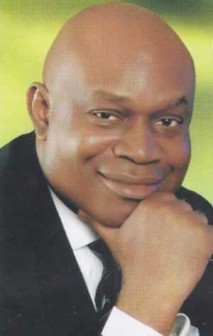
Chief Emeka Ngige, a Senior Advocate of Nigeria, tells FOLA ADEMOSU his assessment of the Nigerian state on its 52nd independence anniversary
What is your appraisal of our political and economic development since independence?
Appraising Nigeria’s political and economic development is not an easy task. It is a story of missed opportunities, dashed hopes and a bleak future. In short, it is a paradox of a nation. Politically, we are retrogressing. Social vices like corruption, ethnicity, tribalism, insecurity, nepotism and religious intolerance are now the order of the day. They are now part of our culture and tradition. We now look back at the early and mid-60s with nostalgia. The greatest calamity that has befallen our dear country since independence is failure of leadership at the centre. The golden opportunities we had with a seemingly well focused and progressive leadership, as witnessed during the regimes of Generals Murtala Muhammed and Muhammadu Buhari, even though they were military men, were shortlived. The failure of Nigerian political leadership has also impacted on our economic development, with Nigeria classified as one of the poorest nations in the world. In the 2009 Global Hunger Index, GHI, Nigeria scored 18.40 and is ranked the 47th of 84 hungry countries in the world! This is in spite of huge earnings we make from crude oil. Despite being the 8th largest oil producer, Nigeria is one of the biggest importers of refined petroleum products. Our refineries were made to collapse so that a few people would be importing petrol and collecting bogus subsidies. Our educational system is wretched. Parents now send their children to study abroad. To put it bluntly, Nigeria is a failed nation politically and economically!
Can we sustain the presidential system we run?
The presidential system we operate is expensive and is fraught with waste pipes that drain our resources. But the wastage is not entirely because of the system of government we operate. Even if we ran a parliamentary or any other system, we would likely spend much because of the endemic and pervasive corruption, abject poverty and high unemployment rate in the country. So, the solution does not lie in changing the system of government, but in getting the right leadership at the centre that will change our orientation, set good examples and fight corruption. With the high rate of unemployment brought about by leadership failure, it is inevitable that we have big-sized government with thousands of political aides all over the country. When all the industries have collapsed, there is a concomitant pressure on political office holders to find jobs for their relations and associates. That’s why we now have a Special Assistant to a Special Assistant and a Personal Assistant to Personal Assistant e.t.c. Without the right leadership, we are going nowhere. Ghana got the right leadership under Jerry Rawlings and John Kuffuor, and the difference became clear. In our own case, Obasanjo foisted the type of leadership we presently have and its attendant dismal failure, leaving us hopeless and with a bleak future.
What is your view on the agitation that lawmaking should be on part-time basis?
Whether the parliamentarians work part-time or not does not solve the problem of high cost of governance. Making the parliamentarians work part-time may make it worse because at the moment, most of them are really working part-time. Unless and until we reform our electoral laws to make it possible to recall a failing parliamentarian, we shall continue to witness incompetent and inept legislature as we have at the moment. Since 1999, no legislator has been recalled from any of our legislative houses, indicating that the electoral law in this respect is flawed.
In the 2012 Budget, allocation for recurrent expenditure dwarfs that of capital expenditure. What does this portend?
In my own view, it is not the small allocation to capital project that is the problem. The problem is that contractors that handle the few capital projects are owed by government, leading to abandonment of projects. This explains why Enugu-Onitsha, Enugu-Port Harcourt, East-West highway, Ogbomosho-Ilorin, Lokoja-Abuja, Dutse-Maiduguri, Ikot-Ekpene-Calabar and many others have been more or less abandoned. That brings to the fore, the recurring issue of failed leadership at the centre. It is most unfortunate.
Can we survive as a nation, given the hole through which resources drip?
With the way our resources are being looted on a daily basis by politicians and their cohorts, there is no way the nation called Nigeria will survive for long. But mark my words: this nonsense will not go on forever. Something will have to snap. It’s either the nation self-destructs or the nonsense is arrested.
Do you support the view of those agitating that Nigeria should split?
The calls for a split have arisen because of inept, incompetent and parochial leadership we have at all levels, particularly at the centre. It is not true that the nationalities are strange bedfellows, hence the agitation. When you have a leadership that concerns itself with progress of only his tribesmen or of his area, there is bound to be cries of marginalisation by other areas. When these cries are ignored, then agitation for splitting the country will resonate. The day we shall have a pan-Nigeria leadership, a leadership that will treat all parts of the country fairly and equitably, you will see the agitation for splitting the country dying away. Obasanjo had a golden opportunity of being a pan-Nigerian or even pan-African leader, but he blew the opportunity with his dictatorial, corrupt and ungodly leadership. Nigerians are yearning for a visionary leader; a leader that can tackle the challenges that face us as a nation; a leader that will wield all the ethnic groups together and give them a sense of belonging. It may take a while for such leadership to emerge, judging by the corrupt electoral system we have, but all hope is not lost. Out of that very dark tunnel, one day we shall see the light.
The call for a Sovereign National Conference is also brought about by the failed leadership of Obasanjo and his successors. It was a hope dashed, a hope betrayed. And the reaction is the strident calls for convocation of a Sovereign National Conference by frustrated and marginalised Nigerians. My take is that such a conference may be needful, but is not legally feasible because of the legal framework existing in the country. There is no way you can convoke such conference with the National Assembly standing idly by. Under the 1999 Constitution, there cannot be two sovereigns in one entity. That is the major hindrance for the convocation sovereign national conference in Nigeria.
What is the biggest problem that still makes Nigeria seem like a toddler at 52?
The biggest problem is inept leadership. This is followed by corruption. Give Nigeria the right leadership and everything will fall in place. Inept leadership has been the bane of our national development. That’s why Nigeria at 52 is still regarded as a toddler.
Many countries that were at par with Nigeria at independence seem to have left her far behind. What would you say is responsible for our retrogression despite stupendous oil wealth that has accrued to the federal government over the years?
Again, my answer is that inept leadership is our curse. Murtala Muhammed tried to change things, but was killed. Buhari equally showed his inclination to turn things around, but was overthrown by the reactionary forces. We are yet to come out of the woods since then.
Some people have advocated bloody revolution as a panacea to the country’s many ills…
Bloody revolution may not be the answer because of ethnicity. When a census of those killed during such a revolution is taken, some people will allege ethnic cleansing and all that. But that is not to say that we are not heading in that direction. The signs are that if care is not taken, there will be a bloody revolution in Nigeria, but I am not canvassing for it.
How would you assess governance in the country, particularly President Jonathan’s transformation agenda?
 Apart from the airport renovations we are now witnessing courtesy of Ms. Oduah, not much has been transformed by the Jonathan administration. The hospitals are still in shambles. Nigerians troop daily to India for medical treatment. Even our First Lady is still out of the country on medical treatment. That shows that the health care sector has not witnessed any transformation. Same goes for roads that deteriorate rapidly. Travelling by road from Abuja to Lagos is like committing suicide. Insecurity is at its highest level since the civil war. The transformation we are witnessing is negative transformation, not a positive one. May God save our country while we wait patiently for Goodluck.
This interview is published in TheNEWS of 8 October 2012
Comments