


I’ve Sold 70m Albums

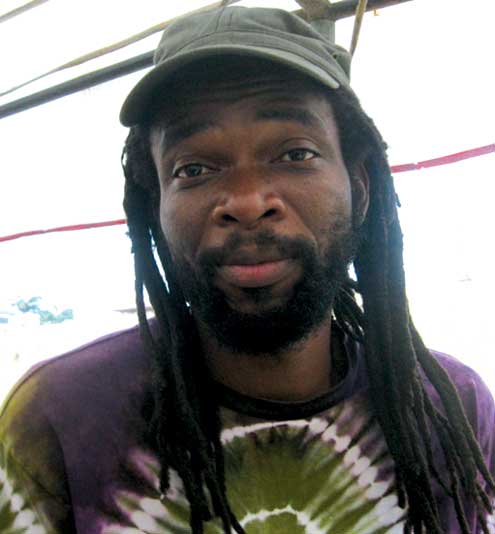
Folklore musician Segun Akinlolu, better known as Beautiful Nubia, tells Entertainment Cafe about his art
Why is your music heavy on folklore and tradition? Does it have anything to do with your being born in Ibadan?
It’s just a reflection of who I am. What I play now is a total reflection of the circumstances surrounding my birth, upbringing and experiences I have had growing up. My kind of music is one that is honest and has very sincere roots. I do not play music to make money. I don’t think: ‘Oh let me play what they are gonna like’. I play what comes from inside of me. Whatever inspiration I have, that’s what I bring out for people. And because that music has sincere motives, it always connects with an audience. And it shocks many people. They say: ‘You don’t even promote your works that much, yet you have millions of fans both old and young, and people buy your music’. It’s because the music was borne out of love and people can connect with that love.
I cannot really say I am trying to be traditional or I’m trying to be African. No! I was born here; I didn’t have a choice in being born here. I just found myself here. But I was very well immersed in this culture. I was lucky that when I was growing up, I had my grandmother who kept pushing this culture in my face. And she didn’t say respect the traditional costumes or the language. She talked more about the values in that culture. The values of honesty, humility, hard work, perseverance, good neighbourliness, communalism, learning how to share and give, and the virtue of sacrifice. My grandmother always put all those in my head. She always said life was not worth anything; so spend your time here wisely by sowing yourself here. Plant a tree today for future wayfarers, she would say figuratively. A hundred years after you’ve planted that tree, when it’s hot, somebody can go under that it and have some shade. He doesn’t know who planted tree; he might not even say a prayer for you. But at that moment, for being the one who provided the comfort by planting that tree, your life is successful.
At what time did you decide to return home from your base in Canada?
I’ve never lived abroad; this is what I keep telling people. The story that you hear is that this artiste is ‘Canada-based’. I don’t know how that started. It became strong when we released our big album, Jangbalajugbu in 2002. Our friends in the media thought they were doing me a favour by colouring me in that light of ‘he’s Canada-based’. They thought it would add more value to me. Of course, I have Canadian citizenship and I have a home in Canada. But my place of abode is Nigeria – this is my primary market. On the average, maybe I spend like eight months in Nigeria and four abroad every year. Sometimes, I spend more, depending on my engagements out there. But even when I’m in Canada I’m not just staying back there. I’m travelling around the world; I’m playing in different places, especially in the U.S and sometimes in the UK.
Any artiste of this age, who is worth his salt and has an audience outside his primary area of growth, cannot say he’s sitting down in one place. I’ve turned out 11 albums (one of them freshly released). My largest audience is here and they run into tens of millions. My potential audience in this country is like 170 million. But my actual audience, that I know have bought my album, could be up to 70 million people. How many artistes all over the world can boast of such figure? For Jangbalajugbu, we, by ourselves, have sold more than a million copies and we have receipts to prove this.
Your record sales appears a rarity given the menace of piracy in industry. How have you managed the pirates?
I remember going to Alaba once to talk to our marketers and the guy told us: ‘Whatever you have sold, multiply it by seven – that’s what the pirates have sold!’ But I don’t really let the piracy issue bother me that much. There is piracy all over the world. I think that the most wicked pirates are those guys abroad, who get your CD, rip it, and put it online for billions of people to just have for free. That’s the worst form! The one in Nigeria, if we get it right by fixing the music industry and the country in its entirety, piracy will become a minor issue.
You studied Veterinary Medicine. Why did you quit that for music?
It would appear I just dumped that degree for music, but I started writing songs when I was nine years old. I always knew that I was going to be an artiste. The gifts were there; I could write songs, poems and stories. Back in primary school, my teachers told me I had a kind of stage aura that was quite arresting.
But it so happened that I had to go study Veterinary Medicine. I was actually persuaded to follow that path by my parents and teachers. They said even if I was to take to music, I should have a trade I could fall back on if music was not going well. Grudgingly, I accepted to study the medical course. But when I now got there, I fell in love with the course. I ended up practising for about nine years. I worked full time for eight years at foremost livestock company, Animal Care, where I rose to the position of Divisional Manager. I learnt how to manage funds; I learnt a lot. It was a good time; I enjoyed the job a lot.
But then the call of music was always strong. I always knew this was my eventual destination – if you like make me a president, I would still end up as a musician. So eventually, in 2000, I decided I was going to stop. Even while I was a vet, I was playing music part-time. My first album was released in 1997, while still working as a vet. I was playing at shows and also working at Animal Care. The job was affecting the music, though. I couldn’t put all the energy that I needed; I couldn’t take some shows and I couldn’t make the sacrifices that I needed to get this thing going. So I decided in 2000 to end the paid job and move on and become a full time artiste. But to prepare my mind for the uncertainties that lay ahead, I told myself: you always get your regular salaries as a vet and it never failed. Now you are going to become a musician, your income is not going to be regular again. You are not assured of anything again. I thought in my head: ‘Swear an oath of poverty now, because you are going to be poor’. But you are going to enjoy being poor because you would love what you are doing. When I stopped working as a vet, it was difficult at the beginning. It is still tough now. Everyday is a struggle; you keep going forward. But when you do what you love and you see people appreciate what you do and you see the outpouring of love, you feel that you are successful. Nothing matters to you again. I’ve had young people tell me: ‘I grew up on your music?’ And that gives me boundless joy.
What else do you do outside of music?
I undertake paid research for organisations and people, especially historical research. I also edit annual reports of companies. But I’m basically married to music – recording and playing music, and doing performance poetry.
Tell us about your musical show, EMUFEST?
Every year, for like 10 years now, I would take my band on the road for tours. It used to be that artistes in Nigeria could tour. In the days of Rex Lawson and the likes, they used to go around the country on playing tours. But in this generation, you just sit down for someone to call you. If nobody calls you, you’re hungry. I have never been like that; I’ve been very pro-active. I like to be forward-looking. The audience is there; how do I connect with them? That’s how I run. We started doing this, taking the whole of my 14-man band and we would go on the road every year and go to as many state capitals as possible, especially in the southwest. We do all these tours under the auspices of the Eni-Obanke Music, my company, which I set up 15 years ago.
But five years ago, I started thinking of expanding it beyond just me. It would now be me and other artistes working in that genre. And it would take the form of our tours, whereby we would take the festival from city to city. We don’t have a real folk music festival in this country. A festival that celebrates contemporary folk music. What we are doing now is not really traditional folk music. We are contemporary folk musicians. We take from the past and then fuse such with other things. So, I thought it would be nice that we have a festival of contemporary folk and roots African music. I haven’t heard of anyone in the whole of Africa. Whatever money we made from the album sales, we would blow on our live shows and we are left with little funds. But this is the life of an artiste. An artiste who is committed to his art doesn’t think of profit; you think about getting the work done.
So in 2010, against all odds, we had the maiden edition, which recorded a large turnout and paraded Orlando Julius Ekemode, Jimi Solanke, Yinka Davies, my band, and many emerging talents in the genre. We did Ile-Ife, Ibadan, Oshogbo and a small event in Lagos. That was the start and it was symbolic. And I’ve vowed that once we’ve started, we are not gonna stop. Last year, we did it again in Lagos, Ibadan and Ile-Ife. This year, we are aiming to include Abuja, Benin, Enugu to the southwest states we’ve been doing. By this festival, we are hoping to re-invigorate the idea of touring by artistes.
—Tokunbo Olajide
Comments