


Capital Oil: Reps Wade In

Ifeanyi Ubah, Chairman of Capital Oil & Gas Limited takes his case to the House of Representatives
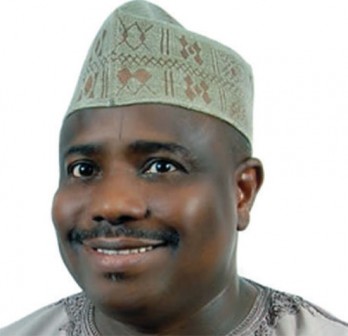
The House of Representatives began sitting Thursday last week over the petition sent it by Ifeanyi Ubah, the embattled Managing Director/Chief Executive Officer of Capital Oil and Gas Limited. Capital Oil had just been reopened last Monday after a two-week closure and temporary take-over by the Assets Management Corporation of Nigeria, AMCON, following court orders in Nigeria and the United Kingdom.
Ubah’s grouses in the petition are directed mainly against Aigboje Aig-Imoukhuede, Managing Director/Chief Executive Officer of Access Bank, and Cosmas Maduka, chairman of the Coscharis Group and non-executive director as well as chairman, credit committee of Access Bank. Aig-Imoukhuede had headed the 15-man Presidential Committee on Verification and Reconciliation of Fuel Subsidy Payments the federal government set up in July this year to probe payments on importation of fuel. The report the committee submitted within the month indicted 50 oil marketing and trading companies for engaging in transactions it described as “not legitimate.” Top on that infamous list is Capital Oil and Gas, which was mentioned as illegitimately engaging in 26 transactions valued at N23 billion.
Capital Oil is the biggest indigenous oil marketer, boasting of four depots with a combined capacity of 16 million litres of petroleum products. It stores about 35 per cent of fuel imports of the National National Petroleum Corporation, NNPC, and handles storage for other petroleum products marketers. Capital Oil also has the biggest private jetty, which it prides itself to have dredged deep to accommodate four berthed big vessels. At Amuwo, on the suburbs of Lagos State, it has constructed a vast modern fuel truck/tanker park which its management said has been a major factor in solving the perennial face-off between the Lagos State government and the National Union of Petroleum and Natural Gas Workers, NUPENG, over parking problems and the resultant traffic gridlock in the Apapa/Amuwo Odofin/Orile Iganmu areas of the state. The facility can hold about 1000 fuel tankers.
The Aig-Imoukhuede committee report has thrown a wrench in Capital Oil’s operations, as AMCON moved to recover “illegitimate” subsidy payments from the company. Its woes have been compounded by an altercation between Ubah and Maduka over a controversial N20 billion loan facility secured from Access Bank.
In his petition to the House of Representatives, Ubah says the damaging report of the Aig-Imokhuede committee was no coincidence; Aig-Imoukhuede and Maduka, he maintains, are essaying to use the Fuel Subsidy Payments Reconciliation and Verification committee to victimise him because of some business collaboration gone sour between them. Moreover, there are, he claims, political undertones to “the plot to ruin” him financially. The Capital Oil boss was known to be nursing an ambition to contest the Anambra State governorship election. He is from Nnewi, as is Maduka. But, as he noted, some Peoples Democratic Party top hawks in the state seemed not to be comfortable with his ambition and were scheming to debilitate him financially. He has been compelled, he admitted, to put his ambition in abeyance.
Ubah is asking the House of Representatives to intervene in what he calls “A Serious Breach Of Fundamental Human Rights, Gross Misrepresentation, Suppression and Concealment of Material Facts, Threat to Life, Fraud, Deceit, Infringement, Gross Violation of Banking Rules and Regulations, Attempt to Forcibly Take Over Capital Oil & Gas Industries Limited Under False Pretence Resulting in Non-Payment of Over N20 Billion Due To Capital Oil & Gas Industries Limited Under an Unending Ongoing Investigation In A Transaction Guaranteed By The Federal Republic of Nigeria Sovereign Debt Note of 45 Days.”
In what he deems injustice, the Capital Oil chairman wants the federal legislators to take a second look at the Aig-Imoukhuede committee report which recommended Capital Oil & Gas and its chairman “for further investigation without due process”. He is also wondering why the Federal Ministry of Finance has refused to pay Capital Oil its due “under the pretext of Aig-Imoukhuede committee’s verification and recommendation”. He claims that the “refusal” of the Finance Ministry to remit the “overdue subsidy payment” is strangulating Capital Oil and has the “inevitable consequence of over 3000 losing their jobs due to non-payment of their salaries”.
He prays that the House of Representatives set aside the Aig-Imoukhuede committee report due to conflict of interest, “Aig-Imoukhuede being the CEO and Managing Director of the bank where our oil marketer sourced funds from.” He says the committee lacks transparency as the investigation suffered from fair hearing. This, he says, resulted in “gross miscarriage of injustice to Capital Oil & Gas Industries Limited and MD/CEO, Ifeanyi Patrick Ubah”.
The petitioner accuses Access Bank and Maduka of “unethical practices and insider abuse, contrary to sections 18 and 20(2) of the BOFIA 2004”. As Ubah says, Aig-Imoukhuede and Maduka are in “connivance, collusion and conpiracy to strangulate, destabilise and take over Capital Oil & Gas Limited under false pretence of a disputed loan facility”. He alleges that the entities conspired to make unauthorised withdrawals, contrary to the account mandate. “While the loan was being processed, Access Bank and Maduka concealed and suppressed some material facts relating to the transaction and didn’t disclose the unsecured nature of the facility to Capital Oil which was constrained/compelled to execute further additional securities to protect the loan facility and act as a guarantor to guarantee and reassure Access Bank plc.”
The controversial loan was actually obtained from Access Bank by Maduka on behalf of Ubah. The Capital Oil boss is accusing Maduka of “taking undue advantage of his position as Chairman of Board, Credit Committee of Access Bank plc to disclose privileged and confidential information of the bank to a third party in order to gain undue advantage to secure and protect loan and credit facility from the bank”. He adds that there is no way Aig-Imoukhuede would not suffer from conflict of interest in his capacity as chairman of the Fuel Subsidy Payments Reconciliation and Verification committee because even “as Managing Director of Access Bank plc, he traded in petroleum products with Capital Oil & Gas Limited (i.e. source of funds to other marketers) at the same time of his being the chairman of Presidential committee on subsidy probe payment, and by so doing, cannot be a judge, jury and prosecutor at the same time.” Ubah maintains that Maduka’s “personal animosity to Capital Oil & Gas Limited… has made him incapable of giving a frank and unbiased assessment of Capital Oil & Gas Limited” as it relates to investigation on the oil company.
Finally, Ubah says Access Bank, Maduka and Aig-Imoukhuede displayed “lack of faith in the Nigerian judicial system and a disregard for the Constitution of the Federal Republic of Nigeria”. He says he and Capital Oil & Gas were, through “an undated Guarantee Indemnity agreement prepared by Access Babk plc, deceived and misled into signing an agreement that provided for parties to opt out of jurisdiction of the Nigerian courts and confer same to the UK court, contrary to the Constitution and laws of the Federal Republic of Nigeria. This is in spite of the fact that this transaction was executed in Nigeria, all the parties were registered and are doing business in Nigeria and there was no arbitration clause in Nigeria.” In essence, Access Bank, Ubah interpretes, is mocking the Nigerian judicial system as unreliable in its resorting to a UK court when it is believed that the “authorative law which is the Nigerian law has no foreign element or connotation to vest jurisdiction in English courts”.
The legislators are not unexpected to hear from Maduka his defence of the allegations against him. The car dealer has been stating his position in many interviews and newspaper advertorials. According to him, his path and Ubah’s crossed during his 50th birthday celebration four years ago when the latter attended. He said Ubah walked up to him to introduce himself and he became interested in the oil merchant when he realised they are from the same industrial city of Nnewi, Anambra State. One thing led to another and the two began discussing the issue of a loan facility for Capital Oil & Gas Limited. “I took Ifeanyi to Aig-Imoukhuede and Herbert Wigwe (Aig’s deputy at Access Bank) and introduced him to them as my kid brother and pleaded with them to avail him of some facility to be able to do business. He admitted he was awed by Capital Oil’s assets he saw when he visited the company’s depots at Apapa and convinced the company and Uba were worth doing business with.
Maduka said because Aig-Imoukhuede and Wigwe insisted on not doing business with Ubah, he took it upon himself to enter into a partnership with him “under Coscharis and Capital Oil”. The bank would be dealing with Maduka on the loan issue and he would be dealing with Ubah. But there was a snag. The bank’s charter does not allow its credit director to have interest in a credit facility. Incidentally, Maduka is chairman, Credit board of Access Bank. When the loan issue went before the board, it was turned down because, Maduka said, the managers didn’t want to do business with Ubah. So he told them that if they didn’t want to do business with Ubah even as he, Maduka, was involved, then he would need additional funding in his account for 30,000 metric tonnes of premium motor spirit (petrol), which was about $30 million. The Access Bank board agreed to avail him of the facility, and did approve it under Coshcaris Motors Limited.
Maduka narrated that while the bank was opening a letter of credit for the transaction, he decided, to be on the safe side, to prepare a document for Ubah to sign saying he (Ubah) has sold his consignments to him (Maduka). “We asked him to dedicate a tank where our product would be separated from any other product he may have. Then we would call a manager like a Receving Manager from an inspection agaency. So we hired an inspection agency called Vibrant Venture to make the transaction possible.” According to Maduka, the parties agreed that when the letter of credit, LC, was opened, Ubah would nominate a vessel and inform Vibrant Venture which would go with the vessel to offshore Cotonou to load the goods and bring the goods to the dedicated tank. As Ubah was paying in money, the bank would be releasing the product to him and payment for the tank would be from the proceeds of the product.
So the LC was opened. Maduka said since he was borrowing from Access Bank on a negative pledge because Access Bank refused to lend Ubah money directly, he asked Ubah to sign a document making him (Ubah) his guarantor “so if anything goes wrong, the bank can also go after him”. Ubah signed. “I became the primary obligor and he is guaranteeing me,” Maduka stated.
As it happened, something didn’t just go wrong; things fell completely apart between the two kinsmen. Maduka argued he allowed the emotion of kinsmanship rather than the reason of what he said he had been hearing about Ubah to influence his business decision. By that statement, the billionaire car merchant was playing parsinomy with the truth. As he himself unknowingly disclosed, the lure of huge profits played a strong role in his decision to enter into a business partnership with Uba. Maduka was blunt with Ubah that he would not be “taking a risk for nothing and would like to share from the profit”. He recalled he asked Ubah: “What makes you comfortable?” And the oil baron replied 60 per cent on which an agreement was drawn and signed. He also asked Ubah to draw him a profitability analysis on the transaction. He said Ubah told him that on one vessel alone, they could make N250 million. When he went to the bank to clarify, the bankers told him to set his mind on N150 million because of exchange rate fluctuations.
Initially, Maduka said, everything went well. He stated that Ubah was intially paying regularly, clearing the first LC in 32 days instead of the envisaged 38. Another LC that was opened for $32 million was cleared in 28 days instead of 32. The first six times, Maduka and Access Bank were smiling on the transactions. But, as Maduka revealed, Ubah suddenly came to his office and requested to be opened an LC for $286 million, an amount that would be too high for a bank’s single obligor to get approval. To keep the single obligor open, Maduka then effected opening of LCs in the name of Sure Comfort, one of his subsidiary companies. But he left three of them unconfirmed, because “I said we should get some of the cargoes so as to get their confirmation.” But, according to him, Ubah convinced him to open them because “the permission he (Ubah) had would expire by the end of the month if he didn’t open the LC.” So in order not to allow the LC to expire, Maduka agreed to open the LC “only to add confirmation”. He said when he asked Ubah when the LC would be cleared, his business partner told him 70 days.
It was from there that payments have been irregular, Maduka remarked. Eventually things got to a head and Access Bank and Maduka headed to a London court. At home, AMCOM also went to the Federal High Court, Abuja, praying it to freeze Ubah’s vast assets with a view to recovering the debts he is said to be owing. Justice A. Abdu-Kafarati acceded to the request, directing AMCOM to take over the possession of all Capital Oil’s properties and assets wherever they are located. Abdu-Kafarati also ordered the immediate seizure of Ubah’s properties including Plot numbers C28A and C28B Amuwo Odofin Commercial Scheme, Lagos State; Plot 892B Block 28 Omole Residential Scheme II, Lagos State; Plot 8 Walter Carrington Crescent, Victoria Island, Lagos; Plot IN/8B, Emene Industrial Estate/Residential Layout, Enugu State; Plot SP7, Emene Industrial Estate, Enugu State; property (four plots) located at Tex Olawale Street, Olodi Apapa; parcel of land situated at Ibru Port Complex, Ibafon, Olodi Expressway; property at Umuanuka Otolo, Nnewi, Anambra State; and property located at Kuchiko Village, Suleija, Niger State.
The company itself immediately suspended operations following the court order. In a release it issued on 16 November 2012, the Capital Oil management stated: “We wish to emphasise that we stopped operations by 4.37 a.m. this morning (16/11/2012) with a total load-out of 224 trucks of premium motor spirit, PMS, (that is, petrol) equivalent of 8,151,270 litres of PMS belonging to the NNPC.” NNPC officials admitted that the suspension impacted seriously on the already worsening problem of fuel scarcity, leading to government and AMCOM to open talks with the Capital Oil & Gas management on how to amicably resolve the impasse. Initially, the talks were deadlocked over what Nick Hayes, spokesman for Capital Oil & Gas described as the dubious determination of some highly placed persons to hijack the big oil company from Ubah. But eventually, the parties arrived at a consensus and AMCON gave the company the nod to re-open.
The re-opening will gladden the industry’s key stakeholders like Tokunbo Korodo, chairman, Lagos State zone, NUPENG. Last Monday, Korodo was host to hundreds of oil workers who thronged his office in solidarity with Ubah. The workers called on the federal government to handle the Capital Oil issue with reason so it would not result in joblessness for many of their colleagues. “Capital Oil is an indigenous company that went and borrowed huge money and invested it in the oil and gas industry. By that investment, he employed a lot of workers; 1,000 direct workers and 3,000 auxiliary workers. These workers are registered members of NUPENG and whatever happens to that company will definitely affect the workers. Government failed to provide the enabling environment for the private investors to strive to recoup and pay back their loans. This, coupled with other reasons, made it difficult for the company to service the loans as and when due,” Korodo stressed. He added government shouldn’t have allowed AMCON to wade in “because AMCON came with the intention to take over the company”. Capital Oil, he maintained, “is so strategic to the petroleum industry because all the PPMC loading points have collapsed and Capital alone handles 35 per cent of petroleum distribution of NNPC nationwide. Though the issue is in court, our interest is that we, as the umbrella union that covers the workers, will react to anything that goes against their interests and our reactions might have economic implications.” He implored government to quickly resolve the issue, even if it has to be done out-of-court.
—Tayo Odunlami
Comments