


Nigeria Needs Cultural Rebirth To Develop

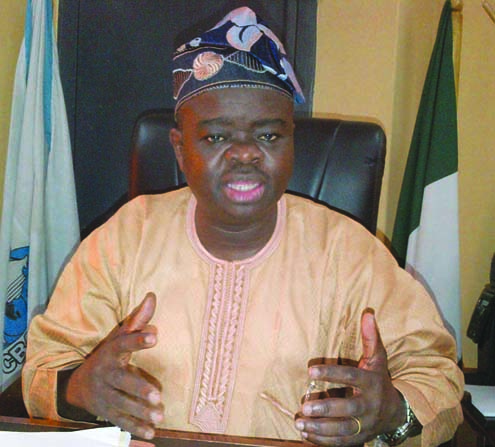
Professor Tunde Babawale, Director-General, Centre for Black and African Arts and Civilisation, CBAAC, explains to TOKUNBO OLAJIDE how indifference to cultural values has hampered Nigeria’s socio-economic development
The Centre for Black and African Arts and Civilisation, CBAAC, is almost 35 years old. Would you say the centre has received the support it requires to achieve its objectives?
There is no doubt that one of the things that have held back the organisation and hindered its progress and undermined its capacity to perform better on the world stage is the fact that it’s been grossly underfunded over the years. I grant that to my predecessors that the level of funding that CBAAC had was pathetic. When I came on board in 2006, that improved a little and it enabled us to do a few things, which have earned us accolades from all over the world. But unfortunately, in terms of the little effort that government has made, especially in recognition of culture as being a part of our life that should be a pillar of development, if not the basis of development itself, enough resources are not being committed to support us.
Last year was about the most agonising for us in terms of funding. During the year, we had three major international conferences, even with the meagre resources. What we had to fund all of that was just about N100 million. With seven outreach offices that are directly funded from Lagos, we have very little room to manoeuvre, even though we’ve gone out of our way to improve the international image of Nigeria and Africa. Despite its great strides and being the only agency with an international mandate, CBAAC is the least considered in the area of budgeting in the Ministry of Tourism, Culture and National Orientation. It had the lowest budgetary allocation in that ministry in 2012. We have made a plea to the National Assembly and we are receiving positive response and I believe the Ministry of Finance will also respond to our yearnings.
Government’s excuse for paying little attention to arts and culture is that issues like employment and security, for instance, are more pressing needs. What roles have culture in solving the country’s many headaches?
The role of arts remains what it has been: to record the day to day life of the people and interactions with themselves. All of these constitute what is called culture. But the moment you do not give attention to that particular sector, then there is problem. One of the reasons you have the festering of these security problems is the abandonment of culture. Would you imagine the number of people that would have been employed if we have promoted things like drums and the making of drums? There are families in the days of old who lived solely on that profession and they continue to pass it on over generations. That is aside the tourism value of our cultural festivals and the cultural industries that emerged naturally from cultural activities. Take for instance, hair styling, fashion, dance, drama and the number of people that would be employed in those industries.
It is warped understanding of economics that makes people think that arts and culture are unrelated to industry. It is not true! It’s not just manufacturing that is industry. It’s high time we realised that culture is part of economics and economics is part of culture. When government realises that and gives a premium of place to culture, then we will be making progress. Don’t forget that the tourism derivative of culture is also affected by this neglect. In many parts of Africa and the Third World today, they earn more revenue from tourism than they do from coffee or cocoa. Take Kenya, Gambia, and South Africa for example; a phenomenal amount of money is generated from tourism, which is always fed by culture.
Culture, of course, also has a role in security. Greater doom would have enveloped our country but for culture. Many Nigerians who are buffeted by a range of existential crises and problems are only being given relief on a daily basis by cultural events and activities – home videos for example. Nollywood keeps many people going. Many Nigerians are keen to go home after a hard day’s work to go and watch ‘Aki and Pawpaw’; to go and listen to D’Banj or Tuface – even in the midst of the many crises that we face. With all the Boko Haram disturbances, take Tuface or D’Banj to Kaduna today, the hall will be filled up and people forget everything. People attend our cultural festivals in large numbers to take away their sorrows. We would have had greater social crisis, indeed a social implosion, without culture.
There is also the concern over the erosion of our cultural values. Where did we get it wrong?
There is a very big disconnect between what exits in the past and what exists now. That’s why we are in a state of anomie, socially. In those days when we still took culture seriously and we took the upbringing of the youth seriously, the socialisation process was done in such a way that people are taught the values of good breeding, regardless of whether your parents had money or not. You were taught to be contended with whatever you have and not to covet whatever your neighbour possesses, and to retain your self pride. ‘Remember the son of whom you are’; ‘Honesty is the best policy’, etc, were the watchwords then. But in Nigeria of today, it has turned out that honesty is no longer profitable. People now see dishonesty as the best policy in the survival game. So, the culture of respect for elders and civility, the culture of hard work and of sense of community have all broken down.
There is a need for us to go back to the glory days, by not only teaching history in our schools, but also teaching culture. That way we can have well-rounded individuals because the essence of culture is to breed the individual. What distinguishes us from the lower animals is the fact that we have culture. That’s why we are regarded as civilised. We have to retrace our steps. We have to train our youths in the art of speaking indigenous languages. This is because in those languages, we have embedded our history, our norms, our values, our proverbs, our philosophy, and our understanding of life generally. These are things that need to be restored for us to have a new Nigerian nation; to bring about a new morality. What we have today is what I call the morality of the vampire or the buccaneer. This is what holds sway now and it is what is responsible for the disorder that we have now.
Part of CBAAC’s mandate is preserving Nigeria’s heritage and retrieving lost ones. What is the state of Nigeria’s archival capacity? You had to go once to France to recover some FESTAC ’77 artefacts?
I can only talk about CBAAC because we have a National Archive. What happens is that because of the problem of funding, the digitisation process of both our archival materials and audio-visuals has been very slow. We need to digitise what we have. There is no documentation that exists on FESTAC ‘77 from the days that they started the process of holding meetings till when FESTAC was held and till the end of it. We have all the documents but some of it are still in hard form and they depreciate over time or get torn and this is why we need to digitise them. We’ve already begun that process of digitising what we have in the archive. But for the audio-visual materials, we have gone very far.
Your agency recently held its annual Diaspora conference at the Missouri University, United States. How significant was the programme?
It’s our flagship programme, which started some seven years ago, shortly before I came on board. My predecessor decided that if we say we have a mandate that covers the Diaspora, we should not restrict ourselves to activities only centred on Nigeria. Thus they started a series of international conferences, the first of which was in 2005 and held in Lagos. I came on board in 2006 and took up the gauntlet to project the agenda to better promote Diaspora issues.
Therefore began the process of taking this conference to the Diaspora and Africa.
The first in the series, when I came on board, was held in Trinidad and Tobago in 2006. We moved from there to the Republic of Benin in 2007. The theme was about Global African Spirituality and the Quest for Self-Reliance in Africa. We debated the difference between religiosity and spirituality; and how we have erroneously mistaken religiosity for spirituality, which is not the same. You can be spiritual without being religious and vice versa. The fact is that excessive religiosity has been the cause of the fundamentalism that is wreaking havoc in our communities today in Africa, especially as we have witnessed in Somalia, we are witnessing in Mali and, of course, through the Boko Haram phenomenon in Nigeria today.
In 2008, we keyed into a UNESCO project called the General History of Africa. UNESCO had produced a report, which detailed the history of slavery, Africa’s colonial experience and neo-colonial experience. We organised the 2008 conference, in Rio de Janeiro, around the theme: Teaching and Propagating African History to the Diaspora and Teaching and Propagating Diaspora History to Africa.
Impressed by the 2008 Rio conference, the Brazilian government partnered with us in 2009 to hold a similar conference in Brasilia, the country’s capital. We held a second phase of the teaching and propagation of African history project, whereby 3,000 teachers from Brazil alone, were trained. We brought in experts from Africa, mixed them with those in the Diaspora to be able to build the capacity of the teachers in that part of the world. As a result of that experience, Brazil proposed an MoU with Nigeria, at CBAAC’s instance. So, Nigeria and Brazil signed an MoU on technical cooperation, on joint effort to challenge racism and then promote research and efforts at promoting culture on March 15, 2010, in Abuja.
In 2010, we had another conference here on pan-Africanism and integration of Africa, where we brought in over 20 experts from all over the world as part of Nigeria’s 50th Independence anniversary celebrations. In 2011, as a result of the pressure from the Black community in Brazil (people of African descent constitute about 60 per cent of the population), we went to Brazil again. We were invited to the city of Salvador, in the State of Bahia, where we organised a conference titled: Multiculturalism and the Prospects for African and African Diaspora Development.
The one we held in 2012 was in partnership with the University of Missouri in St. Louis. The theme was: Africa and the African Diaspora in the New Millennium. What informed this focus was the need to fulfil the mandate given to CBAAC, which is to maintain the network of contacts between the Diaspora and the continent. There is strength and wisdom in continental and Diasporan Africa linking together for synergy and for us to be able to share ideas and experiences and especially for the need to build the continent.
Secondly, the Diaspora requires Africa to build up its own confidence, self-esteem and identity. No matter how big you are, if don’t have identity, you are nobody. But once you have identity, it energises you into conquering the world. Thirdly was the need to critically address challenges facing Africans on the continent and those in the Diaspora.
Looking back at the conferences, how have they helped Nigeria’s image internationally?
It had further underscored and highlighted Nigeria’s leadership position on the continent. CBAAC has been showcasing Nigeria, the potential of the country and also moving to improve the level of interactions between and among Black peoples around the world.
.This article originally appeared in TheNEWS magazine of 28 January 2013
Comments