


APC v PDP: Buhari, Others Will Fail, says Lamido

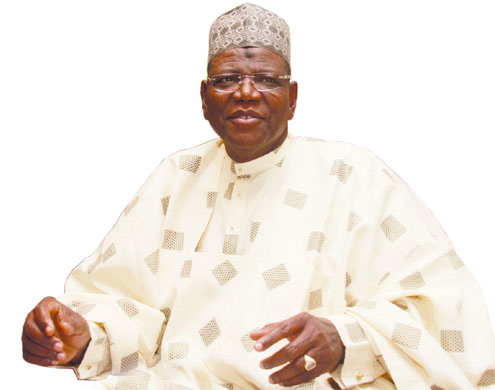
Governor Sule Lamido of Nigeria’s northwestern state of Jigawa takes BABAJIDE KOLADE-OTITOJU through the changes he has made in the state over the last five years
You have been governor for five years now. How has the journey been?
I don’t know what you mean by how the journey has been, but I will tell you it has been a very exciting job. It is quite exciting but, of course, there are a number of challenges–serious challenges. It is up to you to decide if your passion is to see what your role is in relation to the office you are holding. To that extent, there is no doubt it is a very very difficult job. Just like any leader, say a governor, president, father or family head, you will want the best for those under you. But you may not have the required resources to give them what you think is the best for them. You will do your best to see how you can use the resources available to give what you think is the best. To that extent, it must be a very challenging job because by human nature, once you attain a particular level, you aim for the next. There is always the need to keep improving the quality of life you are living today.
You seem to have so much passion for the poor, as evidenced by the Talakawa Summit that you organise from time to time and the monthly allowance for the poor. What influence does your NEPU/PRP background have on this?
What do you call the poor? Are they human beings or animals? Are they living things or effigies? What do you call the poor?
They are human beings.
You said they are human beings, in your own reflection.
Yes.
Good. And how do you feel if you see another person in an intolerable condition?
Bad.
So, in my view, anybody that feels passion for another person is a human being. I am a human being and I see my reflection in you. If I see you in a critical condition, it could have been me. And that is why I am always desirous of giving some level of decency and dignity. No human being was born to suffer. You have come to enjoy the worldly things God has made and then worship Him. And when you worship Him, by the time you die, you will get the best of what God has prepared in paradise. To me, it is not a matter of somebody being poor; I am just looking at the human in you, the person in you; you are my own reflection. I think I am calling for the equality of human beings; I am still talking about what you will see as a standard, basic commitment to human beings. Poverty takes away self-esteem; it takes away your dignity, your self-pride and makes you feel sub-human. Nobody would want to feel less than a human being. So, what we have is not a kind of vocation; it is a deep-rooted feeling of humanity. Human beings, in my own reflection, must have a standard and must have something that aggregates him as a standard human being.
Has this attitude reshaped your approach to governance in any way?
Right from my childhood, I was very concerned. I was lucky that I grew up in what you can call a fairly wealthy family. I say wealthy, but by village standards. I come from a village; my father is Fulani. He owned cows and horses. It is left to you to define what wealth is in a developed environment. In my area, my father owned cows and horses. I grew up in a family where there is so much love, there was so much pampering and I could then relate myself with those who were less fortunate; those who were my peers, playmates and who were coming to our house. I treated them like human beings. I began to wonder why our house was different. It was something that challenged my thoughts even in those days. I grew up in an atmosphere where what is called security, protection and comfort reigned. And because this is something I enjoyed, I am in a better position to give it to others. You cannot give what you don’t have. I am not immodest or haughty; I am only saying that you can only give what you have. You can only give a kind of feeling, which you think distinguishes you from others. So, to me, that kind of advantage, that kind of privilege I had gave me the idea to ask why others should not be like me.
It is something that has really tormented me since I was a small boy. I have no idea why I am lucky to come from a family where my father was a chief of the village and was very prosperous–by village standards. I can understand what deprivation is because I could compare and contrast my condition with that of others. I realised that it was my duty to insist that others should also be like me. That is all! It is something that could be called ideological, or philosophical. For me though, it is simply a natural thing. You know if calves cry in the night, I cannot sleep! You may not believe it. If I saw a calf in my father’s house and it was missing the mother, I’d get kind of worried and you could sense the feeling in me. I have this feeling for fellow human beings. That is all.
You have built a school called the Bamaina Academy for the Gifted. Where do you hope to see the school in five years?
When I became governor in 2007, I went to one school, where I was in 1961. I visited my class, where we were only 30. I knew the kind of environment in which I was groomed–the teachers, teaching facilities, chairs, desks and what have you. When I went there about four decades later, I discovered that the very classroom was occupied by 240 pupils as against 30 during my own time. They all sat on bare floor, with the ceiling almost torn away. It was during the hot season and the heat coming through the zinc roof, which was already torn, ensured that the class was oppressively hot. I was shocked. And that was in my own environment, in my own locality, the school I went. I have been there all along, but had not bothered to go to that school to see what was happening. I started to think of the support I got from the school, from the community, which may not be available to those I met in that classroom to make them play the kind of role I am playing by the time they are attain my age.
I also wondered why we, as leaders, cannot maintain–if not improve–what we enjoyed. There is no way any child growing in that kind of environment will be able to play a good role in life by the time he becomes mature–in terms of age. I asked myself: If our own generation is a lost one, what can we do to save the next generation? The secondary school I attended, Barewa College, was where the late Premier (Ahmadu Bello) exhibited his passion for moulding future leaders. The quality education we got gave us the impetus to get to where we are today.
And again, in my religion, Islam, the beginning of humanity is education because when God created Adam, He asked the angels to prostrate before him. Of course, Satan, being proud, refused, asking why he should prostrate for somebody that was created in his presence; somebody made of ordinary mud as against him that was made with fire. God said He had a purpose for telling Satan to do so, because he (Adam) knew something which Satan did not know. And God ordered Adam to give Satan a lecture. So, the first lecturer in human history was Adam. This means that the entire essence of humanity is that one would grow in knowledge. When God perfected creation, He brought in Mohammed Abdul Salam, my Prophet. And there was a similar scenario. God shook him violently and asked him to read. So, the beginning of human creation is education or knowledge. The perfection of human creation is also knowledge. With education, you can conquer your environment. Education is the true development. In the North, you find a lot of vulnerable people, especially the youth, who are out of school. That is why you have poverty in the North. And because they’ve been abandoned, you have violent behaviour and insecurity.
So, at a time, I started wondering what to do to save Jigawa people. I got the School for the Gifted established in Bamaina and insisted that the students must be specially gifted and that is how it is. From time to time, I go there and personally interview the students. Admission into the school is not based on whether you are the son of the governor or any influential person. It is based purely on merit. And everything about the school is free: the uniform, books and other materials needed for study. And my dream is that in the next couple of years, we will be producing new human species in Jigawa. Human beings who have been groomed to have the fear of God, human beings who would be responsible, human beings who would be trained with love and passion, so that whatever they do, they will be guided by the principles of bettering the cause of humanity. Some are going to be doctors, engineers, pharmacists, bankers, technocrats and what have you. They are people that will redefine development in Jigawa and hopefully, they will also be part of the team that will take Nigeria to a greater height in the nearest future.
The President has urged that you make the admission open to students from other parts of Nigeria. Are you considering that immediately?
Currently, we admit students from neighbouring states and these students must be the best from those states. Some are coming from Kano, Benue, Kwara, Kebbi and other states. But our standard is that they must be the best from those states. We are making efforts to reform what was the old northern ideal. The family of the old North, a family of justice and fairness, a northern family of love and understanding, just like it used to be in the days of Alhaji Ahmadu Bello. I think the best way is to begin with the younger generation. I have taken on board the President’s appeal that we should open the door to students from all the states in Nigeria, so that we can get the best in each of the states to come to Bamaina Academy.
You have won awards and earned praises for infrastructural development. But listening to your budget speech for 2013, you appear to put the accent on education and health care delivery. Why have you done this?
It is a good thing. It is part of the system of running our government in the last six years. We try to define what is called humanity. You can only be useful if you are healthy, you can only also learn if you are healthy. So, health is very essential. People will be able to pursue development when they have good health. So, I believe there is nothing a human being will be able to do perfectly without good health. Of course, I have already explained to you why we are so concerned about education. It is important for the development of our people. However, there is nothing so special focusing on health and education; it is just part of the process for consolidation.
How have you improved the health care delivery?
Before I came in, Jigawa had the highest mortality rate in Nigeria, just because we had in place an abnormal health care system, which refused to take care of the primary health care system that takes care of something as basic as immunisation. Today, we have trained so many midwives, we have trained so many doctors and so many nurses so as to be able to give us the required manpower to address the issue of health at the primary stage. If you don’t do that, no matter how much money you put in, you will get nowhere. We are also working to ensure that our people have potable water. There is nowhere in Jigawa State where you will go and find people selling water in jerry cans. Nowhere! Wherever you go, you’ll see our people appear very neat, their faces are shining, their clothes are washed and yo will see that their human dignity is being restored.
Let us talk about agriculture. Jigawa is reputed for agricultural production and some states in the North actually feed the country. Now, what is your government doing to improve agricultural production, especially in a mechanised form?
We are concerned with what we can do within the available resources to see that the Jigawa farmer is liberated from this labour-delivering kind of agriculture. What we did was to make provision of bulls, ploughs and cows, which are paired, for them to use on their farms. We also gave them fertilisers at highly subsidised rates. All these are done to support the people because they are the main resource we have. When they are at a sub-human level, they can’t produce and cannot be useful to the society. So, we try to give them a steady life and by the time they have steady life, they would have a sense of human dignity; they will not go into crime. And so, our approach is very very holistic. We are restoring in you that human dignity to make you more productive. And by so doing, you are contributing to the development of the state. We are not there yet, but then, we are working very, very hard. We are working very hard, but the constraint here is money. If I can have N20 billion for agriculture in one go, I can feed Nigeria. We have over half a million hectares of fertile land watered by the Hadejia Plains. Jigawa land is suitable for any farm produce, but it needs huge investment. I have been to Rome, where I discussed with them. I have been to UNDP and I have been to Egypt to borrow from their irrigation schemes. I have also been to Saudi Arabia. I know what you call modern agriculture. If you go to Europe or America, they have food reserves all over because one farmer in America can produce 50 tonnes of maize in a very small area. But here, hardly can you see a farmer produce half a ton per hectare. So, it is a very big problem. I just can’t do it because I am constrained. The Federal Government promised to pump money into the Irrigation Scheme, which has been there since 1978. Up till now, it has not been completed. So, you can see the level of commitment on the part of the government.
To do a lot more than you currently do, you need to improve the Internally Generated Revenue potential of the state. At what stage was the Internally Generated Revenue of the state when you came in and to what level have you pushed it?
If you have a cow which is malnourished, you can’t milk it. No matter what you do, you just can’t milk it. And therefore, you make the right preparation. You fatten the cow first, so that it could bear the calf and then, give you the milk. Internally Generated Revenue has to be applied in a system where you have a stable workforce that is productive and beyond subsistence. There is no way you can force a three-year-old child to carry a 50 kilogramme bag of rice on his head. You must let the child grow to the age of 16 or 17. That is why we are making so much investment in education, in health. Our people are below sea level; they can’t find their bearing. Now, we are taking them above sea level so that they will stabilised. And when they are stabilised, their potentials will be increased. The markets we have are with few traders, who offer little. The situation is not like that in Lagos, which is full of money. Here, the money is just for daily survival. I believe in generating revenue, but now we are working hard to invest in my people to make them stabilise and make them productive. When they are properly stabilised, they will be more than willing to pay taxes because they will take pride in supporting the society. Any decent human being will want to contribute, but you cannot contribute if you don’t have. That is the problem. So I am working hard to raise their standard of living, to stabilise them. When they are stabilised, I assure you that they will perform wonders. Our people are the major stakeholders, they are part of the government and they see the government working for them. And once you instil that trust, they are more than willing to make sacrifices.
You have built what has been acknowledged as the best NYSC Orientation Camp in Nigeria. During the commissioning, the President said the cost at which you built it was very moderate and that elsewhere, they would have claimed to have spent billions to put that kind of structure in place. Now this is an acknowledgment by the President that corruption is rampant in our country and that even some governors are guilty of it. What is your take on the issue of corruption and how can Nigeria defeat corruption?
I think the problem is to have an overview of Nigeria in terms of the economy, economic manipulations and abuse of office so that we can know where it is coming from. To me, the NYSC has a meaning and purpose. It was established under Yakubu Gowon after the country had fought a very very brutal civil war. After the civil war, we needed a scheme that would foster a sense of brotherhood. And that is the way the NYSC should be viewed. And therefore, if you are bringing the young Nigerians, who have just graduated from universities and polytechnics, to experience life outside their own localities, it is the best way to forge national unity and therefore maintain stability. And therefore, it is quite important that those people who are coming to these areas, which are not their own environment, must be supported with comfortable environment to make them feel relaxed and loved by their hosts wherever they are. To me, it is an attempt to make them feel loved, appreciated and that here in Jigawa, they are coming to their own brothers and sisters. And we welcome them with open arms and give them all the comfort they need. Their minds are disabused from the prejudice of our political class or the elders who keep on creating stories about our own country and our own locations. For me the cost has no meaning as long as I get the kind of standard that I so much cherish. I can put more money, if there is a need, to give them more comfort and make them understand what is called Nigeria–for their own benefit. By the time they are through with their service, they will go back to their states and will understand and appreciate Nigeria’s diversity and also appreciate the kind of support they got from their fellow Nigerians on the other side.
Do you agree with Justice Mustapha Akanbi’s utterance that it is either we defeat corruption or Nigeria dies?
Whatever the case may be, Nigeria will not die. Corruption is a big phenomenon in Nigeria and people address it in a very abstract way. The question is: what effort are you making and what are you doing about it; not me alone. Corruption is in every Nigerian bedroom and it has so many variables. If you are a commercial driver and someone hires you to take him where he doesn’t know and you take him round and round and collect more money, it is corruption. If you are a butcher and you go and get rotten beef and sell it, it is corruption. If you are a priest and you pray for people who are dubious because they gave you money, it is also corruption. So, corruption is a phenomenon, which is deeply-rooted in Nigeria. It will remain. What you can say is that it will be a country that will have no relevance in the comity of nations; a country that would be left behind, ignored and have no respect anywhere in the world. Is that what you mean by death? The truth is that we need what you call decent human beings to inherit Nigeria. By this, I mean living Nigerians, not dead ones. The people selling cocaine are dead Nigerians; smugglers of illicit goods are dead Nigerians. They are the reason our image outside is that of a dead country. That is why we have no respect. Simple.
There are people who believe that we have so much insecurity because the youths have been neglected and deprived. How do we conquer insecurity?
Once governments are appropriated or owned by operators, not by the people, it means that the people have been relieved of their rights, obligations and services. What have we done to address the wrongs, which began 25 years ago? Talk about the youths—their education, the industries and unemployment. You can imagine a healthy 25-year-old young man without a future. What does he do? He gets out of school and there is no employment. He’s hungry and angry. He goes looking for a menial job, but finds none! The last time Dangote Group said there were vacancies for truck drivers, do you know how many people applied? Over 10,000 graduates, including holders of Master’s degrees. And if they didn’t get the job, how would they survive? From 1983 to date, governments have been run as nothing more than estates. It was only when we returned to democracy that we started looking at the country to see how we can make it progress. Today, there is freedom. You can speak, you can criticise, you can make a demand, you can even scream. Before the return of democracy, you couldn’t even speak. If you were beaten, you could not scream. If you were denied your rights, you could not complain because you were ruled by decrees. The President or whoever it was could wake up in the morning and say that nobody should go out tomorrow morning and nobody goes out. So, we must understand what is called development and what is called leadership. We must understand what is called true democracy. We are so pained and because of that, we want a solution. I can say yes, we are progressing because people are now talking, people are now screaming, they are complaining. If they are killing, people will ask questions; if they are stealing, people will ask questions. So, democracy is the best form of government to address problems of insecurity and human development because it is an open system through which you can make a demand.
But the insecurity problem doesn’t even look as if it is being addressed.
It is a kind of pattern, depending where you are. If you are in the East, it is about kidnapping. If you are in the South-south, it is about gun-running and bombing. If you are in the in the North, it is about Boko Haram. If you are in the South-west, it is about armed robbery. So, there are features that are peculiar to some locations, but they are all creating problems and they are all being done by fellow Nigerians – whether Hausa, Urhobo or Igbo. They are all Nigerians expressing their disgust at the system. But gradually, with good governance and with some effort, we will be able to overcome it. Insha Allah.
Many believe that your party, PDP, has failed Nigerians. The opposition parties are preparing to fuse under one umbrella, the All Progressive Congress(APC), to challenge the PDP, which once claimed it will rule Nigeria for 60 years. How do you respond to the threat to your party’s dominance?
If they are right, you will know. And in a democracy, they can say anything. The question: What is their problem? It is the PDP. The PDP is a Nigerian phenomenon. Go to any village in the South-west where you have ACN, there is PDP there. Go to any village in the South-south, there is PDP there. Go anywhere in the North, there is PDP there. But I can count places in Nigeria where you will go and not find CPC or ACN or ANPP. Go anywhere in Nigeria–any village or ward–the main contenders are PDP and other parties. PDP is everywhere. But if you are talking about a particular office or you are talking about a councillor in Ijebu-Ode, nobody cares who their councillor in Ijebu-Ode is. Nobody cares whether he is CPC or ANPP or AD or ACN because he is a Yoruba man. It is Yoruba CPC, Yoruba AD, Yoruba ANPP and Yoruba PDP. If you are talking about a party chairman in a local council, it will be in the same Yoruba area. If you are in Jigawa State, if you are talking about a councillor, whether it is CPC, PDP or ANPP, it is the same Fulani, Kanuri or Hausa man. If you go to Enugu or Bayelsa or Akwa Ibom, if you go to any village that they are having a kind of contest for office, it is the same people in different political parties. The same thing applies to the contest for the chairmanship, governorship or the National Assembly. Now, when you go to the governor of Osun or Ogun State, you talk about ganging up but because ACN controls the states, they would say they would not gang up because they are the dominant power there. If you are talking about ACN in Jigawa State and ask people to gang up against it, PDP will say: ‘Sorry, I will not.’ What I am trying to say is that it is simply the kind of effort through which characters gather, ignoring their place in the system and play on people’s intelligence or whip up emotions. But at the end of the day, there will be no way the PDP can be brought down. With the strength of the PDP in the East, South-south and North, how do they think they can dislodge the PDP?
They are relying on–since the ACN is not flourishing in the North–the CPC to give them votes. They’re also relying on APGA to give them votes in the South-east and vice versa. It will not work; will never work. And this is simply a gathering of small parties with small minds. So, the combination of small things will give you something smaller. The PDP is amused because it is being entertained. We are just watching. How did they come together and to get what? For us, we will behave like the leader in the length and breadth of Nigeria. It is a great thing for Nigeria to forge ahead under the PDP. I don’t see the President of Nigeria coming from the CPC, ACN or ANPP. No sane Nigerian can vote for candidates from these small parties. So, we are just being entertained; they are just acting comedy. It can’t work because Nigerians, in spite of whatever they feel, cannot afford to commit their future to these small parties. No way!
Isn’t there the possibility of a PDP implosion over the presidency as we approach 2015, something the opposition parties can exploit?
That is wishful thinking. PDP members are national players in terms of what we symbolise, experience, political management and political sagacity. Their wish or prayer will never come to pass because the PDP is a party for Nigeria and Nigerians. And Nigerians rely on PDP, no matter what. They cannot imagine being governed by all these small things called parties. Whatever happens, we will stick together. So, let them keep on wishing.
There are people who think that the presidency should go back to the North. And not a few people think that you are eminently qualified. Today, we heard the Speaker of Jigawa State House of Assembly echoing what a lot of people have said and written about: that Dr. Sule Lamido is qualified to be president of Nigeria. The first question: how do you think the PDP will resolve the issue of whether power should go back to the North or not? The second is: Do you see yourself contesting the presidency in 2015?
You are saying this because you have no understanding of the philosophy behind the formation of PDP. When we assembled after Abacha’s death to form the party called PDP, the assembly was for Nigerians. We assembled for Nigerians because we knew what Nigeria was between 1983 and 1998. We knew what transpired. We knew the level of danger Nigeria was facing as a nation. Therefore, the philosophy behind the foundation of PDP was for Nigeria. It was not founded for you as a person or for me; it was founded to stabilise Nigeria. That people are saying what they are saying now is because Nigeria has been restored. If you knew what transpired in 1996, 97 and 98, you will know that Nigeria now is certainly healed. In 1999, nothing could germinate on the Nigerian soil. So, that was the wisdom behind the PDP; the reason behind the formation of PDP. It is not like CPC or AD or ANPP. Nobody will look at all these small parties and see the Nigerian project. Nobody will look at ACN now and see the Nigerian project. Remember that ACN was not part of it in 1999. It was AD we knew in 1999. So, ACN does not have what you call Nigeria as part of its history. So does CPC. They are talking because PDP has worked to restore Nigeria. This kind of talk, this kind of postulation, fails to recognise the larger system called Nigeria. We in the PDP are now experienced. We are now political experts, who believe in Nigeria; who cannot fail Nigeria and who will be able to capture the Nigerian aggregate at any given time.
When Jonathan came on board, people never talked about Jonathan. They were calling me all kinds of names. They said all kind of things against me and I said: Look, we are working for Nigeria around Jonathan. It is not Jonathan working around Nigeria. The smaller parties see the opposite of this. Therefore, it is not in my tradition or my culture to go outside the main political arrangement and say I want to be this, I want to be that. People are free to name names, but at the end of the day, it is the national interest that will determine what the PDP will do as a political party. And we will always stand by Nigeria and for Nigerians.
So, it is national interest that will determine whether you will contest?
My party, PDP, will always stand for Nigeria.
Comments