


Equality

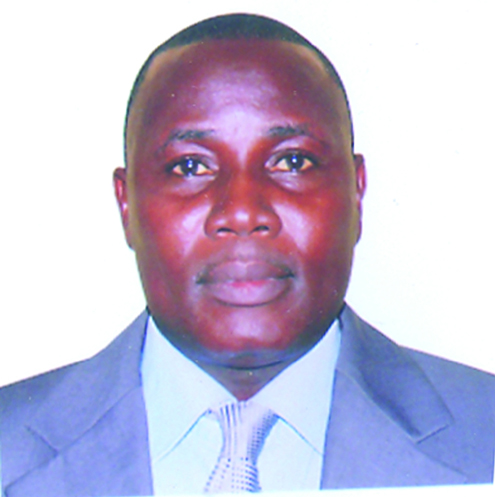
By Ademola Adegbamigbe
Each time I look at the photographs of Serena Williams, an African-American and the world’s Number One tennis star, what flashes in my mind is not her physiological make-up or success on the lawn. Given her toothpaste smile and high cheek bones, I imagine her as a possible pepper seller at Sandgrouse market in Lagos or a muscular woman, smuggling rice into Nigeria through Idi Iroko or Seme border for sale at Daleko.
One day, I was reading James Baldwin’s Tell Me How Long The Train’s Been Gone. What struck me were not the experiences of the protagonist, Leo Proudhammer, but the image of Baldwin himself. He had bulging eyes that remind one of a jovial toad’s, and a big, negroid nose that could make anyone mistake him for a good village wrestler in Umuahia, a rice planter in Igbemo-Ekiti or a trader at Ariaria market in Aba.
I was so carried away by Baldwin’s face that I showed him to my late uncle, Prince Ezekiel Alabi, saying: “Sir, you and this man resemble each other.”
The old man laughed, asking, “Who the hell is the fellow?”
“A writer.”
So much for Baldwin and Williams. What makes the difference about what they achieved and what they could have been is the environment in which they grew. If their ancestors had not been shipped from Africa across the dizzying expanse of the Atlantic as slaves, perhaps they would still remain in Sandgrouse, Igbemo, Umuahia or Ariaria.
So, to come down to Nigeria, the children of the rich and those who are waved off as the flotsam and jetsam of the society all have one head, one nose, two eyes. What is more, it is blood, not engine oil or diesel, flowing in their veins.
What I am driving at is the concept of equality in the world, or to bring it nearer home, Nigeria. Why are some people poor and others rich? Why are others educated and many remain illiterate all their lives? Why should certain kids study in Ivy League schools abroad while others are used as cannon fodder by religious incendiarists?
A friend of mine who recently visited Nigeria from Canada narrated the gravity of poverty at the grassroots. That was when he was growing up in Nigeria. For the first time, I heard the story of people who could not afford to buy meat but would actually borrow. It went this way. A poor woman would ask a rich co-tenant to lend her two or three pieces of meat. After cooking for a while, the poor woman, having benefitted from the flavour, would return the pieces of meat to the true owner. The poor woman actually did not need the pieces of meat in their physical form; just the taste in her own soup. That is one colour of poverty.
Equality has been a subject of great debate among sociologists, psychologists and, most important, philosophers from time immemorial. While many believe that all men are born equal and, therefore, should have the same level of comfort, there are scholars who submit that equality should not be perceived as an absolute.
Rather, they believe that since citizens have different levels of intellect, everyone can never be equal. In other words, a boy who glides through school in flying colours and later makes a success of his life should not be put on the same scale with another pupil who, at school, was just bones from shoulders up. That is why Theodore Roosevelt’s statement on equality is apt here: “I acknowledge no man as my superior, except for his own worth, or as my inferior, except for his own demerit.”
The middle path that scholars down the ages have trodden, therefore, is that while it is not possible for all human beings to be equal (since they have different levels of aptitude), they must be given the same opportunities to actualise the potential deposited in them by providence. Here is the crux of the matter. It is only a legitimate government that, according to the political philosopher, Immanuel Kant, can provide this level playing field or equal opportunity. Kant postulated: “It is only a legitimate government that guarantees our natural right to freedom and from this freedom we derive other rights [equality or equal opportunity included].”
One of the major ways of providing this level playing field is education, which government at all levels in this country is toying with. Come to think of it. Were it not for education, President Goodluck Jonathan himself could have become a shoeless palm wine tapper in Otuoke, Bayelsa State. Were it not for education, the Education Minister, Professor Rukayyat Rufai, may not have gone beyond frying kulikuli or selling fura de nunu in a kiosk somewhere in Goron Dutse.
All those in high places in politics, business, law and others today, enjoyed their school days. Scholarships were there for them. At the university cafeteria, our present big men ate subsidised food – laps of chicken, eggs, ice cream… That was before General Olusegun Obasanjo – who himself enjoyed his secondary school days and layers of army training without gnashing his teeth – withdrew the facility.
Now, there is trouble in the land. For God’s sake, our rulers should:
One: Do something about the demands of the Academic Staff Union of Universities, ASUU.
Two: State governments should have a rethink on the way they have “priced” university education beyond the reach of the poor. The logic of availability of scholarship or bursary for the poor does not hold water, since it is not automatic. Worse still, that quality education does not come cheap is wonky logic. The quality education that our rulers received in their time was cheap, very cheap.
Three. Teachers in public primary and secondary schools should be well motivated through increased wages by government at all levels.
After doing these, equal opportunity would have been provided for all.
So whoever ends up at the top of the ladder would have enjoyed sound education. And anyone who, in later life, finds himself at the rear would have satisfied himself that he could not have done better, and that his under-achievement was not for lack of opportunity. These and more, to me, are how to achieve equality.
•08055002056
Comments