


Syria’s chemical warfare could draw US intervention

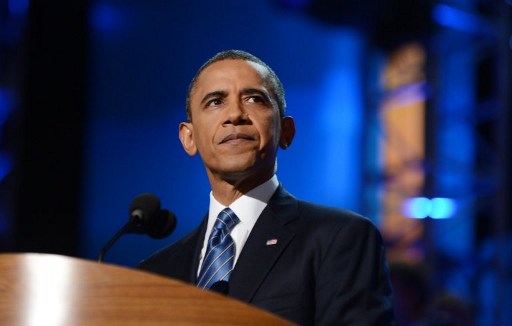
WASHINGTON (AFP) – Signs are growing that the horror of chemical warfare could for the first time draw the United States into a direct military intervention in Syria’s vicious civil war.
The US military and diplomatic machine is slowly stirring, after pictures of children apparently choked on poisonous gas shocked the world last week.
President Barack Obama is facing another test of a legacy doctrine rooted in avoiding Middle Eastern quagmires.
Syria touches a perennial question of whether humanitarian impulses or narrow national interest should define US foreign policy. The crisis is intensifying as Obama is wrestling with how to respond to a coup in Egypt.
The president held a rare Saturday meeting with top aides including Vice President Joe Biden, his secretaries of defense and state, intelligence chiefs and senior brass to discuss the US response.
Then he called British Prime Minister David Cameron — hinting at an effort to frame an international coalition for action.
It is unclear whether Obama is leaning towards a military strike if the use of chemical arms by Assad’s troops, which would infringe a “red line” he established last year, is proven
It is possible that US diplomatic and military activity in recent days could be simply designed to build pressure on Syrian President Bashar al-Assad, who has resisted all US demands to quit power.
But the administration appears to be taking steps that would be expected to precede a decision to target Syrian units eventually implicated in the attack outside Damascus.
The Pentagon is positioning forces, including ships equipped with cruise missiles, closer to Syria while Obama aides examine the Kosovo conflict for legal precedents for action without a UN mandate, which Russia would surely block.
Secretary of State John Kerry has also been burning up phone lines, talking to US allies in Europe and the Middle East.
Julian Zelizer, a Princeton University foreign policy historian, believes Obama is yet to sign off on military force.
But he said the administration clearly “feels pressure to do something, or to look like it is preparing to respond, for political reasons, (and to show Syria) that there are boundaries to what is permissible.”
Obama aides caution that no decisions have been finalized, and want definitive proof that Syrian forces strafed a rebel-held Damascus suburb with chemical arms and killed 1,300 people.
On Saturday, the Syrian Observatory for Human Rights gave a breakdown of 322 people killed, including 54 children, in an alleged toxic gas attack earlier this week in a Damascus suburb,
It gave a count of “322 dead, including 54 children, 82 women and dozens of rebels, as well as 16 unidentified bodies.”
Hours earlier, medical charity Doctors Without Borders (MSF) said 355 people had died after around 3,600 patients displaying “neurotoxic symptoms” flooded into three Syrian hospitals on Wednesday, the day of the alleged attacks.
The victims all arrived within less than three hours of each other, and MSF director of operations Bart Janssens said the pattern of events and the reported symptoms “strongly indicate mass exposure to a neurotoxic agent”.
“Medical staff working in these facilities provided detailed information to MSF doctors regarding large numbers of patients arriving with symptoms including convulsions, excess saliva, pinpoint pupils, blurred vision and respiratory distress,” he said.
Syrian opposition groups have accused President Bashar al-Assad’s forces of launching massive chemical attacks near Damascus on August 21 and killing as many as 1,300 people.
The Syrian government has strongly denied those allegations, but has yet to accede to demands that UN inspectors already in the country be allowed to visit the sites.
There has been no independent verification of the number of dead, and the medical humanitarian organisation was the first independent source to report such a high toll.
Comments