


Soyinka leads tributes for Mandela

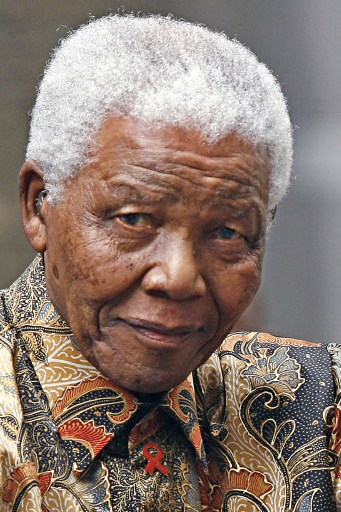
FOLARIN ADEMOSU
South Africa’s legend, Nelson Mandela, will be interred Sunday at a private ceremony in Qunu, his village where his life journey started 95 years ago.
But it seems the world will never get tired of reliving his legacy.
In Nigeria, Nobel Laureate, Professor Wole Soyinka, led tributes for the former South African President, yesterday, at the Freedom Park, Lagos Island.
Soyinka, in a poem, titled “No, I Say,” spoke on Mandela’s refusal to negotiate his own freedom without his comrades-in-arm serving in Apartheid prisons.
He narrated how some African Heads of States had met Mandela at Nkomati, a mining area south east of South Africa, to press him into accepting conditions for his release.
Soyinka said Mandela rejected, stating until his comrades-in-arm jailed in Apartheid prisons were released.
Other dignitaries at the session included Governors Rotimi Amaechi and Rauf Aregbesola, Consulate General of the South African Republic, Lulu Louis Mnguni, French Ambassador, Francios Sastourne and Deputy Consulate-General of the Italian embassy.

Others were Professor J.P Clark, Director-General, Centre for Black Arts and African Civilisation, CBAAC, Professor Tunde Babawale; President Campaign for Democracy, CD, Dr. Joe Odumakin; Professor Kole Omotosho, Professor Ogaga Ifowodo, Odia Ofeimun, Executive Director, TheNews, Kunle Ajibade and Barrister Femi Falana, among others.
Governor Amaechi, who read from his mobile telephone Mandela’s thought on Nigeria, urged a definite action against corrupt leaders.
“You heard about $50 billion (money said to be missing from the Excess Crude Account),but nobody is talking. In some country people will be on street. If you don’t take ur destiny in your hands, we, leaders, will continue to steal. It is because you have stoned nobody that we are stealing,” the governor said.
Ofeimun, who did not betray his dismay at Governor Amaechi’s statement said he had always been restrained by Professor Soyinka from joining issues with the governor.
“Governor Amaechi has just told us he would not join us on the street because we have failed to do what we should do.Let us not deceive ourselves, all the 36 governors are participants in the problem they speak about,”
Reading from a dance drama, titled ” A feast of return,” Ofeimum admonished Nigerians to take action and take Nigeria back.
Governor Aregbesola said Mandela “was not only the symbol of the struggle, he defined the trajectory of his country’s cause.”
Speaking on Mandela’s forgiving spirit, Aregbesola said it was “unsurpassable grace that he (Mandela) brought no baggage or malice from prison, but still forgave his jailers”.
Professor Babawale recalled how the Madiba visited the CBAAC after his release in 1994 to collect a certificate of freedom from the City of Glasgow held in trust for him. He said people are happy because Mandela left solid footprints on the sands of time.
“When you live with a mission, a vision, a purpose, the end will always be sweet. He broke the jinx of tenacity of office and left power when the ovation was loudest.Mandela was able to lift south africa into global reckoning cos of forgiveness and reconciliation,” the professor of Political Science said.
Barrister Falana said, Mandela as a lawyer was with a difference. “Law, for him, was not for money but liberation of the people,” he said. Falana spoke of how Mandela, rejected by white-owned law firms, partnered with his friend, Oliver Thambo, to render freelegal services to the oppressed black South Africans.
Odumakin said Mandela’s meant “Africa and the global community has lost the rarest example of courage and a valued elder to all humanity.” She stated Mandela would remain a reference in consistency and doggedness, while enjoining Nigerian leaders to emulate him.
Ifowodo, a lecturer at the Texas State University, United States, read a sequence of 27 sonnets, titled “Mandela’s Mantle” written by him in 1990, symbolising each year the anti-apartheid hero spent in prison.
Ajibade, who read an excerpt from the deceased’s biography, titled “Mandela’s Way” and written by Richard Stengel, said he (Mandela) was a leader who was “never afraid to say he was scared.”
In the book, Ajibade said, Mandela sometime travelled on a tiny plane that lost one of its engines mid-air. While his lone bodyguard, named Mike panic, Mandela busied himself reading the newspapers and, it was only when the plane had landed that he confessed he had been scared.
Ajegunle, Lagos-based activist, A.J Dagatola, rendered a poem, titled, “This country, undying on death.” Dagatola bemoaned lack of good leadership in Nigeria, which he said is still feasted by maggots.
“Nigerian leaders are implementing a doctrine of the falsification of realities, while the country has become a great monster before our eyes,” Dagatola said.
Consulate General of South African expressed appreciation to the organisers for holding the tributes session.
“We have lost a giant and we are going to miss him visiting the sick, old peoples homes, orphanges and home of abandoned children. We are going to miss that voice that preaches reconciliation, respect for fellow men and peace,” he said.
He said the three musketeers of the anti-apartheid struggle -Mandela, Oliver Thambo and Walter Sisulu, symbolically died ten years apart from eachother.
“Oliver Thambo left us in 1993, Walter Sisulu, in 2003, Mandela in 2013. This is very remarkable because they are the three muskateers of apartheid struggle and started the ANC Youth Wing in the 1940s,” he said.
Femi Kuti and the Positive Force band entertained the guests, while there were also performances from Lagos City Corale, Crown troupes of Africa, Aduke Aladekomo Footprints of David and Balck Image theatre.
Tunji Sotimirin mimicked Mandela.
Mandela will be buried at a private ceremony in his village of Qunu, in South Africa Sunday
Comments