


Confab in stormy session over rules of procedure

Ayorinde Oluokun/Abuja
After hours of stormy session devoted to considerations and arguments over rule of procedure that will guide the exercise, delegates at the ongoing national conference adjourned on Monday to continue discussion on Tuesday.
Delegates had resumed on Monday with robust debates on the Rules of Procedure; a framework meant to regulate the activities of the Conference and the conduct of delegates during both the plenary and committee sessions.
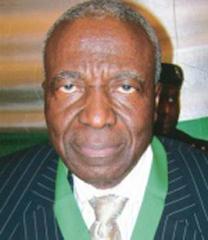
Monday session which was presided over by Conference Chairman, Honourable Justice Idris Legbo Kutigi opened with a prayer and adoption of Votes of Proceedings.
Based on motions moved and supported by members, Conference agreed that the Rules of Procedure should be considered clause by clause. The motion was moved by Mohammed Kabiru Jibrin from the Northwest Zone.
Seidu Dansadau, a former senator suggested that anytime a motion was moved and seconded, the chairman should thereafter put the question for immediate decision in order to facilitate proceedings since members were prone to speaking on one issue for a long time and possibly repeating what previous speakers had said.
He also advised that once an issue has been debated, decided upon and adopted, it must not be revisited. His position was supported by former Governor of Akwa Ibom State, Obong Victor Attah.
Dr. Osahon Enabulele, president of the Nigerian Medical Association suggested that a time-frame be attached to the provision authorising President Goodluck Jonathan to appoint a replacement for any of the officials of the Conference who might resign from office.
His position was countered by Monsignor Obiora Ike from Enugu State who said the Rules of Procedure was purely meant for the Conference and was not binding on the President and that it was beyond the powers of the Conference to compel the President to do anything under its rules.
With his argument and that of others who made contributions, the issue was dropped, leaving the President to make any such appointment at his discretion.
Ledum Mitee from Rivers State, and Supo Sasore, SAN, from Lagos State, were of the view that a section of the draft rules that compels delegates to obtain authorization from the Conference Secretariat before staying away from any meeting or travelling out of the country was not necessary.
Mitee argued that delegates should only be made to merely inform or notify the Secretariat instead of being portrayed as having committed any offence by being absent.
Sasore said delegates should be assumed to be responsible enough to appreciate the need to attend all the sessions; adding that there was no need to seek and receive authorization to be absent from any session of the Conference.
Based on a motion moved by former senator, Daisy Danjuma, the word “offence” was removed from the section dealing with absence from meeting and replaced with “it shall be a breach of these rules….”
Another issue that attracted long debate was that of quorum. While some people suggested one third of members, others said 50 per cent of members must be present at either plenary or committee meetings before a quorum could be said to have been formed.
At the end, when the question was put, it was the position of the majority that one third of members of the Conference or committees would form a quorum during each session.
A civil society leader, Dr. Abiola Akiyode, questioned in a motion, the use of “he” to refer to both men and women. A heated debate then followed.
Josephine Anene, who described herself as “an elder stateswoman” insisted that the matter be resolved amicably so that female delegates could have a sense of belonging.
She moved the hall to laughter with a suggestion that the use of “he” should be replaced by “it” to refer to both sexes or at the very best, the word “she” and not “he” should be used to represent both male and female delegates.
Dansadau drew the attention of the Conference to the use of “he” both in the 1999 Constitution, Votes and Proceedings of the National Assembly, and Judicial pronouncements; and cautioned that there were sufficient conventions to be followed on the issue.
When the question was put for a decision, it was ruled that whenever the word “he” is used in the Rules of Procedure, it must be followed by “or she.”
Strong objections and counter objections were equally raised with regard to the time of sitting; from 10 am to 2 pm before lunch break and from 4 pm to 6pm.
Former Governor of Ogun State, Segun Osoba in a motion, gave reasons for the need to adjust time of sitting on each day. He cited principally, the need to give room for lobbying by delegates.
His position was that time for lunch break be reduced to one hour while sitting on each day should end by 5 pm.
He was not however rigid about the space of time.
Victor Attah, who supported the motion, said the “afternoon sessions would be completely empty,” and suggested that “straight sitting from 10 am to 4 pm be adopted by the Conference.”
Former Governor of Anambra State, Chukwuemeka Ezeife, spoke in favour of the motion, “we should not be rigid on this. I think after lunch, it is bye-bye. We should consider 9 am to 4 pm, go home, rest and begin the evening hours.”
Both Senator Mohammed Aliero and Dr. Iyorcha Ayu however disagreed with the suggestion.
Ayu said one hour was not enough for lunch and that the time stated in the draft rules of procedure should be adopted.
He was supported by former President of the Senate, Adolphus Wabara, who said the time stated in the draft rules of procedure was in order adding humorously that “if you want to eat pounded yam and amala and fall asleep, goodluck to you.”
The most prolonged debate of the day was drawn from a motion moved by Mike Ozekhome, SAN; it was on the determination of questions proposed during the Conference especially on controversial issues.
He said while the draft rule of procedure stipulated that in the absence of a consensus, 75 per cent of delegates must vote for such an issue to sail through, he moved that Conference should adopt the two-third majority vote practicable both in Parliaments and other groups.
Ozekhome was supported by other speakers like Gani Adams, Bisi Adegbuyi among others.
Auwaalu Yadudu from the Northeast disagreed.
He said the President’s address was explicit on the unity of the country; and that for decisions to be adopted and implemented, it must attract sufficient support of delegates across the country and that delegates must not accept the assumption that consensus on critical issues would be impossible.
An elder statesman, Ayo, Adebanjo from Ogun State said emphatically, “we have been in this struggle for too long, we are going to work for a consensus. This country must remain one. The things causing contention, we must iron them out. What we want now is solution to the future.”
When the Conference resumed after lunch break, the chairman ruled that further debate on the issue be taken over to the next sitting when members would have had sufficient time to reflect on all sides of the arguments.
On appointment of committees, it was agreed after a heated debate that each member should indicate which committees he would want to serve while election of committees’ leaderships would be decided by the committees themselves.
Another aspect of the Rules of Procedure not decided upon on Monday, dealt with whether individual delegates should speak or each group should be represented by a spokes person.
The session was adjourned at 6.10 pm for Tuesday.
Comments