


Cervical Cancer Kills 26 Women In Nigeria Daily — WHO

Oluremilekun Osobu-Asubiojo
At least 26 women die of cervical cancer daily in Nigeria, a new World Health Organisation, WHO study has revealed.
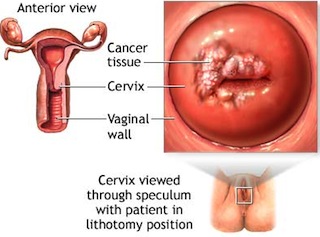
Cervical cancer, regarded as the most common female cancer in developing countries with approximately 500,000 new cases and 250,000 deaths occurring each year, if not detected early, could be fatal according to further findings by the WHO.
As a way of tackling the menace, Professor Ifeoma Okoye, a Radiologist at the College of Medicine Nsukka, Enugu, explained that vaccination of young girls at a tender age could reduce the chances of one getting the infection before it grows into full-blown cancer.
Speaking during a programme titled, “School-Based Cervical Cancer Vaccination Awareness Initiative” at the University of Lagos, Akoka, Prof. Okoye who doubles as the founder of ‘Breast Without Spot Initiative’, BWS, noted that “risk factors that increase the chances of HPV infection to full cancer include multiple sexual partners, a partner who has other sexual partners, early age at first sex, early child birth earlier than 18, sexually transmitted infections like herpes, HIV/AIDS and herpes, smoking and the use of tobacco, low immune system, history of many births and poor personal and genital hygiene.”
She added that “there are two main stages of cervical cancer; the pre-cancer and full cancer stages. It takes between 10-20 years for a woman to move from infection with HPV to full cancer. There are no signs or symptoms at pre-cancer stage, that is why vaccination of young girls stand the chance of prevention of cervical cancer because cervical cancer is 99 per cent preventable and prevention is necessary for the reduction and control of cancer burden in the country.”
The National Coordinator of BWS, Funmilayo James, submitted that the school-based vaccination initiative was adopted to prevent cervical cancer in countries.
The initiative involved parents and school owners or administrators to consent and sponsor the vaccination of girls between the age of nine and 13 as a primary prevention.
“The programme will start off in Lagos schools and as time goes on, we will spread it across other states,” she said.
Comments