


The Unauthorised Biography: Oba Okunade Sijuwade in the eye of history

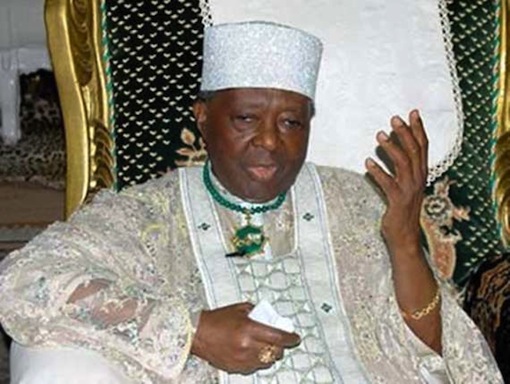
Prince Sijuwade’s business career was marked by more than average fortune. Endowed with an agile mind, highly motivated and possessed of an iron-will, courage and prodigious industry, the prince was certainly destined for success. And so he drove himself to limits that would seriously test all but the most dogged. Early in his career, he decided he could do with no more than four hours sleep and that distance would prevent him from accomplishing his goals. Even today, with the enormous demand on his time in several places, some of them several miles apart, he maintains a travelling schedule that even the most peripatetic would consider punitive.
Shortly after Prince Sijuwade returned to Nigeria, he was appointed the Sales Manager of Leventis Motors in Western Nigeria with its headquarters in Ibadan. By 1960, with Nigerian Independence, he became an adviser to the Leventis Group.
In 1963, the government of Western region Nigeria, now getting increasingly involved in a lot of industrial activities in the country approached the Leventis Group to release the Prince for five years to help in re-organisation of some of their companies. The request was reluctantly granted after month of hard negotiation by the then Chairman of the Leventis Group, Chief A. G. Leventis who considered the young Prince Sijuwade as an asset to their organization. The Leventis Group made the Western Nigeria Government promise to let the Prince return to his organization at the end of his assignment.
Prince Sijuwade’s first assignment with the government was as Sales Director of National Motor in Lagos. He subsequently headed the management of the company with numerous Nigerian and expatriate staff under him. In 1964, he undertook an extensive international tour to look into the possibilities of acquiring better products for National Motors. One of the places he visited was the Soviet Union whose cars he believed would sell well in Nigeria, because they were relatively cheap and appeared durable.
When he returned to Nigeria and reported to his employers, they were not as enthusiastic about the business proposal, because the government was not at this time well-disposed to trade with the Russians. Rather than feel disappointed Prince Sijuwade, smart businessman that he was, immediately saw a business opportunity and seized it. He formed a company along with three friends, WAATECO, which was to become in a few years the sole distributor of soviet-made vehicles, tractors and engineering equipment in Nigeria with at least fifty Russians on its staff and a dozen branches all over Nigeria.
This small beginning marked the start of trade with the Soviet Union in Nigeria and for Prince Sijuwade, the birth of a business empire that was to include at least fifty companies. Two years after WAATECO was set up, Prince Sijuwade offered the Soviet Union 40 per cent equity participation in the company. Of course, the Russians did not hesitate since the company was doing well. Business with the Russians was to grow many hundred folds in the next decade and a half.
It is a credit to his acumen in business that while trade with the Russians expanded, his business contacts in the capitalist West continued to grow and develop. He was being seasoned in the tough world of business. While setting up his own company, he continued his efforts to help re-organise the government-owned National Motors and by 1965 the company began showing a profit.
The political turmoil in the country following the coup of January 1966 and the counter-coup of July the same year brought his good friend (Rtd) Major General Robert Adebayo (then Colonel) to office as Governor of the Western Region.
Sensitive to the possibility of having a disagreement with his friend over a public issue, he decided that it was best to resign his appointment as an employee of the Government of Western Nigeria. He subsequently left the service of the government and went fully into business on his own. With this resolve, he now explored with fresh zeal his many contacts within Nigeria and on the international scene and revitalized business possibilities which time had not allowed him to exploit while working with the government.
Within ten years, his activities stretched far and wide, and to keep in touch with the various commercial capitals of the world, he moved the headquarters of his operations to the United Kingdom n 1973. With this, he was truly where he wanted to be in the business world. The world was, as it were, his oyster.
Prince Okunade Sijuwade and Ile-Ife relationship before 1980


Comments