


Nigerians have more friends abroad than Americans, Britons, Australians

A research conducted by the University of Cambridge’s Department of Psychology has revealed that Nigerians have more friends than Americans, Britons and even Australians mainly because of its low-social class.
According to the research, having millions in the bank may give you a life of luxury, but it can also leave you lonely.
The researchers found that the wealthy typically have fewer than half the international friends than lower class people, despite having more resources to travel the world.
The experts believe that having more money makes people less dependent on others and this causes them to be stay in their ‘social bubble’.
The team conducted two studies – one local and one global. The studies were designed to the test the ‘restricting social class’ hypothesis which states that wealthier people restrict which groups they interact with.
For the first ‘local’ study, the team recruited 857 people in the US and asked them to rank their perceived social status – from working to upper class – on a numerical scale.
This was combined with their annual household income and their Facebook friends list.
The results from this first study found that low-social class people have nearly 50 per cent more international friends than high-social class people.
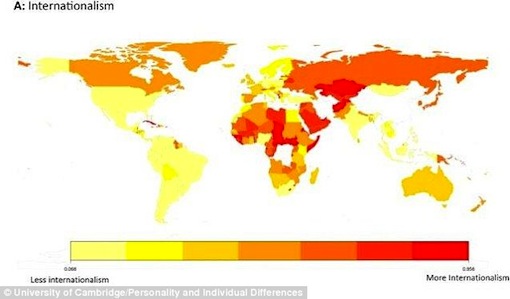
For the second ‘global’ study, the team worked with Facebook to study data on every friendship formed over the network globally as of 2011.
All the data was anonymous and it included more than 57 billion friendships.
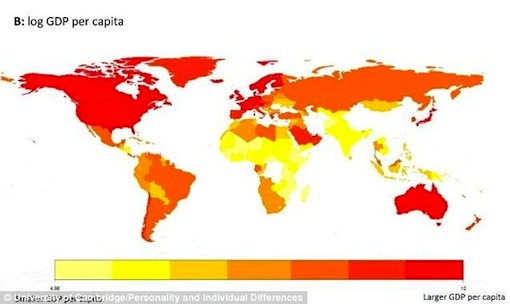
The research team determined social class on a national level based using each country’s gross domestic product (GDP) per capita for 2011 as published by the World Bank.
The researchers again found a negative correlation between social class and the percentage of Facebook friends from other countries.
For people from low-social class countries, such as Nigeria, 35 per cent of their friendships on average were international.
This was compared to a 28 per cent average in high-social class countries, such as the US, UK and Australia.
“The findings point to the possibility that the wealthy stay more in their own social bubble, but this is unlikely to be ultimately beneficial.
“If you are not engaging internationally then you will miss out on that international resource – that flow of new ideas and information,” said Dr Aleksandr Spectre, who heads up the lab.
Co-author Maurice Yearwood added that previous research has highlighted the value of developing weak ties to people in distant social circles, because they offer access to resources not likely to be found in a person’s immediate circle.
“I find it encouraging that low-social class people tend to have greater access to these resources on account of having more international friendships,” he said.
“The results could also be highlighting a mechanism of how the modern era might facilitate a closing of the inequality gap, as those from lower social classes take advantage of platforms like Facebook to increase their social capital beyond national borders,” he said.
The researchers also noted that although Facebook friendships can’t be directly compared to real-world friendships, a lot of the properties in the former will ‘strongly mirror’ the latter, making it good place to study such connections.
The results were published in the journal Personality and Individual Differences.
Comments