


CNN/Multichoice Awards: 20 years of journalism in Africa

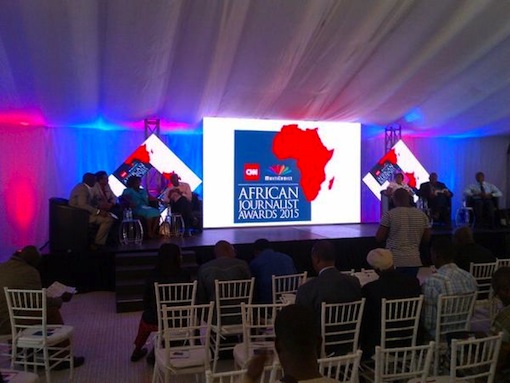
Seun Bisuga/Nairobi
Joana Mantey, a Ghanian journalist, who currently freelances was the first African journalist to scoop the African Journalist Awards in 1995.
When she won the award in her home country on 11 August, there were only six winners but she was named the overall winner. 20 years on, the face journalism has changed.
In her opinion, journalism has gone from manual to digital with many players from across the globe. An attestation to her submission is that in 2015, there were 1,429 entries from 39 countries vying for awards in 13 categories.
But that is not the talking point for her, the diminutive writer believes that journalism has not only forced government to review its policies in Africa but that journalists now enjoy the use of technology which makes it easier for her colleagues to do more investigative stories.
Mantey who was a panelist at the 20th edition of the CNN/Multichoice Awards holding in Nairobi, Kenya also opines that governments across Africa have been able to consider or even pass the Freedom of Information bill.
This according to her allows more journalists to have access to information as well as educate and inform the public across the continent.
Her view is not solitary. Declan Okpalaeke, the 1999 winner from Nigeria echoes her point of view. He reckons that though digital media has become a competition for the traditional media, thorough investigation is required in order to feed readers with the right information.
The question of media ownership, funding, training was also raised at the media forum anchored by John-Allan Namu, Special Projects Editor and investigative journalist with KTN and the 2009 winner of the prestigious CNN/Multichoice Awards.
Commenting on the matter, well-travelled journalist and writer, Richard Kavuma from Uganda stated that media outfits must put the readers first. He explained that sometimes advertisers try to “kill” negative stories about their brand but argued that media owners and editors should not give in to such pressure.
He further stated that the media is the connection between the public and the government or private sector, hence, their duty should be dispensed professionally.
Hopewell Rugoho-Chin’ono who scooped the award in 2008 urged journalists to think independently. He noted that technology cannot be separated from journalism and as such journalist should try to produce and edit videos and pictures by themselves. He then stated that passion not necessarily professional training was the bedrock for successful journalists, pointing that, some of the best journalists did not not really attend a school of journalism.
Wanja Njuguna, a well-travelled journalist and teacher, who was joint winner in 2000 also agreed with him but she placed emphasis on training in the right institute in journalism.
According to her, many rush into journalism without having the basics and this has produced half-baked journalists who are sometimes more interested in money than the job.
She reckons that many journalists have dumped journalism for the corporate world because it pays more than journalism does.
Comments