


FAO: Measures must be taken to address plight of farmers in north-east


 Quick Read
Mr Jose Da Silva, the Director-General, Food and Agriculture Organisation (FAO) says measures must be taken to address the hardship being faced by farmers in the North-East due to insurgency.
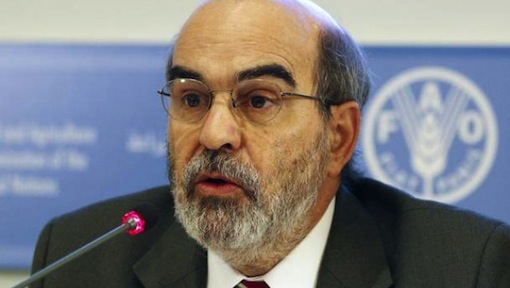
Mr Jose Da Silva, the Director-General, Food and Agriculture Organisation (FAO) says measures must be taken to address the hardship being faced by farmers in the North-East due to insurgency.
According to him, the cycle of destitution caused by crisis and insurgency must be broken.
Da Silva, who made this known in an interview with the News Agency of Nigeria (NAN) in Abuja on Thursday, said that the time to act was now as farmers needed seeds in addition to food.
“To this end, we must ensure vulnerable populations have an opportunity to reap a substantial harvest and replenish their food stocks this year.
“Failure to restore food production now will lead to the worsening of widespread and severe hunger and prolonged dependency on external assistance further into the future.
“We need to protect the assets and livelihood systems of farmers and pastoralists not only for today, but for tomorrow and the years to come which calls for longer-term resilience building.”
He said that agriculture should not be an afterthought, as more than 80 per cent of the people in those affected areas relied on farming, fishing and herding for their livelihoods.
“We need to raise awareness on how urgently we must strengthen our response to the challenges in those areas, especially the Lake Chad Basin crisis encompassing parts of Nigeria, Cameroon, Chad and Niger.
“These areas are currently one of the largest humanitarian crises in the world, with about 11 million people in need of assistance.
“Among them, 6.9 million people are severely food insecure, as well as 2.5 million displaced, which is second largest displacement crisis in the world,” he said.
READ: FAO to visit areas facing humanitarian crisis in Nigeria, Chad
He said the crisis, while catalysed by conflict, was multidimensional and encompassed the security, humanitarian, climate change and economic issues that local populations had long faced.
“The first priority is to support the affected countries in consolidating peace processes and at the same time, responding to the humanitarian emergency.
“In Nigeria’s Borno State alone, the number of people facing crisis is expected to rise and around northeast Nigeria, more than 5.2 million people will be in need of food assistance during the lean season.
“And damage to agriculture ranging from farmers’ access to their fields, vital infrastructure such as irrigation schemes, storage facilities and extension services have been extensive in the affected areas.’’
He said that immediate livelihood support would ensure that critical hunger needs were met in the short-term.
“But this is only the initial step to reverse the current trend toward the depletion of livelihoods and consequent human suffering in affected areas. “A holistic approach is needed to address both the current main drivers of hunger, which include limited food production, high food prices and displacements.
“This also includes the structural causes of vulnerability in the area, demographic growth and competition over scarce natural resources.”
He, however, cautioned that lack of access to basic social services like health, water, education and social protection would inevitably jeopardise the lives of millions in the region.
“This is because climate change in particular poses a menacing risk to an area exposed to droughts and floods.’’
Comments