


G7 says no sanctions on Russia over Syria

 Quick Read
The G7 group of nations has failed to reach agreement over threatening new sanctions against Russia and Syria.
The G7 group of nations has failed to reach agreement over threatening new sanctions against Russia and Syria.
Foreign ministers were seeking a common position on the Syrian conflict, before the US secretary of state flies to Russia to try to persuade it to abandon its Syrian ally.
The nations agreed there was no solution to the Syria crisis with President Assad in power.
But UK proposals to target sanctions at senior military leaders were sidelined.
The diplomacy in the Italian town of Lucca follows the latest apparent use of chemical weapons in Syria.
Syria has denied it carried out a chemical attack on the rebel-held town of Khan Sheikhoun last week that left 89 people dead.
In response, the US fired 59 cruise missiles at a Syrian airbase that it said was implicated in the attack.
Speaking after the end of the G7 meeting, US Secretary of State Rex Tillerson said the missile strike “was necessary as a matter of US national security interest”.
“We do not want the regime’s uncontrolled stockpile of chemical weapons to fall into the hands of Isis [so-called Islamic State] or other terrorist groups who could and want to attack the United States or our allies.
“Nor can we accept the normalisation of the use of chemical weapons by other actors or countries in Syria, or elsewhere.”
Mr Tillerson will head to Moscow for talks on Syria later on Tuesday, hoping to persuade the Russians that they have an unreliable ally in President Assad.
Italian foreign minister Angelino Alfano – hosting the G7 talks – said ministers wanted to engage with Russia to put pressure on President Assad, adding that “we must not push Russia into a corner”.
“We think the Russians have the leverage that is needed to put pressure on Assad and to get him to observe the commitments with regard to the ceasefire,” he added.
The fact that Rex Tillerson’s visit to Moscow is happening at all is telling.
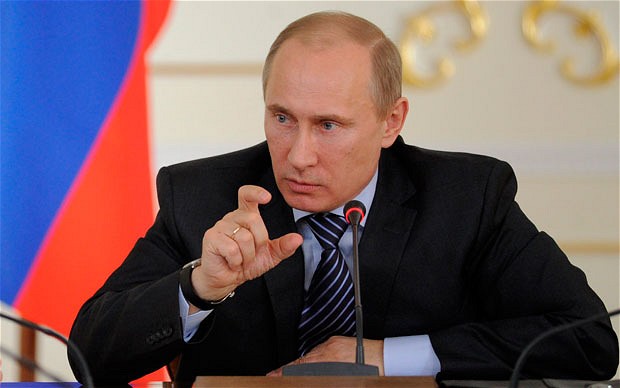
According to the BBC, Russia reacted angrily to last week’s US missile strike on Syria, condemning it as an “act of aggression”. Yet Moscow is happy to host the US secretary of state. He’ll meet his Russian counterpart Sergei Lavrov and a meeting with President Putin cannot be ruled out.
But experience shows that Moscow does not take well to threats or ultimatums.
If Mr Tillerson thinks he can weaken Moscow’s support for President Assad, he may need to re-think. The Syrian president is Russia’s key military ally in the Middle East. Russia has invested heavily – militarily, politically and financially – to keep him in power.
Reports on Monday quoted a senior US official as saying that the Russians knew of the chemical attack because a drone had been flying over a hospital in Khan Sheikhoun as victims sought help.
Hours later a jet bombed the hospital in what the US believed was an attempt to cover up the attack, the Associated Press agency said.
Meanwhile, US Defence Secretary James Mattis gave fresh details on the retaliatory strike against Syria’s Shayrat airbase.
He said the “measured response” by the US had “resulted in the damage or destruction of fuel and ammunition sites, air defence capabilities and 20% of Syria’s operational aircraft”.
The Syrian military admits significant material damage but a Russian defence ministry spokesman said only six Syrian Air Force MiG-23s, plus a number of buildings, were destroyed and that only 23 of the missiles had reached Shayrat.
Reports on Monday quoted a senior US official as saying that the Russians knew of the chemical attack because a drone had been flying over a hospital in Khan Sheikhoun as victims sought help.
Hours later a jet bombed the hospital in what the US believed was an attempt to cover up the attack, the Associated Press agency said.
Meanwhile, US Defence Secretary James Mattis gave fresh details on the retaliatory strike against Syria’s Shayrat airbase.
He said the “measured response” by the US had “resulted in the damage or destruction of fuel and ammunition sites, air defence capabilities and 20% of Syria’s operational aircraft”.
The Syrian military admits significant material damage but a Russian defence ministry spokesman said only six Syrian Air Force MiG-23s, plus a number of buildings, were destroyed and that only 23 of the missiles had reached Shayrat.
Comments