


UN expert urges public action to halt elders abuse

 Quick Read
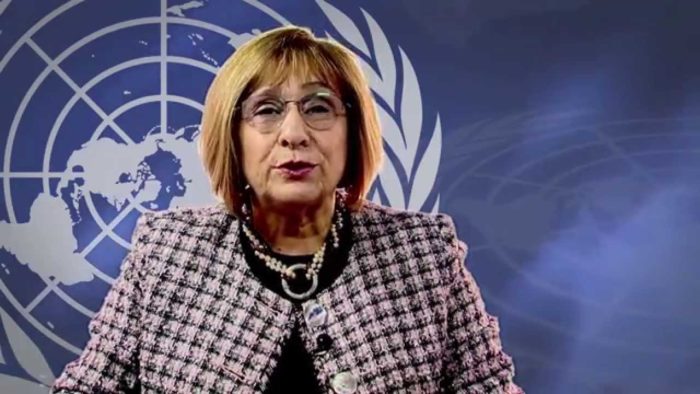
A UN Independent Expert, Ms Rosa Kornfeld-Matte, on Thursday called for public action to eliminate all forms of violence and abuse against older people
A UN Independent Expert, Ms Rosa Kornfeld-Matte, on Thursday called for public action to eliminate all forms of violence and abuse against older people
Kornfeld-Matte, UN Independent Expert on the Human Rights of Older Persons, made the call in her message for the World Elder Abuse Awareness Day observed every year on June 15.
She warned that many older persons were at risk of being abused by their own relatives, Ms Rosa Kornfeld-Matte.
The expert called for greater vigilance and more reporting of suspected cases.
“Elder abuse remains a taboo in many societies. It often happens inconspicuously and in many cases goes unnoticed.
“But we know that it occurs frequently and in all types of settings. No community or country in the world is immune.
“I condemn elder abuse wherever and whenever it happens, but I am particularly appalled that older persons are often at risk from members of their own family.
“We must not close our eyes to the fate of older persons, even though it is difficult to accept that our families are not always a safe haven.
“she said.urged everyone who suspects any form of elder abuse, including financial abuse, to report to their concerns,”
According to her, Elder abuse takes many different forms as some people suffer discrimination in the public sphere, linguistic discrimination, isolation, neglect and financial exploitation, she said.
Others face psychological violence, the withholding of basic needs, physical violence or sexual abuse, the UN rights expert added.
Kornfeld-Matte regretted that most abuse went undetected in spite of clear warning signs, pointing out unexplained bruises, lack of medical care, malnutrition or dehydration, unexplained changes of alertness, or sudden changes in finances and accounts.
“We cannot assume the victims will report what is happening to them.
“In spite of facing abuse such as being physically restrained, left in soiled clothes, over-medicated or emotionally neglected, they may not speak up for fear of reprisals – or to protect family members from criminal prosecution.
“In some cases, the victims may not be fully aware that what is happening to them constitutes abuse, or they may lack the means to report it, for example if they have no access to a phone or a trusted adult.
“They may even be physically or mentally incapable of communicating.
“This all adds to the weight of our collective responsibility to act and to speak up for older persons when they are unable or unwilling to speak for themselves.
“All of us can and must be prepared to be advocates for older people if this abuse is ever to be halted.”
“We also need to be aware that collective prejudice against older persons and public awareness influences the way in which abuse and violence is perceived, recognised and reported.
“It is, therefore, essential to continue to raise awareness to help prevent some abuse cases and to ensure that those that take place are immediately reported,” she said.
She regretted that there was no available data on the scale of the problem, as so many cases were currently not reported adding even if they are, crime statistics are not broken down into different age groups.
The elders’ rights expert also stressed the need to be aware that intervention strategies which might be suitable for addressing the issue of domestic abuse were not suitable for managing violent relationships involving older persons.
“Elder abuse is a specific, distinct and deeply disturbing form of abuse. We must all play our part in tackling it and restoring full human rights and human dignity to all those affected, or who face being at risk in the future,” Kornfeld-Matte said.
Comments