


Secession threats demonstration of elites’ struggle for power – Prof. Mato

 Quick Read
Kaduna State Commissioner of Agriculture and Forestry, Prof. Kabir Mato has described agitations for self-determination in the country as a demonstration of Nigerian elites’ “cut-throat competition for state resources and political power’’.
Kaduna State Commissioner of Agriculture and Forestry, Prof. Kabir Mato has described agitations for self-determination in the country as a demonstration of Nigerian elites’ “cut-throat competition for state resources and political power”.
Mato made this known in an interview with the News Agency of Nigeria (NAN) in Kaduna.
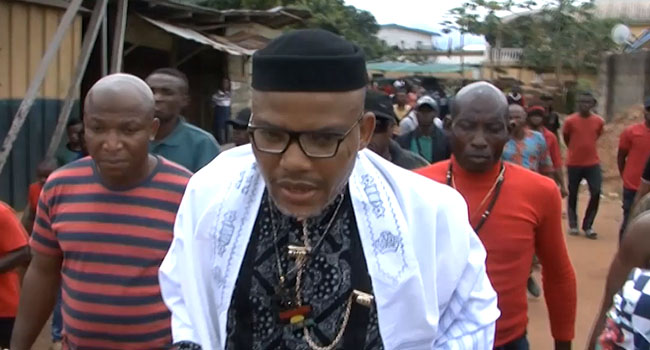
He was speaking against the background of the agitation for secession by the Indigenous People of Biafra (IPOB) and the sudden eruption of hate speech that pervaded the country.
“Agitations on the part of Nigerians are not particular to any specific category.
“It’s in my view an elite manifestation of outcry. If they feel they are not part of the sharing of the scarce resources or they are disadvantaged in the management of the resources of the state, the next thing the elite class of any particular geographical expression does is to come out and threaten that they are going to secede.
“So, I see it more or less an application or a manifestation of the feelings of elites in their cut-throat competition for access to state resources and political power.
“What is called the common man has become the last victim.
“Agitations in Nigerian federalism over time are simply expressed as a feeling of marginalisation, a feeling of being left alone by the political, social, and economic elites of the various sections that make up Nigeria.
“We are not talking about what keeps us together as the bottom of the society; we are not talking about education; not poverty; health services.
“We are not talking about basic infrastructure; we are talking about the sharing of the little scarce resources at the centre and at the state level.
“So these frontline that is being drawn on a daily basis, in my view, is strictly and fundamentally an affair of the elites of the various segments and fragments that make up the Nigerian federation.’’
According to the don, the best way to go about addressing the needs of Nigerians is for the elite class tore-assess itself and re-define the role that it should play within the framework of local and national development.
“The moment we begin to understand that what the common man in Nigeria requires and desires is simply to live an optimum good life, then the idea of all these minor differences and cleavages that we try to entrench in the minds of fellow citizens will begin to fade away.’’
He, therefore, urged the elites to wake up to their responsibility of meeting the educational, social, economic, and infrastructural needs of the country.
“I think one of the reasons we keep our people under perpetual ignorance by refusing to invest in education is to keep the level of awareness at very low ebb.
“Because when people become aware of what the reality is, they will begin to ask fundamental questions.
Mato, who is also a professor of political science, urged Nigerians to hold their leaders accountable and answerable to issues relating to their overall well-being.
“I think when we go that way it will tremendously help bridge the gap between the rich and poor and increase awareness at the lower level of the society.
“On the other hand, it will help the elites understand that their personal wishes and aspirations are not necessarily the aspirations and benefits the common man is supposed to enjoy in Nigeria.’’
Speaking on the bonds binding the Nigerian people, Mato said: “there is no federation on the surface of the earth that came into being as a result of similarity or homogeneity.
“Federations normally are a contraption to address heterogeneous issues meaning that associations of different nations and nationalities, who desire to form a common front, surrender some aspects of their communal or national sovereignty and independence in order to be able to pool resources together to build a larger nation.
“In the case of Nigeria the amalgamation of the Northern and Southern protectorates into a nation that is called the Federal Republic of Nigeria by the British colonial administration, in my view, is just one way that any other system of government would come into being.
“One of the thoughts of the colonial masters probably was that the larger the number of people you have cohabiting a massive land the better.
“And of course we know that in terms of both national and international significance, population and land mass are two important features that indicate the capacity of a people and their nation. And I think so.
“This basically, more than any other reason account for being referred to as one big nation.’’
Comments