


FEATURE: Nigerian youths recount strategy for coping with unemployment

 Quick Read
"I was told to stop coming to work straight away without any notice. In fact I felt so bad because the manner in which I was told to leave the job was really not polite.” This was the experience of a young Nigerian who recently lost his job.
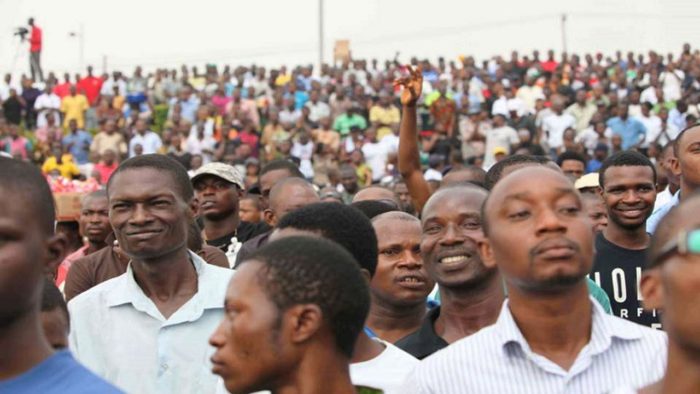
Photo: Guardian Nigeria
By Fatimatu Binta Muktar
“I was told to stop coming to work straight away without any notice. In fact I felt so bad because the manner in which I was told to leave the job was really not polite.” This was the experience of a young Nigerian who recently lost his job.
His coping strategy was to think entrepreneurship. “The idea of entrepreneurship might be enticing and that is how I am dealing with it for now,” he said.
He knows that the Jobs are not out there, especially when the National Bureau of Statistics (NBS) has reported that 4 million Nigerians have loss their jobs in 2017 alone.
Asmau Yazid is a graduate of Mass Communication from the Ahmadu Bello University Zaria. To her, her current unemployment status is an excellent time to develop new skills.
“I’m using this opportunity to start up a little business at home such as confectioneries and small chops. But on the other hand, I lost the feeling of control of my life as there is no regular income. I lost that status that comes with having a job. Sometimes, I become unhappy. With a job, I believe you feel happier and more confident,” she said.
Nimah Obasa, a graduate of Economics at the Imo State University made a number of efforts to get a job but couldn’t. He decided to do something unusual – become an apprentice of electrical installation.
“It is really demanding and I am not being paid from the apprenticeship. I am under undue financial pressure. Though I sometimes get hired, but the pay is relatively low and inconsistent. But I believe with hard work and patience, I’ll grow,” he said.
Rofia Daromosu, a graduate of Food and Nutrition has traversed many companies, submitting Curriculum Vitae and application letters.
“If I had capital, I would have started a business. But I don’t have capital. Being a graduate and unemployed is not an easy task. It’s difficult to ask for money from your parents because you know you are meant to give them not them giving you.
“With the fuel scarcity, it isn’t easy going out because everything is expensive and the cab drivers charge exorbitant prices though they aren’t to blame. I am only trying to make ends meet by doing little jobs available here and there. For example, I joined in the yellow fever immunization campaign; also, I participated in the National Directorate of Employment two weeks training,” she said.
Another graduate who pleaded anonymity said he is under emotional pressure for failing to get a job. He said that he however intends to learn electrical installations or carpentry to survive the pressure.
One graduate of Zoology said that he prefers not to worry so much about getting a job in order to protect himself from nervous breakdown.
Furqaan Abdulfattah, a graduate of Metallurgical Engineering said the feeling of not being responsible and the lack of finance to begin a business are some of the pressure that haunts an unemployed.
For Oluwaseun Abatim, the period of unemployment has afforded him time to self-discover himself. “I’m embracing my talent. I’m a percussionist. I just need someone or an organisation to help my career. I believe I’m okay till more fortune smile on me,” he said.
Ruqayat a Law graduate explained how she deals with the pressure of unemployment. “I try not to stay idle and I develop myself in my chosen career path,” she said.
In a phone interview with sociologist Ebongabasi Ekpe-Juda, he said lingering unemployment could lead to criminality.
“A man has not eaten. He’s gone to university, spend years, graduated, his intellect is sharpened and finds no job. He has no money to start up anything. He will have to survive and in most cases the only way to survive is to go to crime,” he said.
He said the government has been indolent in dealing with unemployment.
“We have so much land in this country that the government could have employed these people and put them in farms, pay them well, give them good living conditions,” he said
He said the unemployment situation has worsened to the point of people accepting whatever jobs that come their way.
” I spoke to a girl recently who told me that she went for an interview and they were going to offer her N15,000 monthly to work from 7am to 10pm, Sunday inclusive. When would she have time to work for herself?” He queried.
Economist and Public Affairs Analyst, Dr Austin Nweze said the government should create an enabling environment for businesses to thrive.
“It is not surprising that in 2017 alone 4 million people lost their jobs. The environment is not conducive for business. So, those that are surviving are doing cost saving measures and one way is to reduce staff,” Nweze stressed.
Nweze said the way out is for all the components of government to be working.
“No state economy is working. They all depend on federal government handouts. And that’s why when they want to grow their IGR (Internal Generated Revenue), they send touts to demand for bicycle, stereo, TV licence and all manner of crude way of generating money,” Nweze said.
He said the good news is that a study done by Small, Medium Enterprise Development Agency (SMEDA) in Abuja few years ago shows that 70 to 74 local government areas in Nigeria have at least two natural endowment that quality industries can be built on and bolster the IGR of the states.
“But because of the oil money they are receiving from the federal government, no state is being creative. That’s why you have most of the states not being viable,” Nweze noted.
Comments