


WASH Ambassador calls for creation of gender desks in MDAs

 Quick Read
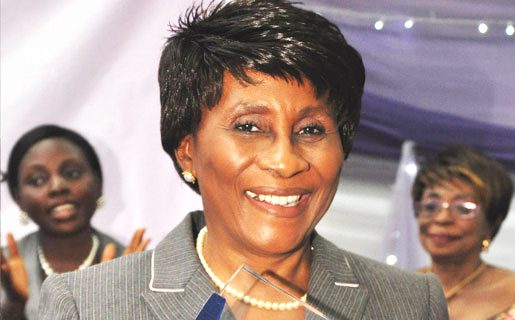
Ms. Ebele Okeke, Nigeria’s Water Sanitation and Hygiene (WASH) Ambassador, has called for the creation of gender desks in all Ministries, Departments and Agencies (MDAs) to promote women’s rights.
Ms. Ebele Okeke, Nigeria’s Water Sanitation and Hygiene (WASH) Ambassador, has called for the creation of gender desks in all Ministries, Departments and Agencies (MDAs) to promote women’s rights.
She made the call on Friday in Abuja.
Okeke said that the promotion of women’s rights, which included proper menstrual hygiene management, would go a long way to enhance the well-being of women.
She noted that some challenges facing women such as the lack of clean toilets and potable water were quite challenging.
She said that when operational, the gender desks would be strategic in efforts to incorporate topical gender issues in all government policies and programmes to stimulate the overall development of womenfolk.
Okeke moaned that the dearth of toilets in public places and potable water to manage menstrual cycles hygienically had led to low productivity, adding that the deficiency was one of the major factors fuelling women’s absenteeism in the workplace.
“We have received reports that a large number of public offices and places lack good toilets and potable water; these issues will definitely engender low productivity, we must do all we can to reverse this trend,’’ she said.
She said it was saddening to note that most of the offices had no separate toilets for male and female workers.
The WASH ambassador also underscored the need to jettison certain religious beliefs, myths and taboos about menstruation, saying that menstruation was a biological phenomenon which all women must undergo.
Okeke noted that the Water Supply and Sanitation Collaborative Council (WSSCC) was collaborating with the Federal Ministry of Women Affairs and Social Development to institutionalize the creation of a Menstrual Hygiene Management (MHM) Desk.
She stressed that the collaboration was a good step in efforts to boost worker productivity in the workplace.
Besides, Okeke underscored the need for the education of adolescent girls across the country in MHM, saying that menstruation connoted the imminent maturity of the girls.
She called on the three tiers of government to mobilize resources to facilitate infrastructural improvements in all public places so as to provide safe and private spaces that would enable women and girls to manage their menstrual periods hygienically.
Citing a 2016 Joint Monitoring Progress report, Okeke said that globally, Nigeria had the second largest number of people practicing open defecation because of poor access to water and sanitation facilities in public places.
She urged the government to prioritize the citizens’ access to potable water and sanitation, saying that the policy should be backed with the requisite funds.
She appealed to the government to increase its support for the WASH sector, saying that this would boost citizens’ access to good water, sanitation and hygiene facilities.
Comments