


Corporate organistions urged to embrace Climate Finance

 Quick Read
A climate change Consultant, Mr Stanley Igwebuike, has urged corporate organisations in the country to embrace climate finance to access opportunities in the climate change projects.
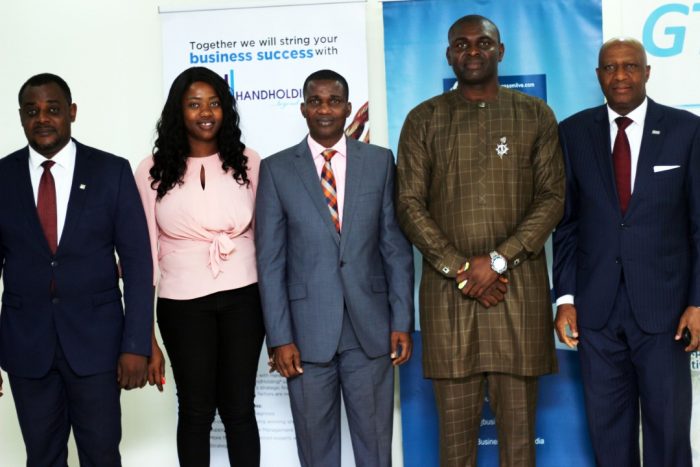
Ijeoma made the appeal when as a Guest Speaker, he delivered a paper on “Climate Finance: Next Big Opportunity for Corporate Nigeria” at a finance and investment forum dialogue organised by GTI and Business A.M Newspapers in Lagos.
Climate finance refers to local, national or transnational pool of fund, drawn from public, private and alternative sources of financing that seeks to support mitigation and adaptation actions that will address climate change.
The Chief Executive Officer (CEO) of Schrodinger Greentech, an Abuja based Climate Finance and Green Economy Consultancy, said leveraging climate related investment options would help to protect Africa’s most populous country and biggest economy from the worsening destructive physical and disruptive economic impacts of greenhouse gases [GHGs] already in the atmosphere that fuel climate change.
The GHGs absorb and emit radiant energy within the thermal infrared range and causing the greenhouse effect in the process.
Ijeoma said the number of climate induced extreme weather grew from 412 to 797 events between 1990 and 2016, while its cost rose from USD65.6 billion to USD129.4 billion respectively.
According to him, corporate Nigeria needs to tap the global and national commitments to combat climate change by understanding the dynamics of climate finance and building its capacity for national, regional and global impact and relevance.
He said President Muhammadu Buhari on behalf of about 180 million Nigerians submitted the country’s Nationally Determined Contributions [NDCs] to the United Nations Framework Convention on Climate Change [UNFCCC] during the Paris COP 21 in December 2015. Nigeria’s NDCs committed the country to reducing national GHGs emissions stock.
This, he said, would make the country to unconditionally reduce GHGs emissions by 20 per cent and with international support by 45 per cent.
He, however, said that achieving the target would not be without a cost, emphasizing that “encapsulated in this de-carbonization of Nigeria’s economy are massive hugely untapped opportunities for Corporate Nigeria”.
The consultant said, “Nigeria’s NDCs national cost estimate is USD142 billion to reduce emissions by 20 per cent and the national benefit estimate is USD306 billion.
“So, if the country is able to deliver on NDCs commitment, we are going to benefit USD162 billion which is the net profit. This is where the corporate businesses come to benefit.”
On climate finance sources and opportunities that come with it, Ijeoma said that Africa’s climate change governance negotiators and climate diplomats on the United Nations platform for climate governance negotiations believe that adaptation in Africa and the rest of developing countries should be prioritized.
“Considering Nigeria’s extreme exposures and high vulnerabilities to climate change, the country needs more of adaptation projects than mitigation. However, the international climate governance eco-system favours mitigation. We lack finance and infrastructure in Africa.”
Mitigation measures are those actions that are taken to reduce and curb greenhouse gas emissions, while adaptation measures are based on reducing vulnerability of countries, communities, companies and businesses to the effects of climate change.
The Enviropreneur said that the investment gap in the climate finance ecosystem towards the delivery of the UN SDGs by 2030 was worth USD2.5 trillion.
“This estimated USD 2.5 trillion investment gap every year in the developing world presents as much significant challenges as opportunities for investors and businesses. Mobilizing Corporate Africa and public sector stakeholders to bridge this gap for Africa through increased access to international climate and environmental [Green] finance will be strategic for portfolio diversification, profitability and sustainability, especially for Corporate Nigeria that has been partly constrained by a struggling mono-product Nigerian economy in the last half a decade,” he said.
Comments