


African countries need to embrace strong institutions – Mukhtar, others

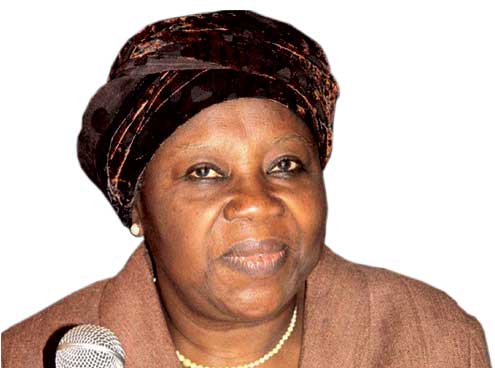
Mrs Aloma Mukhtar, former Chief Justice of Nigeria, on Wednesday joined other speakers to call on the African countries to embrace strong leaders and institutions.
The speakers said it was important for the countries to embrace strong and disciplined leaders who would not abuse power, but strengthen institutions.
They spoke in Lagos at the 13th Lecture series, organised by a law firm, AELEX.
The News Agency of Nigeria (NAN) reports that the lecture was under the theme: ‘Strong men vs. Strong Institutions, Strengthening Democracy in Africa’.
Other discussants included Prof. P.L.O Lumumba, a former Director of Kenya Anti-Corruption Commission; Dr Joe Abah, former Girector General, Bureau of Public Sector Reform; and Mr Fola Arthur-Worrey, a former Commissioner of Land in Lagos State.
Commending AELEX for sustaining the lecture series, Mukhtar said the initiative must have surpassed the expectations the founders.
She lauded the topics adopted over the 13-year period, saying they mirror challenges facing the continent and provide platform of mitigating them.
Mukhtar said that without strong leaders, all efforts to sustain strong institutions would come to naught.
“How can you have strong institutions without a strong leader to nurture them?
“The strong leader is he who is able to assert himself for the general good of the people,” she said.
Speakng in similar light, Prof. Lumumba traced the history of challenges facing various African countries to their colonial roots.
He said most of the institutions of the African countries were externally driven and often put in place to be in the good books of external interests.
“When we talk of Africa, we assume we are talking of homogenous society.
“One must be alive to the diversity of Africa and the fact that various African societies have a system of governance working. Most were also organised in various unique ways.
“The colonialism disrupted all they met on the ground.
“Most African countries we talk about today, except, perhaps Ethiopia and Liberia, were all colonial contraptions.
“In all the colonial states, the will of the people were ignored,” Lumumba said.
He said the system of laws, including common law, like the institutions, were alien to the African countries.
Lumumba cited one of the handicaps faced by African countries.
“We are using one foreign language or the other to interpret terms we adopt.
“For example, what is the correct Yoruba language for strong men? What is strong institution in Ijaw language?
“In most African societies, it is very wrong to define a leader as a strong or weak man”.
Lumumba said that Africa was in a unique position and could not afford the luxury of what the western world call ‘democracy’ in its entirety.
According to him, a strong man is that leader who is selfless and clear in his tasks of holding power in trust and on behalf of the people.
He said that a strong leader, who has lost the umbilical cord with the people, is danger to himself and to the society.
Such a leader, he said, would confuse a threat to him with threat to the country.
Comments