


Americans pile up $50b debt on online instalment loans

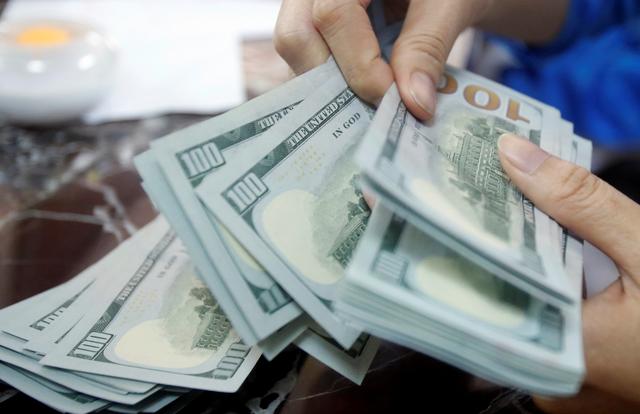
Americans have piled up a massive $50 billion debt on online instalment loan, a form of debt with longer maturities but with crippling, triple-digit interest rates.
In just a span of five years, online instalment loans have gone from being a relatively niche offering to a red-hot industry, Bloomberg reports.
Non-prime borrowers now collectively owe about $50 billion on instalment products, according to credit reporting firm TransUnion. In the process, they’re helping transform the way that a large swathe of the country accesses debt. And they have done so without attracting the kind of public and regulatory backlash that hounded the payday loan.
“Instalment loans are a cash cow for creditors, but a devastating cost to borrowers,” said Margot Saunders, senior counsel for the National Consumer Law Center, a nonprofit advocacy group.
For many families struggling with rising costs and stagnant wages, it’s a cost they’re increasingly willing to bear.
In the decade through 2018, average household incomes for those with a high school diploma have risen about 15%, to roughly $46,000, according to the latest U.S. Census Bureau data available.
Not only is that less than the 20% increase registered on a broad basket of goods over the span, but key costs that play an outsize role in middle-class budgets have increased much more: home prices are up 26%, medical care 33%, and college costs a whopping 45%.
To keep up, Americans borrowed. A lot. Unsecured personal loans, as well as mortgage, auto, credit-card and student debt have all steadily climbed over the span.
For many payday lenders staring at encroaching regulatory restrictions and accusations of predatory lending, the working class’s growing need for credit was an opportunity to reinvent themselves.
They “saw the writing on the wall, and figured, ‘let’s anticipate this and figure out how to stay in business,’” said Lisa Servon, a University of Pennsylvania professor specializing in urban poverty and author of The Unbanking of America: How the New Middle Class Survives.
Triple-Digit Rates
Enter the online instalment loan, aimed in part at a fast expanding group of ‘near-prime’ borrowers — those with bad, but not terrible, credit — with limited access to traditional banking options.
Ranging anywhere from $100 to $10,000 or more, they quickly became so popular that many alternative credit providers soon began generating the bulk of their revenue from instalment rather than payday loans.
Yet the shift came with a major consequence for borrowers. By changing how customers repaid their debts, subprime lenders were able to partly circumvent growing regulatory efforts intended to prevent families from falling into debt traps built on exorbitant fees and endless renewals.
Whereas payday loans are typically paid back in one lump sum and in a matter of weeks, terms on instalment loans can range anywhere from 4 to 60 months, ostensibly allowing borrowers to take on larger amounts of personal debt.
In states such as California and Virginia, interest-rate caps enacted years ago and meant to protect payday borrowers only applied to loans below $2,500.
For subprime lender Enova International Inc., outstanding instalment loans averaged $2,123 in the second quarter, versus $420 for short-term products, according to a recent regulatory filing.
Larger loans have allowed many instalment lenders to charge interest rates well in the triple digits. In many states, Enova’s NetCredit platform offers annual percentage rates between 34% and 155%.
In fact, Virginia sued NetCredit last year for avoiding state interest-rate caps, while California Governor Gavin Newsom earlier this month signed into law a measure capping interest rates on loans between $2,500 and $10,000 at 36% plus the Federal Reserve’s benchmark, currently at around 2%.
Comments