


2 Nigerian innovators in the finals for $30,000 ISHOW Kenyan prize

 Quick Read
Two Nigerian innovators, Dunamis-Cognitio and MicroFuse Technologies have made the finals of the 2020 American Society of Mechanical Engineers (ASME) Innovation Showcase (ISHOW), taking place in Nairobi, Kenya on Tuesday.
Two Nigerian innovators, Dunamis-Cognitio and MicroFuse Technologies have made the finals of the 2020 American Society of Mechanical Engineers (ASME) Innovation Showcase (ISHOW), taking place in Nairobi, Kenya on Tuesday.
The Nigerian firms were among the eight finalists announced by ASME, for innovations that address issues including clean cooking, feminine hygiene, food waste reduction, green building, medical diagnostics, and renewable energy.
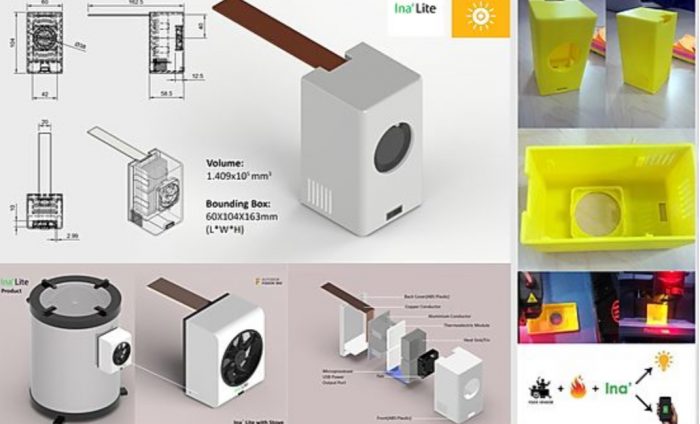
Dunamis-Cognitio, based in Port Harcourt, Rivers State, was picked for its “Ina Lite” — a sustainable, affordable, portable, light-weight, thermoelectric generator that harnesses heat energy to generate electricity accessible from a USB power port.
Lagos-based MicroFuse Technologies qualified for the finals for its “Cipher” technology — a tool that enables its user to diagnose and detect cerebral malarial retinopathy with a smartphone while also capturing other individual patient data.
This tool would be of immense help in urban settings and remote areas where it can be a split-second decision to treat a child for malaria or consider other causes of illness that could be life-threatening as well.
Five of the finalists are from Kenya, while only one is from Egypt.
The Egyptian qualifier is ECO Egypt from Cairo.
Its “ECO Food Dehydrators” — the only Arab food dehydrator provider and the second in Africa enables farmers to turn crop surpluses that usually go to waste into powdered food in just hours.
It also allows farmers a 30-fold increase in revenues that benefits rural women and enhances food security.
The Kenyan finalists are BURN Manufacturing Co, based in Ruiru, Nairobi-based Ecobora Company, Green Pavers, Inteco Kenya and Zuhura Solutions.
BURN Manufacturing Co. presents “Kuniokoa TURBO Stove” — a forced draft biomass stove that is compatible with Pay-As-You-Go (“PAYG”) solar systems and is more efficient and cleaner-burning than the company’s innovative Kuniokoa stove.
The TURBO decreases time to boil by ~60% , decreases the tending interval by 30%, and can burn wood fuel with up to 27% moisture content (wet basis) as clean as liquified petroleum gas.
Once launched, it will be the only production household cookstove in the world that achieves ISO/IWA “Tier 4” performance with agricultural waste briquettes.
Ecobora Company showcases its “Solar Cooking Boiler”.
The company is equipping rural marginalized schools with its patented solar-powered cook stove that permits around the clock cooking by tapping the sun’s energy and storing it in a repurposed oil tank with waste motor oil as an effective carbon sink tank, eliminating the need for firewood.
The stove is affordable and provides heat energy even during rainy seasons. The money saved equips science and computer laboratories to offer quality education to students.
Green Pavers made its road to the finals with its “Styro-Plastic Densifier” — which turns tons of waste plastic littering the streets and landfills into durable and affordable building materials, making cities and communities more green-friendly and sustainable.
Inteco Kenya Ltd. designed “Ari” sanitary pad dispenser system. Inteco works in the menstrual hygiene ecosystem and focuses on the distribution and supply chain management of donated sanitary pads to adolescent girls in schools.
The company secures the value chain by ensuring that sanitary pads are being used by the intended user, and create cheaper systems for accountability and monitoring by installing sanitary pads dispensers in schools, where students can get pads using near field communication (NFC) cards.
Zuhura Solutions got into the final with its “Halisi Trolley”, a transportable solar-powered street food vending trolley, fitted with a solar panel, lithium battery, tamper-proof AC and DC charging system, mobile phone charging component, and an interface that can monitor both the temperature of the trolley to the precise location of the Trolley itself.
These socially minded teams of inventors from Kenya, Nigeria, and Egypt will present their design prototypes and vie for a share of $30,000 in seed grants in addition to technical support to help bring their design innovations to market, said a press statement by the organisers.
After the opening pitches, an esteemed panel of judges will privately interview each finalist as part of an extensive design and engineering review and then will choose three hardware innovations as grand prize winners.
In addition, one finalist will emerge as a “Fan Favorite” based on social media voting results and win $1,000 (USD).
The ceremony will hold at 6 p.m. East Africa Time via web conference
Dr. Victor Konde, scientific affairs officer with the United Nations Economic Commission for Africa (UNECA) and Michael Johnson, chief strategy officer for ASME, will deliver opening remarks and welcome participants to the virtual event.
Iana Aranda, director of engineering global development programs for ASME, will host/emcee.
ASME’s panel of judges includes entrepreneurs, academics, engineers, designers, investors, and industry representatives from leading organizations in India, Kenya, and the United States such as Villgro, Gearbox, Philips, Philips Foundation, Villgro Kenya, and many others.
The fan favorite prize is made possible and in memory of Byron G. Schieber Jr. M.S., PE, Professor Emeritus QCCNY, and Ruth L. Schieber.
ISHOW Kenya winners will be announced in a virtual awards ceremony on Wednesday, May 27 at 6 p.m. East Africa Time and later shared via the ASME ISHOW website, social media, and news release.
A virtual ISHOW was held last month for finalists from India and finalists from the Americas will participate in a virtual ISHOW USA event in July.
ASME helps the global engineering community develop solutions to real world challenges.
Founded in 1880 as the American Society of Mechanical Engineers, ASME is a not-for-profit professional organisation that enables collaboration, knowledge sharing and skill development across all engineering disciplines, while promoting the vital role of the engineer in society.
ASME codes and standards, publications, conferences, continuing education and professional development programs provide a foundation for advancing technical knowledge and a safer world. For more information, visit www.asme.org.
Comments