


North Korea conducts largest missile test since 2017

 Quick Read
North Korea's latest launches included a test of two short-range ballistic missiles and their warheads on Thursday, and an updated long-range cruise missile system tested on Tuesday.
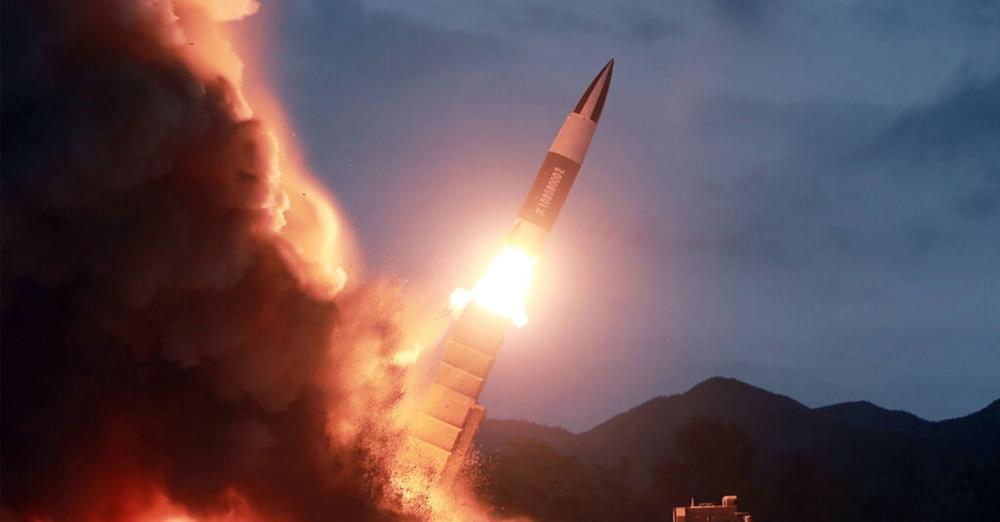
North Korea conducted its largest missile test since 2017 on Sunday, sending a suspected intermediate-range ballistic missile soaring into space.
The test was seen as taking the nuclear-armed country a step closer to resuming long-range testing.
South Korea’s Joint Chiefs of Staff reported that a projectile believed to be a single ballistic missile was launched about 7:52 a.m. (2252 GMT) from North Korea’s Jagang Province toward the ocean off its east coast.
South Korea’s National Security Council (NSC), which convened a rare emergency meeting presided over by President Moon Jae-in, said the test appeared to involve an intermediate-range ballistic missile (IRBM), which North Korea has not tested since 2017.
The launch takes North Korea a step closer to fully scrapping a self-imposed moratorium on testing its longest-range intercontinental ballistic missiles (ICBMs), Moon said.
He noted that this month’s flurry of missile tests was reminiscent of the heightened tensions in 2017, when North Korea conducted multiple nuclear tests and launched its largest missiles, including some that flew over Japan.
North Korean leader Kim Jong Un has said he is no longer bound by that moratorium, which included a stop to nuclear weapons tests and was announced in 2018 amid a flurry of diplomacy and summits with then-U.S. President Donald Trump.
North Korea’s rulers suggested this month they could restart those testing activities because the United States and its allies had shown no sign of dropping their “hostile policies.”
“The United States condemns these actions and calls on (North Korea) to refrain from further destabilising acts,” the U.S. military’s Indo-Pacific Command said in a statement after Sunday’s launch.
A U.S. State Department spokesperson said the launch demonstrates the threat posed by North Korea’s unlawful weapons of mass destruction and ballistic missile programmes, and called on Pyongyang to engage in “sustained and substantive” dialogue.
It is unclear if IRBMs were included in Kim’s moratorium, but those, too, have not been tested since 2017.
South Korea’s JCS and Japanese Chief Cabinet Secretary Hirokazu Matsuno separately said the missile is estimated to have reached an altitude of 2,000km and flown for 30 minutes to a distance of 800km.
IRBMs typically have ranges of 600 to 3,500 miles, while ICBMs have ranges exceeding 3,500 miles.
Missile experts said the data could indicate a test of an IRBM such as the Hwasong-12, which was last tested in 2017, or a new type.
The launch could make January the busiest ever for North Korea’s missile programme, which analysts say is expanding and developing new capabilities despite strict sanctions and United Nations Security Council resolutions that ban the country’s ballistic missile tests. read more
Its latest launches included a test of two short-range ballistic missiles and their warheads on Thursday, and an updated long-range cruise missile system tested on Tuesday.
Source: Reuters via NAN
Comments