


Silent Journeys and Cultural Memory: A detailed review of ‘ Òde Àpẹ̀rìn ‘ by Shogo Olalekan Uthman

 Quick Read
Olu Ajayi is an artist and art reviewer with over 40 years experience in studio practice and art administration. He was listed in the Who is Who in Art compendium, as well as being honoured as a Top 100 Artist.
By Olu Ajayi , Artist and Art reviewer
In Òde Àpẹ̀rìn, endurance is not dramatized, it is simply lived, carried quietly along a dusty road that stretches beyond the frame. Olu Ajayi
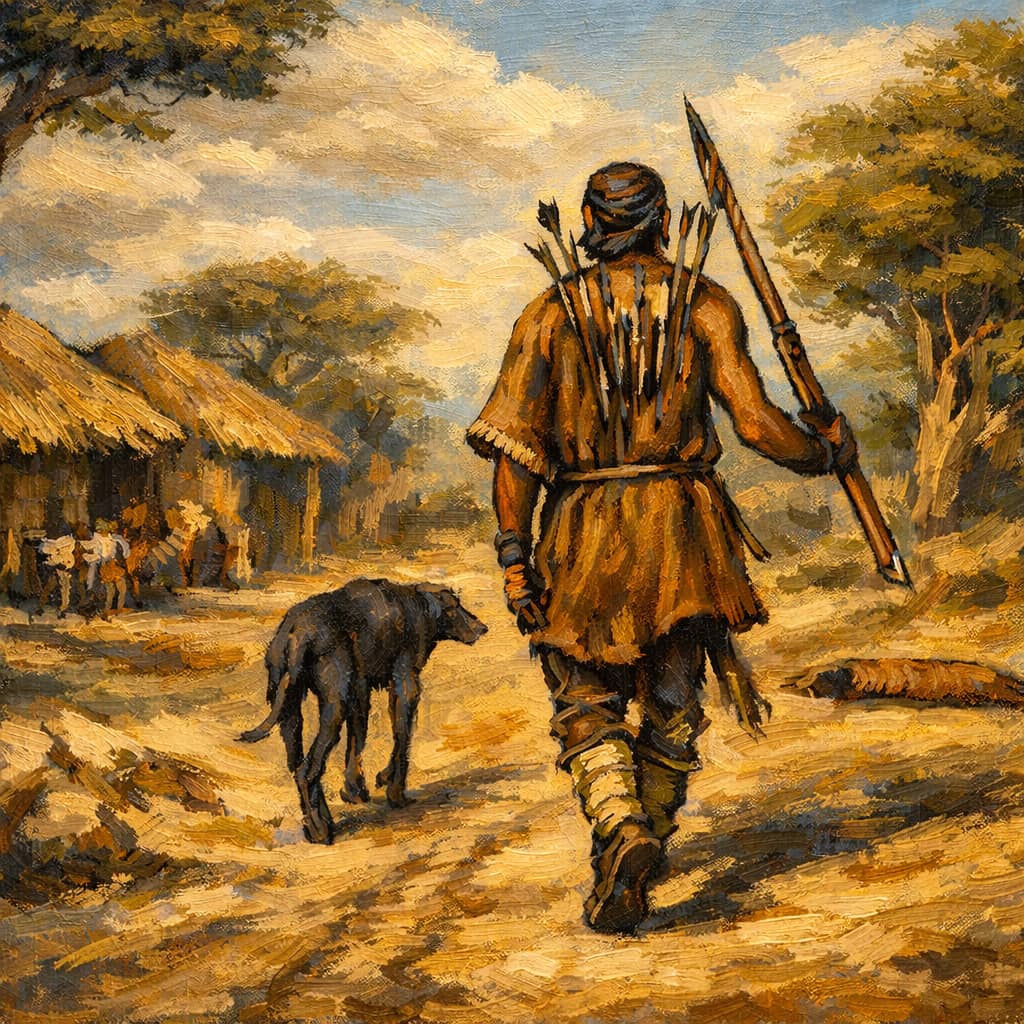
Artist Shogo Olalekan Uthman presents a contemplative and culturally grounded painting that reflects on the quiet responsibilities associated with masculinity within many African societies. The work depicts a lone man walking away from the viewer, holding a locally made firearm while accompanied by a loyal dog. The path before him stretches into a rural environment shaped by earthen roads, trees, and distant homesteads. Rather than presenting heroism through spectacle, the painting offers a more intimate reflection on endurance, duty, and the generational responsibilities carried by men across rural African landscapes.
One of the most striking aspects of the composition is the decision to show the figure from behind. This compositional strategy transforms the painting into a moment of observation rather than confrontation. The viewer becomes a witness to a journey already underway. The road ahead suggests uncertainty, while the village environment behind the figure implies a life shaped by tradition, family, and obligation. Through this simple yet powerful gesture, Uthman invites viewers to reflect on the invisible burdens and commitments that often define manhood.
Through the image of a solitary man walking away from the viewer along a rural path, accompanied only by a loyal dog and carrying a locally made firearm, Uthman constructs a visual narrative that speaks to the lived realities of countless African men whose lives revolve around responsibility to family, land, and community.
The figure itself is painted with a balance of structural clarity and expressive looseness. The clothing of the man, rendered in textured strokes of brown and ochre, appears weathered and practical, reinforcing the narrative of labor and endurance. The arrows visible on his back and the firearm held in his hand suggest readiness and responsibility rather than aggression. These objects are not presented as symbols of dominance but as tools associated with survival and protection within rural life.
In many traditional communities, such objects reflect a man’s role as provider and guardian. Uthman therefore situates the figure within a broader cultural context, allowing the painting to function as both narrative and social commentary.
The visually alluring color offers a vital role in establishing the emotional tone of the painting. Uthman employs a palette dominated by warm ochres, earthy browns, and muted golds that evoke the natural tones of African soil and sunlight. These hues anchor the figure within his environment, visually reinforcing the inseparable relationship between identity and land. Subtle cooler tones within the sky introduce contrast and atmospheric depth, balancing the composition while suggesting the openness of the landscape beyond.
Technically, the painting reveals confident and expressive brushwork. Rather than pursuing photographic realism, Uthman embraces a painterly surface in which individual strokes remain visible. The textured treatment of trees, pathways, and vegetation creates movement across the canvas while preserving the tactile qualities of paint. This technique situates the work within a broader contemporary African painterly tradition that merges narrative figuration with expressive landscape.
The symbolic elements within the painting further enrich its narrative. The firearm held by the figure does not suggest aggression but responsibility. In many rural contexts it represents protection, hunting, and the obligation to safeguard one’s household and land. The presence of the dog introduces a quiet emotional dimension, symbolizing loyalty, companionship, and shared survival within the rhythms of rural life.
Ultimately, Ode Aperin stands as a tribute to the resilience embedded in everyday existence. By focusing on an ordinary journey rather than a dramatic event, Shogo Olalekan Uthman elevates responsibility itself into a subject worthy of artistic reflection. The painting becomes both homage and cultural record an acknowledgment of the unseen labor and silent strength that sustain families and communities across generations.
Through restrained storytelling, earthy color harmonies, and textured brushwork, Ode Aperin offers viewers a poetic meditation on duty, endurance, and cultural continuity. It reminds us that the most profound forms of heroism are often quiet, unfolding not in moments of spectacle but along the long roads of everyday life.
Olu Ajayi is an artist and art reviewer with over 40 years experience in studio practice and art administration. He was listed in the Who is Who in Art compendium, as well as being honoured as a Top 100 Artist.
Comments