


Why Water Resources Bill is dangerous for Nigeria – Activist

 Quick Read
According to him, the Water Resources Bill is an indirect way of introducing Rural Grazing Area (RUGA) and Cattle Colony.
By Jethro Ibileke
A lawyer and an environmental rights activist, Dotimi Tawari, has charged media practitioners in Nigeria to rise to their social responsibility of enlightening members of the public on the ills of the Water Resources Bill, to ensure its death.
This is even as he urged the National Assembly to throw the controversial Bill recently re-introduced into the dust-bin, arguing that if they passed the bill, it will deny Nigerians of their identities and ‘kill’ them.
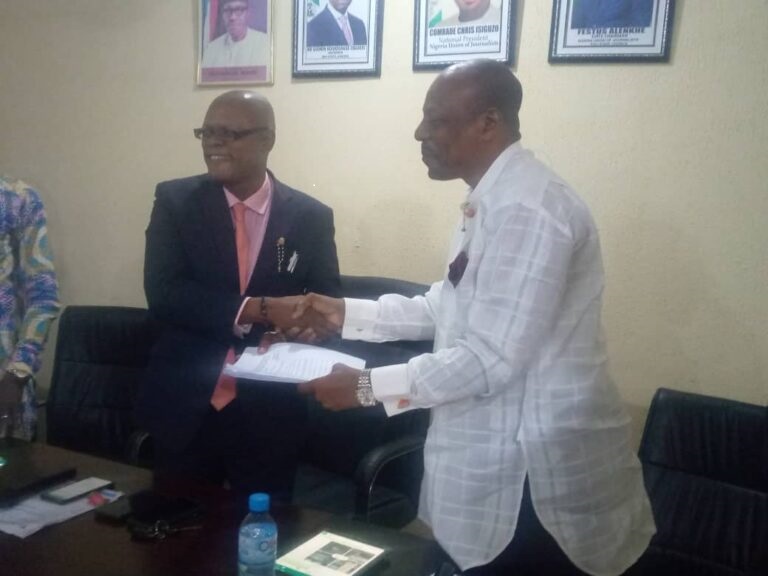
Tawari who is the President of Ijaw Community Law Centre, made these assertions in Benin, Monday, at an event organised by the Nigeria Union of Journalists (NUJ), Edo State Council, to enlighten journalists on what the Bill entails.
He described the Bill as anti-federalism, adding that if passed into law, it will take Nigerians back to the old days of unitary system of government where everything is concentrated at the centre (Federal Government)
According to him, the Water Resources Bill is an indirect way of introducing Rural Grazing Area (RUGA) and Cattle Colony.
He further noted that if passed into law, the Act will automatically incorporate the Land Use Act of 1978, and that every land owned by communities and state governments would be ceded to the Federal Government.
He reads the Bill in part: “The Delta of River Niger, and everything therein belongs to the Federal Government.
“This is an indirect way of re-introducing RUGA, the cattle colony thing, this is it. When they brought RUGA, it died, when they brought cattle colony thing, it died, this is the last thing they want to do.”
He continued: “Section 158 reads: Any natural or man-made water, flowing or standing on the surface of the land, including rivers, lakes, reservoirs, lagoons, wetland, creeks, Deltas, etc belongs to the Federal Government. Everything is gone.”
According to him, because of the interior motive behind the Bill, it was sneaked into the National Assembly through back door and was not made public until some members, including the Speaker of the House of Representatives insisted that it should be made public.
He added: “They are amending the Nigerian Constitution without us knowing. This is because by extension, the Land Use Act of 1978 is incorporated into this Bill.”
The environmental rights activist noted that if Nigerians allow the Bill to see the light of the day “it will be more powerful than your state government; it is like creating another country entirely inside a country.”
He added: “And that is why we say members of the press must rise to this responsibility. Your constitutional role is to be a watch dog, so make sure this bill does not see the light of the day. Because if it does, we lost our identities completely.”
In his remarks, the Edo NUJ Chairman, Comrade Festus Alenkhe, urged the legal practitioner to take the enlightenment message to other NUJ State Councils in the South-South and South-East, with a view to opening journalists’ eyes to the inherent danger in the proposed Bill, so they too can in return enlighten members of the public.
Alenkhe who thanked the environmental rights activist for the enlightenment, appealed to Edo journalists to give publicity to the proposed Bill to enable them educate Nigerians about it and take the necessary steps.
Comments