


Review: Whispers of the Ancestral Clay, FCT Council for Arts and Culture

 Quick Read
There are exhibitions that display craft, and then there are those that carry memory. Whispers of the Ancestral Clay, held on October 27, 2022, at the FCT Council for Arts and Culture in Abuja, was firmly the latter. This wasn’t just a gathering of artists, it was a return to soil, to silence, and to stories whispered from the ground up.
By Dele Jegede
There are exhibitions that display craft, and then there are those that carry memory. Whispers of the Ancestral Clay, held on October 27, 2022, at the FCT Council for Arts and Culture in Abuja, was firmly the latter. This wasn’t just a gathering of artists, it was a return to soil, to silence, and to stories whispered from the ground up.
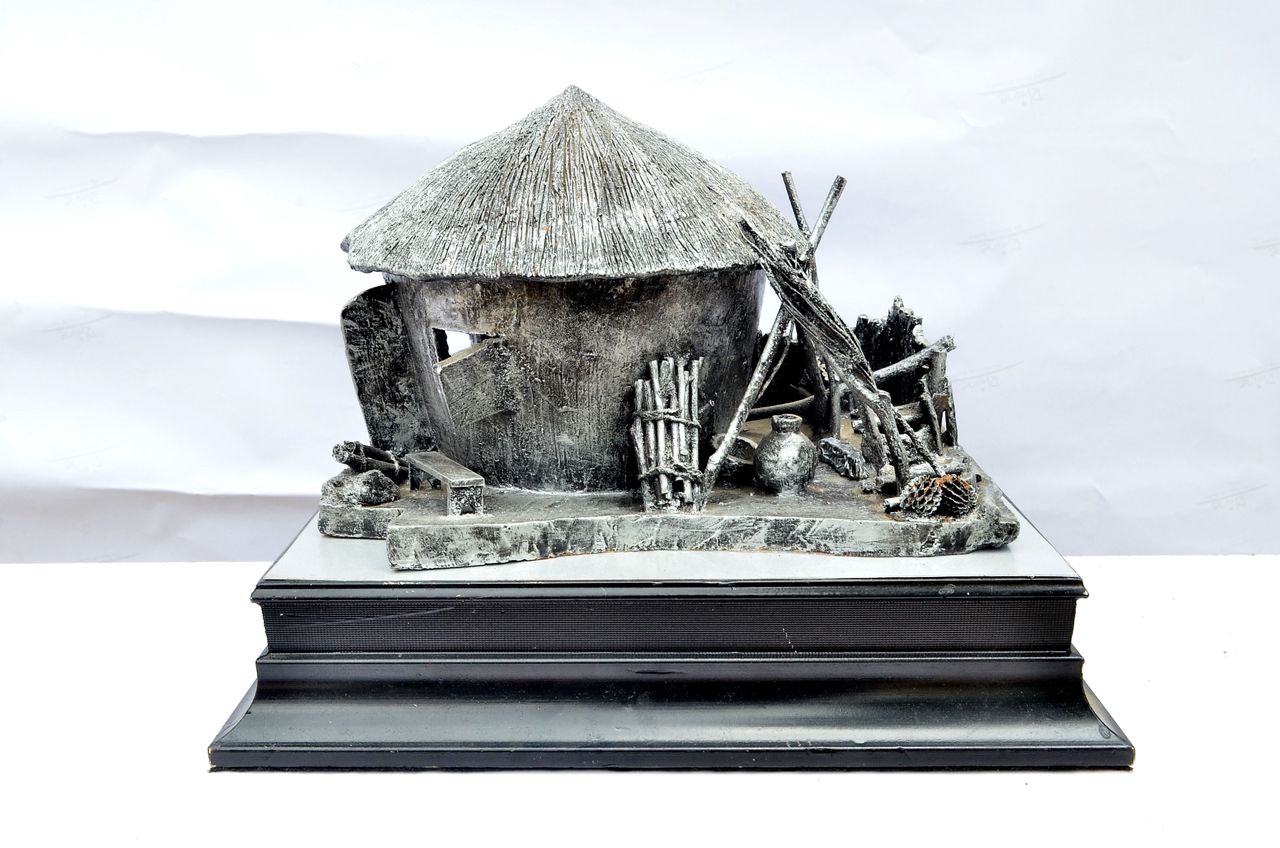
A masterpiece titled HOME, that quietly commanded attention was by Chidi Ebere, known artistically as Ekemmiri.
A sculptor rooted in the cultural textures of Igbo land, Ekemmiri presented this masterpiece work that looked less like it was made and more like it had always been there. A miniature traditional mud house, shaped with care, and surrounded by everyday village elements: a clay pot, firewood, a small bench, tools leaned against the wall. The roof, delicately crafted to resemble raffia thatch, almost breathed with rural memory.
This wasn’t nostalgia for nostalgia’s sake. The work had presence. It held space for a kind of quiet truth, the kind you don’t find in textbooks, only in lived memory.
For those who grew up in villages across southeastern Nigeria, this sculpture was instantly recognisable. But even for those outside that world, it offered a window into the rhythms of a life where clay wasn’t just a material, but a shelter, a memory bank, a grounding force.
What made Ekemmiri’s piece stand out was not only the technical execution but the emotional clarity. This was not a glorified version of rural life, nor a romanticised scene. It was lived experience cast in form. Simple, honest, and deeply intentional. You could almost hear footsteps on the dusty compound floor, smell smoke curling out from behind the hut, or imagine elders trading stories under a fading sun.
The broader exhibition explored different interpretations of clay as a channel between the living and the ancestral. Some pieces were abstract, others symbolic. But Ekemmiri’s work felt like an anchor, a reminder that before monuments and masks, there was the HOME. And in that HOME, memory still lives.
Whispers of the Ancestral Clay offered much to reflect on. But it was through works like Ekemmiri’s, quiet, rooted, and deeply personal that the exhibition found its true voice.
His second piece, The Milk Maid, added a layer of elegance to his storytelling. Cast in golden tone, the sculpture stood tall and proud: a young woman, regal in her poise, balancing a water pot atop her head with the kind of grace only time and tradition can teach. Her braided hair, heavy necklace, and confident gaze were beautifully carved, speaking of feminine strength, quiet labour, and the pride of identity.
What was striking about both pieces was their honesty. They didn’t try to impress. They simply were solid, familiar and full of care. Clay and resin here were more than mediums; they were bridges to memory.
The Whispers of the Ancestral Clay exhibition as a whole did what good art should do: it slowed us down. And through works like Ekemmiri’s, it whispered things we may have forgotten but needed to hear again.
Comments