



KSA’s Legacy and the Rise of New Voices at Ekimogun 2022

 Quick Read
You know how it is with big cultural festivals that there’s always that quiet murmur in the air, these are the kind that never makes it to the printed programme but go round among the people in the crowd.
By Emmanuel Daraloye
You know how it is with big cultural festivals that there’s always that quiet murmur in the air, these are the kind that never makes it to the printed programme but go round among the people in the crowd. At the 2022 Ekimogun Day in Ondo, It was just so obvious and there was something in the way people watched the stage, paying attention to sets, one after the other in the space between what was expected and what actually unfolded.
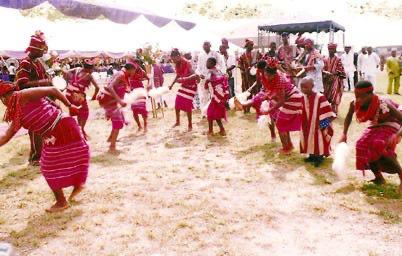
The daytime procession had already done its job. The Ekimogun youths, chiefs in their full regalia, the steady sound of talking drums and Ondo local percussion weaving through the afternoon heat. It was the state at its most deliberate, the kind of display that tells you exactly who you’re looking at and where they come from. Later in the day was the gala night that was meant to cap it off with familiar grace. Then King Sunny Adé stepped up. The moment he touched the mic, the room shifted. This is the frantic kind of atmosphere you get with the slow, respectful evergreen sounds. The kind that comes when someone who has carried the culture for decades finally shows up in person. His guitar lines were clean, the percussion tight, the call-and-response familiar enough to hum along to. For the older generation, it wasn’t just entertainment. It was proof that the foundation still holds. You could see it in the way the elders leaned forward, in the quiet nods, in the unspoken relief that the lineage remains solid.
As the night continues, another moment to remember is when Fedas WRLD took the stage, the crowd split in surprise, the kind that happens when a culture suddenly remembers it’s still growing. She worked the stage like a conversation as she performs. She moved between keys with the live bands without overdoing it, pulled familiar Afrobeats patterns apart and remixed them back together live on stage. Her performance incorporated special crowd control techniques as she would tell them to follow, to clap here, to shout there, to help steer the flow. It was more of a session and not just a set.
Naturally, people had thoughts. Some saw it as exactly what the Ondo cultural scene needed which was a clear signal that the youth aren’t waiting for permission to claim their space in the culture. Others wondered if Fedas’s styling, the stage setup, the whole vibe, matched the weight of Ekimogun Day. You could hear it in the post-show debates: the WhatsApp status post in the form of criticism as the clips were being replayed online. The criticism wasn’t entirely off base. Cultural festivals run on unspoken visual codes, and when you bend them, people notice.
But to reduce it to wardrobe or stage design misses the point entirely. The real conversation wasn’t about whether she matched the festival’s traditional look. It was about what happens when a culture lets its history and identity shine in the present and stops treating its history like a museum.
Of course, people started comparing her to KSA. It’s the Nigerian way. We love to line up generations and ask who did it better. But that’s the wrong question. Sunny Adé isn’t a benchmark to beat or yardstick to measure a growing success. In many ways he’s a reference point. FedasWRLD isn’t trying to replace him. She’s testing how far the roots can stretch, how long the culture can go before they snap.
Looking back, the 2022 Ekimogun Festival won’t just be remembered for the pageantry or the big names that perform at the festival. It will stick because it accidentally staged a very Nigerian conversation about how we honour persistence, what came before without putting pressure on what’s trying to grow? There’s no one or clean answer, and maybe there shouldn’t be. Culture isn’t meant to be locked away. It’s meant to be argued over, remixed, carried forward, sometimes clumsily, sometimes brilliantly.
That night, both sides got their say. And Ondo, as it always does, kept moving. Also, that ongoing question of how to honour what has come before without holding back what is trying to emerge. In the middle of all that, FedasWRLD’s performance stands out because it was alive and not because it was perfect or because it fully aligned with the expectations of the festival, but there was intent, there was risk, and there was a clear attempt to engage culture as something current. There is a clear artistic approach in how she constructs her sets, noticeably it leans on live interpretation, crowd interaction and reshaping familiar sounds in the moment. Also as a developing artiste, her presence on such a big stage points to strong artistic direction and a performance instinct that is already ahead of a lot of her peers. There is still room for refinement, especially in how visual presentation aligns with cultural context, but the core is there and if handled properly, will travel far and beyond.
Comments