


Kings on the shore: OOMO AJADI’s lookbook is already legend

 Quick Read
Some lookbooks are promotional tools. Others are cultural statements. OOMO AJADI’s Ariwo Ilẹ̀ Ọba is the latter — a masterclass in visual storytelling that doesn’t just show clothes, but crowns narratives.
Benson Michael
Some lookbooks are promotional tools. Others are cultural statements. OOMO AJADI’s Ariwo Ilẹ̀ Ọba is the latter — a masterclass in visual storytelling that doesn’t just show clothes, but crowns narratives.
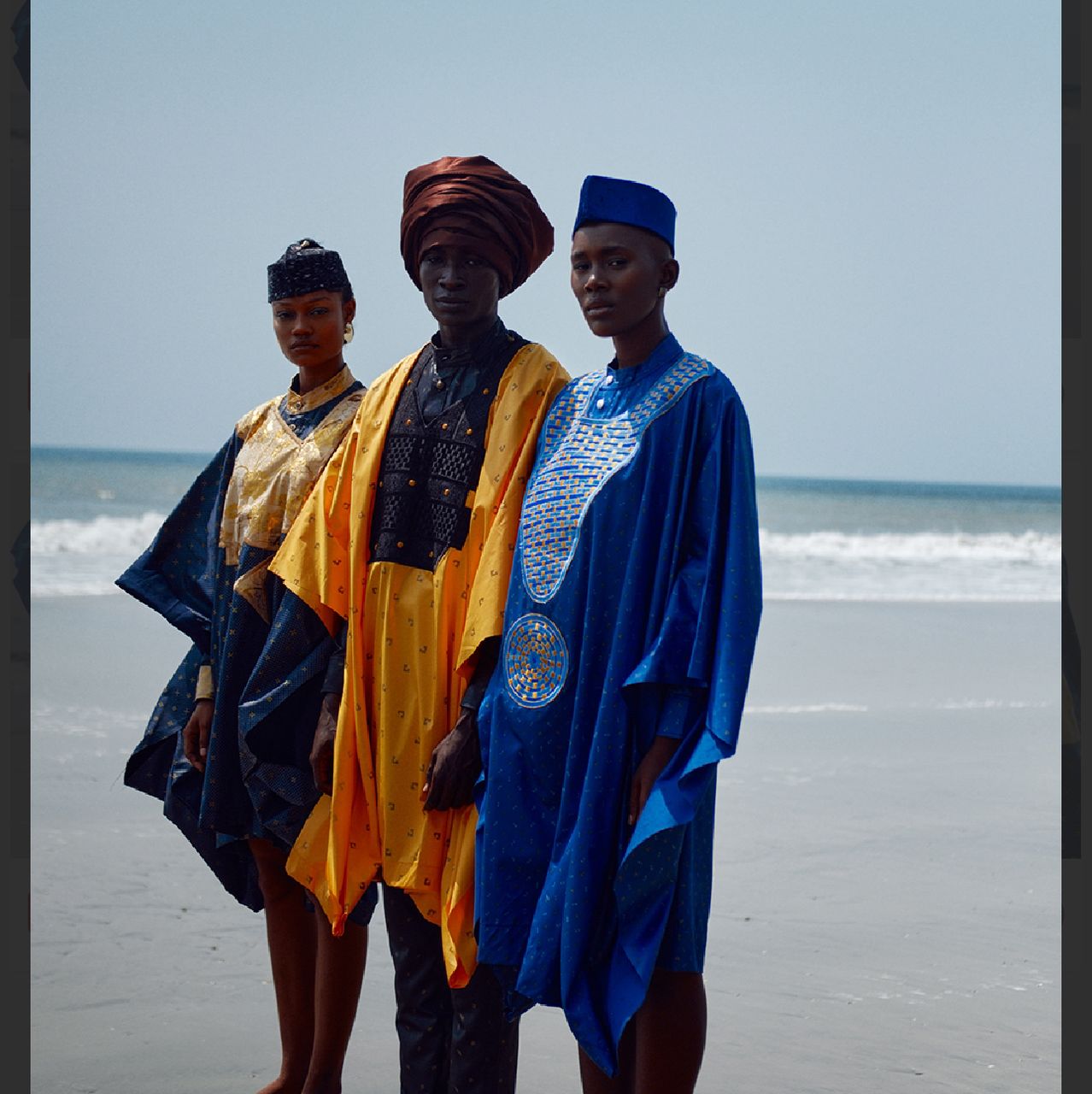
The decision to shoot barefoot models on a shoreline is no accident. It’s a poetic grounding a return to land, to legacy, to where the story begins. The water, the sand, the solemn gaze of the subjects — all evoke a kind of royal stillness that feels ancient and unshakeable.
The casting is sharp. There’s no overdone beauty here. Just strong, real faces. The kind of faces that carry weight. Faces that look like they’ve been chosen for a rite, not a runway.
And the styling? Clean. Focused. Majestic without being flashy. Each look is allowed to breathe no distractions, no over-accessorising. It tells us: “These garments are the moment.”
But perhaps the most powerful choice is restraint. There’s no desperation to go viral. No trend-chasing. Just a clear, confident vision that says, “We know who we are. And we’ve known for centuries.”
In Ariwo Ilẹ̀ Ọba, Yusuf Kareem hasn’t just created a collection. He’s created an archive a body of work that will outlive seasons, algorithms, and hashtags. Long after the last scroll, these images will remain. And they will still speak.
Comments