


Companions of the Cave at Muson Centre: A Theatre Review of Myth and Meaning

 Quick Read
There is something quietly ambitious about staging a morality play in Lagos. In a city where theatre must compete with streaming platforms, traffic exhaustion, and the sheer noise of daily survival, Companions of the Cave chose a different bet, that an audience would sit still for a story about faith, justice, and collective conscience.
By Ngozi Uma
There is something quietly ambitious about staging a morality play in Lagos. In a city where theatre must compete with streaming platforms, traffic exhaustion, and the sheer noise of daily survival, Companions of the Cave chose a different bet, that an audience would sit still for a story about faith, justice, and collective conscience. On the evidence available, it is a bet that partially pays off.
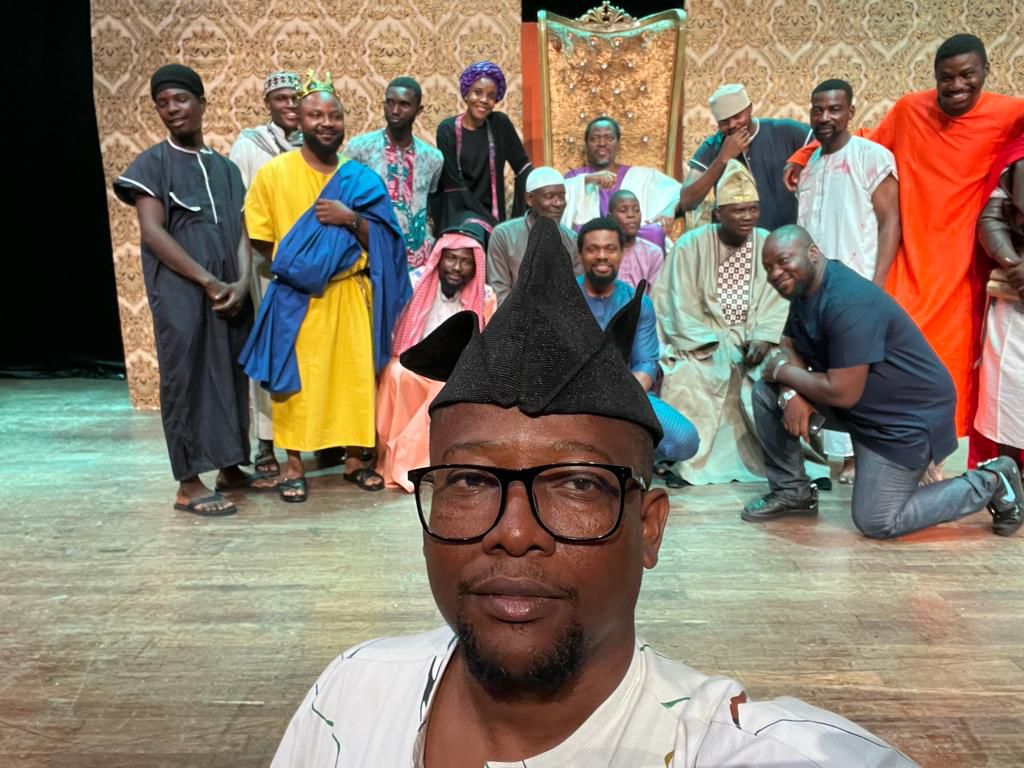
Babatunde Adegbindin, serving as both director and producer, stakes out genuinely distinctive territory with this production. By grounding the narrative in ethical discourse rather than plot-driven entertainment, he signals clearly that this is not a play that wants to merely please, it wants to provoke, to sit with discomfort, to ask what we owe one another. That intention deserves recognition, and in moments, the ensemble cast appears to honour it fully.
Adegbindin’s choice of minimalist staging is smart, if not without risk. Stripping back spectacle forces the text and performance to carry the weight, a high-stakes approach that can either elevate a production or expose its weaknesses. Here it largely succeeds in maintaining focus and thematic clarity. Yet it also raises honest questions: does the text always hold up under that pressure? Are there stretches where the absence of visual stimulus becomes an absence of energy? These are the tensions any director courting minimalism must reckon with.
His ensemble-driven methodology is philosophically sound and consistent with the material. Resisting the pull of a single protagonist in favour of collective voices reflects a considered artistic statement, one that mirrors the communal themes embedded in the narrative. Yet ensemble work is notoriously difficult to calibrate, too diffuse and an audience loses its anchor. Whether Companions found that balance in performance is something only those in the auditorium on those nights can truly judge.
What is less certain is the production’s reach.
The Muson Centre is a prestigious but self-selecting venue, its audiences already culturally engaged, already inside the tent. If Adegbindin’s ambition is genuine societal reflection and community engagement, one wonders how far beyond that demographic the work actually travelled. Good intentions in the programme notes do not automatically translate into access.
The production has reportedly generated academic and professional conversation about values-driven theatre in Africa, no small thing. But discourse among the already-converted is not the same as impact. The more pressing question, whether Companions of the Cave changed a single mind outside its natural audience, remains unanswered.
This is, nonetheless, a production worth taking seriously. Adegbindin arrives with integrity, craft, and a genuine belief that theatre can still be a moral space. Whether the work fully delivers on that belief likely depended on the night, the cast’s energy, and where you were sitting, in every sense of the phrase.
Comments