


FCT residents react to petrol subsidy removal

 Quick Read
Mrs Juliet Lewis, a resident of Abaji Area Council, said that the average Nigerian would be seriously affected, "because, once the price of petrol increases, the prices of everything will go up in the markets.”
Residents of the Federal Capital Territory (FCT), Abuja have continued to react to the removal of subsidies on petroleum products by the federal government.
Some of the residents who spoke with the News Agency of Nigeria (NAN) on Thursday in Gwagwalada lamented the resultant increase in transportation costs in the metropolis.
They called on the government to reconsider steps on the policy.
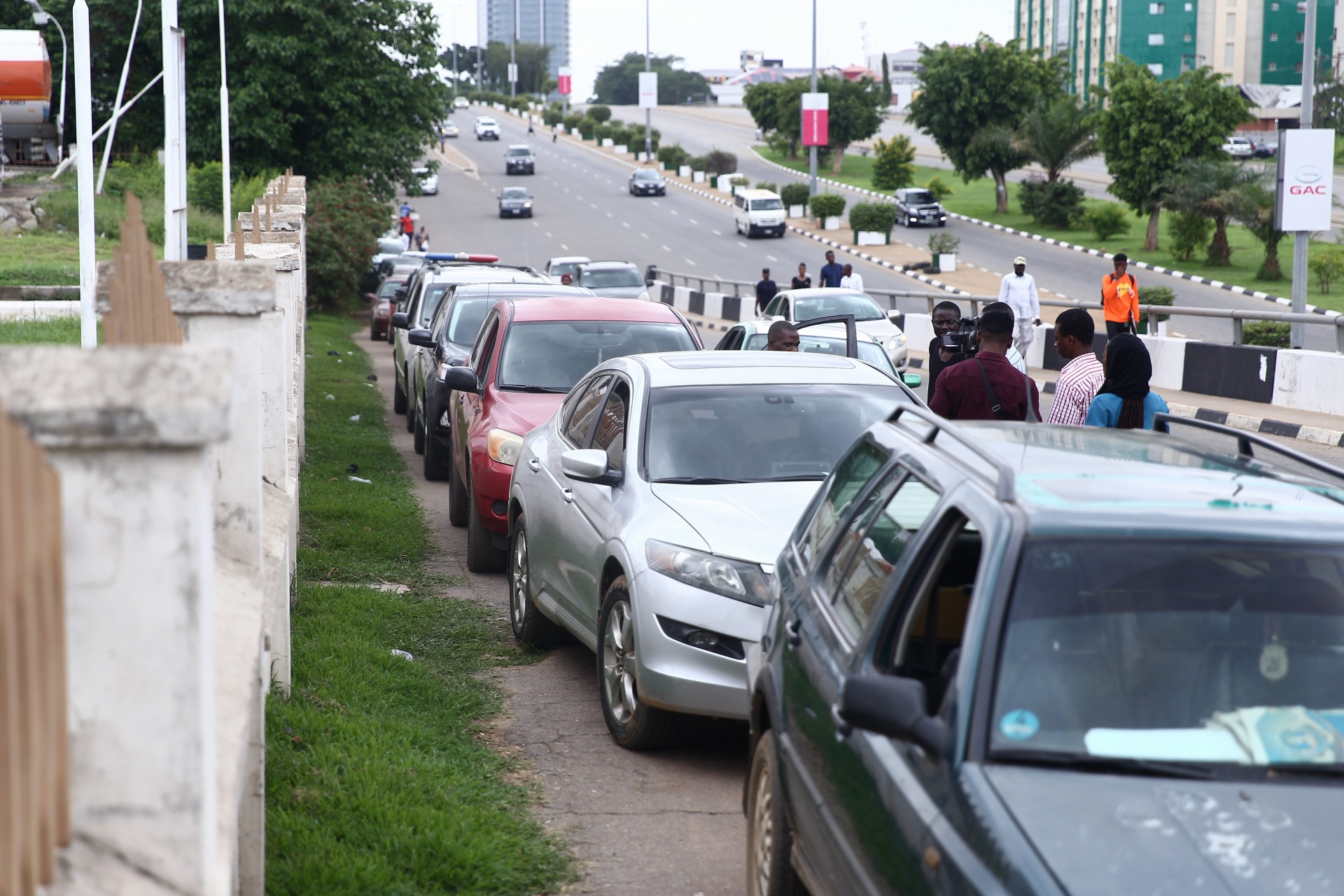
NAN reported that queues resurfaced across petrol stations in the capital territory immediately after the subsidy removal was announced.
According to them, the high cost of transportation fares will affect the prices of goods and services in the markets, which will affect the purchasing power of ordinary Nigerians.
Mr Abraham Gado, a resident of Gwagwalada, told NAN that transportation fare to Area 1 from Gwagwalada now goes for N1,000 as against N400 hitherto.
He said that following the announcement, many filling station owners in some areas locked up their stations, while those that opened sold the commodity for between N537 and N600.
“The oil marketers are also not fair to Nigerians; barely hours after the subsidy removal announcement, they just jerked up prices of petrol without exhausting the old stuck.
“I plead with the government to please rescind this decision and reverse to the old price to cushion the hardship that has started,” Gado urged.
Mrs Juliet Lewis, a resident of Abaji Area Council, said that the average Nigerian would be seriously affected, “because, once the price of petrol increases, the prices of everything will go up in the markets.”
She said that farmers in remote areas with difficult terrains would subsequently increase the prices of their farm produce.
“I am joining millions of Nigerians to call on the new government to have a rethink on the fuel subsidy removal,” Lewis said.
Another resident of Kuje Area Council, Salisu Sabo, said he could not believe that the transportation fares would increase so suddenly.
He said the new policy caught him unawares and had made it difficult for him to attend the programmes he earlier planned for, aside from his official duties.
“I paid N500 to get to Lugbe this morning as against the previous price of N200.
“This time around, one has to plan well and manage the little money he or she has to avoid embarrassment,” Sabo said.
Mr Johnson Anibe, a civil servant said he paid N900 to get to his office in the morning as against N300, adding that on his way home he would pay more.
Comments