


Three professors making impact in Nigeria

 Quick Read
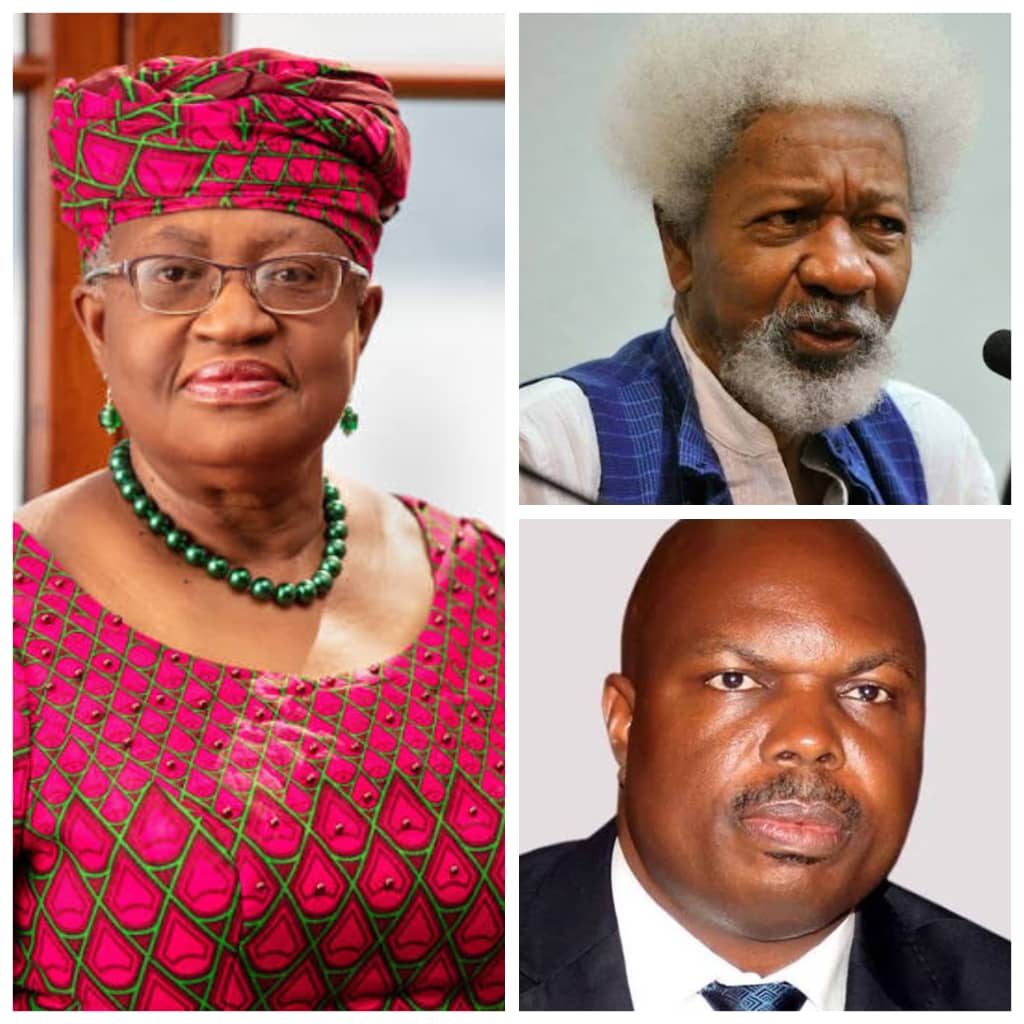
Wole Soyinka, Ngozi Okonjo-Iweala, and Itotenaan Henry Ogiri are three of the best professors in Nigeria, renowned for their global impact on academics, governance, and public service.
By Taiwo Okanlawon
Wole Soyinka, Ngozi Okonjo-Iweala, and Itotenaan Henry Ogiri are three of the best professors in Nigeria, renowned for their global impact on academics, governance, and public service.
1. Ngozi Okonjo-Iweala is a creative figure of economics, development, and global governance. She was born in 1954. A public policy expert, she was credited for developing Nigeria’s public finance reform and leading international development through the World Bank. As the finance minister of Nigeria, she championed revenue administration, governance, and education and infrastructure investments. She is a champion of sustainable growth and development.Her later role as coordinating minister of the economy broadened her macroeconomic emphasis and focus on data-driven reform and stakeholder outreach.
Her international career came a complete circle with becoming Director-General of the World Trade Organization in 2021 to date, the first woman and the first African to lead the organization. On the WTO, she fights for equitable, rule-based trade and the participation of developing economies in shaping the world norms, and tackling barriers facing the poorest of the world.
Outside office, her work and activism bridge development theory with practical policy, demanding human capital investment, open governance, and gender equality as cornerstones of economic development. Okonjo-Iweala’s own leadership combines technical expertise, strategic thinking, and public-service values, providing a model for charting the changing terrain of global business and development.
2. Professor Wole Soyinka born in 1934, is a colossus in world literature and activism. A Nigerian Nobel laureate, Soyinka has set a legendary record as a dramatist, novelist, essayist, and poet, whose literary works confront power, tradition, and the uncertainty of human nature. His plays, essays, and memoirs—Death and the King’s Horseman and Ake: The Years of Childhood being fine examples—exhibit a union almost unique of dramatic art with acerbic social and political analysis, combining Yoruba cultural symbolism, colonial and post-colonial life, and human interest of a global order.
The reach of Soyinka extends far beyond the page. He is widely recognized as a courageous defender of human rights and democratic values, using his voice against oppression and in support of intellectual freedom. His contribution has gone towards shaping present-day African literary aesthetics and for making theatre a necessary engine for social change. As a public intellectual, his continuous criticism of power and his commitment to ethical responsibility have left an unforgettable mark on literature and society.
3. Itotenaan Henry Ogiri
In a turn of his scholarly life that highlights his widening international presence, Itotenaan Henry Ogiri is being honored as a researcher, reviewer, and author whose work crosses borders and fields. Having presented research articles in global conferences organized in the United Kingdom, Europe, and the Middle East, Ogiri has left an imprint on platforms showcasing scholars, practitioners, and policymakers from around the globe.
As an investigator, Ogiri has addressed questions that lie at the intersection of accounting, public administration, and governance. His contributions emphasize structures of governance in institutions in government, financial administration in the public sector, and the role of financial leadership in organizational resilience. Observers note methodological discipline and commitment to unwrapping esoteric data in order to cast light on issues of governance issues and fiscal responsibility in big organizations.
In the peer review context, Ogiri is a peer reviewer of scholarly journals and conference proceedings. His work as a reviewer is typified by careful attention to methodological depth, theoretical context, and the potential policy and practice implications of emerging research. This effort is part of a broader commitment to upholding quality standards in scholarly publication and informing future work in his fields of interest.
Ogiri, as a writer, has developed materials that address both academic and policy readers. His works touch on topics at the intersection of accounting, public administration, and fintech-related topics, but with attention to clarity and usability for instructors, professionals, and students. He is especially noted for being able to articulate concepts accurately and explore how financial governance shapes organizational outcomes in various contexts.
Ogiri’s international conference presence highlights a sustained dialogue with global research communities. His papers have been delivered at venues in the United Kingdom, multiple European locations, and the Middle East, reflecting a broad and ongoing engagement with observers and collaborators beyond his home base. The breadth of his participation signals continued relevance as scholars and professionals navigate evolving discussions in accounting, governance, and public administration.
Comments