


Night Africa sang at UniLag

 Quick Read
That did not matter any way as the participants went fully satisfied with the level of performances at the event and the assurance that Africa, and Nigeria in particular, is endowed with a cultural heritage that should never be undermined.
By Paul Dada
The date was the 15th July, 2024, the night of which was when Africa visited one of Nigeria’s foremost institutions of higher learning, the University of Lagos, located at Akoka, Yaba, and sang so loud.
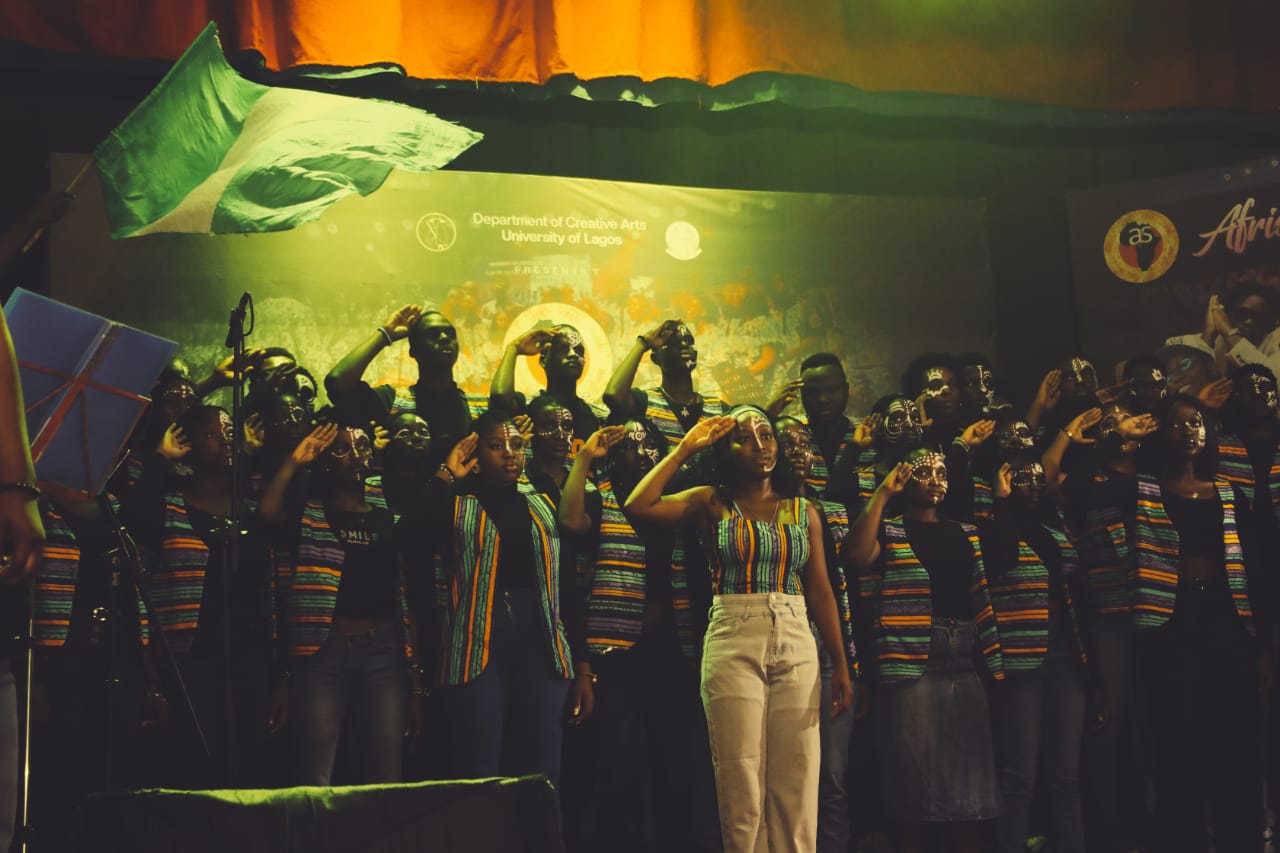
Africa sings, a yearly concert organised by the Department of Creative Arts of UniLag was held for the 11th time. It was an event where the best of African music was performed. Indeed it was another time to hold an audience spellbound with mellifluous voices, scintillating rhythms and bedazzling chords.
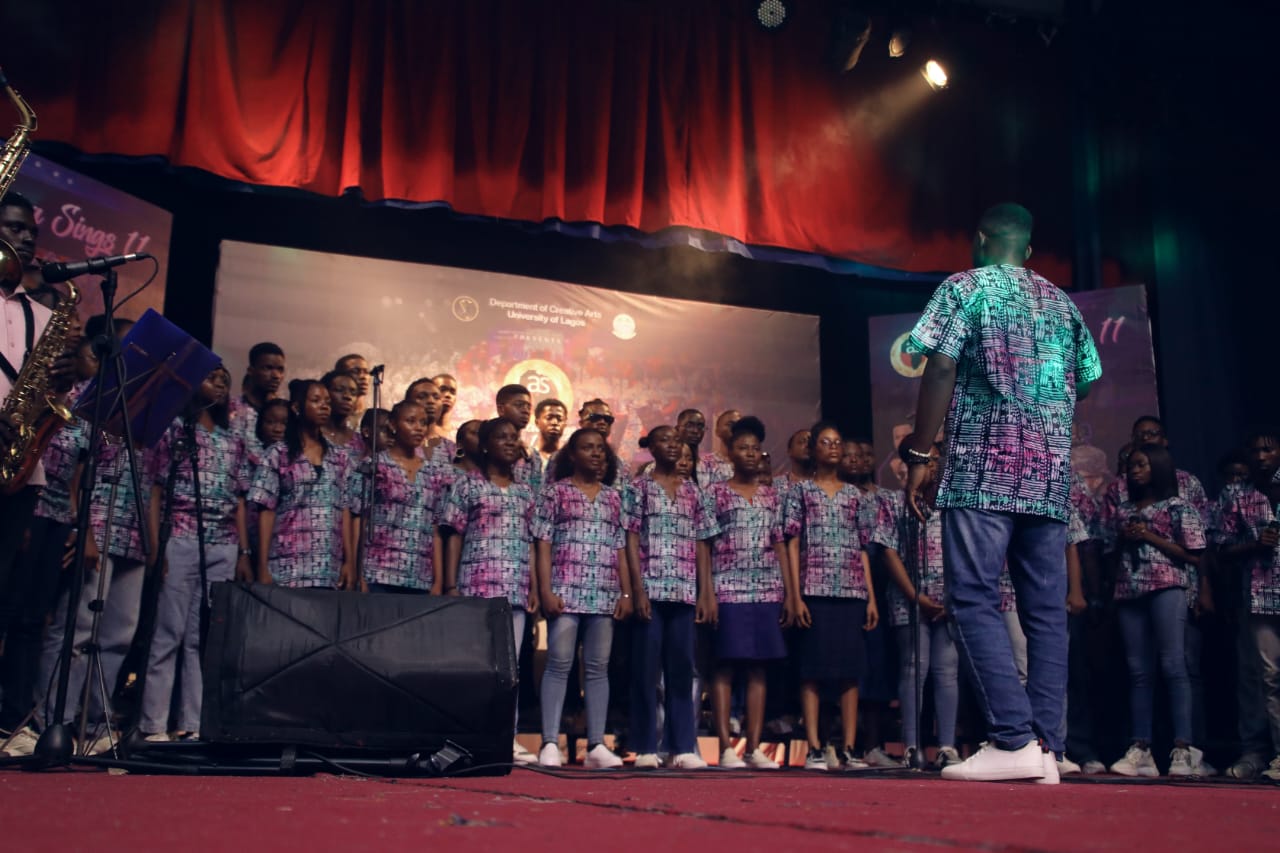
But beyond the dancing, the reverberating sounds of applause, the jocund smiles and the performances of the various groups of singing students, elicited in the audience, the event veritably and eloquently testified to the richness of the African cultural heritage. Culture, they say, is dynamic. And the 11th edition of Africa sings, aptly themed: “Old & New Heritage Concert” combined to genuinely reflect the dynamism of African culture through music. They performed both old and new songs, and beautifully so.
The Music Director, Professor Albert Oikelome had in a press statement before the event given a foretaste of what to expect. He said: ‘The Department of Creative Arts University of Lagos is dedicated to showcasing not only the unique talents of our students in choral music, but the musical heritage of Africa and the diaspora”.
“Nigeria, the most populous country in Africa, is endowed with good music in both popular and traditional streams. Over the years, efforts are being made to preserve these music genres from going into extinction.
“The concert is therefore an effort to bring back the old songs into the present day context. Each group re-ignites the old genres in chorale form and then attempts a re-arrangement of contemporary beats that are trending in modern day music”.
The first group to perform that night was Group 3. And they started with the evergreen ‘Zombie’ by the African and Nigerian music Afrobeat legend, Fela Anikulapo-Kuti. When Fela dropped his exotic family name “Ransome” and replaced it with Anikulapo (the one who has death in his pouch) he may have without intending it been saying he would live on through his songs even after his physical death. Well, with the performance of Zombie (first released in Nigeria in 1976 by Coconut Records , and in the United Kingdom by Creole Records in the following year), at the Africa Sings, Fela was kept alive.
Moving away from Fela’s era, the group performed African China’s ‘Rule us Well’, ‘Which Way Nigeria’ blended with ‘Water Komot My Eye’.
Group 2 who would not allow themselves be outdone by their counterparts in Group 3, performed ‘Joromi’ by the late legendary highlife maestro and musical instruments inventor, Sir Victor Uwaifo, with a choreography. They then delivered ‘Love One TinTin’ before doing justice Flavour’s ‘Nwa Baby’ which was followed by their performance of ‘Fall in Love,’ . Afterwards, they presented a solo performance of Davido’s ‘Aye’ .They then did D-Banj’s ‘Oliver Twist.’
Before Group 1 came onstage, the Lalale Friday crooner, Wale Thompson came up to perform and he did not disappoint his enraptured audience. The choir of CMS Grammar School then came up to deliver scintillating performances and nostalgia evoking old tunes of Ebenezer Obe, Sunny Ade, and others.
After that, Group 1 kickstarted their performances with a Radio Lagos anthem that was followed by aYoruba news cast. Then they performed King Sunny Ade’s ‘Appreciation’ after which they did Ebenezer Obey’s ‘Ese pele pele’. They followed with a dance choreography. They also did ‘Why Me’ and Lagbaja’s ‘Wherever I go’. They sang Asake’s ‘Lonely at the top’’ and finished with ‘Chance.’
The curtain was drawn on the night’s performances with a spoken word delivery by an alumnus of the Creative Arts Department of the university, Preacher’z Kid.
About the songs and performances, Oikelome had this to say: “Interestingly, I did not even influence their choice of songs; I just gave them the theme, and the area that they should really look out for. The arrangement of the songs was by them alone.”
That did not matter any way as the participants went fully satisfied with the level of performances at the event and the assurance that Africa, and Nigeria in particular, is endowed with a cultural heritage that should never be undermined.
Comments