


10 reasons plantain farming is highly profitable

 Quick Read
Plantain has a long lifespan. It can last for 25 years or more. For a single one planted, about six sockers sprout around it in less than five months.
By Isa Isawade
Is plantain farming profitable? The answer is YES. Farmers reveal that among the easiest crops to raise is plantain. After the initial major costs of land clearing, sockers procurement and weeding at an early stage, no tangible cost is incurred to nurture the crop to maturity. Besides, plantain is a major staple food in many parts of Nigeria and Africa, and the continent’s soil and climate are largely suitable for plantain farming. In Nigeria, especially in the southern and middle belt regions, plantain easily grows everywhere. But it requires more, fertile land rich in loamy soil.
A plantain farmer of twelve years standing at the Government Reserve Farm Settlement 111, Ayedaade Local Government, Osun State, Thomas Adekunle Oyewole who spoke with PMNEWS said “Plantain farming is very profitable like many cash crops,” adding that the plant “has a long life span and both fruits and suckers serve as sources of income”.
A published report by the International Institute of Tropical Agriculture (IITA) entitled: Plantain Cultivation Under West African Condition also reveals that plantain farming in the African sub-region is rewarding and enjoys a very long lifespan.
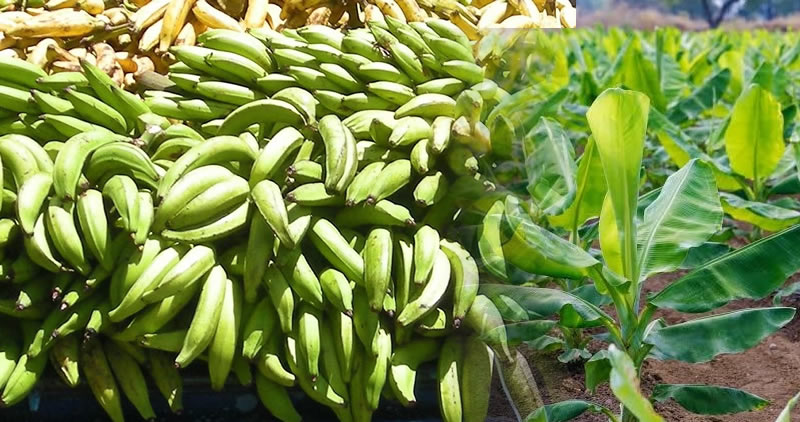
Among the reasons plantain farming is a profitable venture are the ten points listed below:
1. Plantains are a staple food that can be consumed in many forms such as fried, baked, boiled, pounded or roasted, and consumed alone or with other food. They are known to be rich in nutrients such as vitamins, minerals, and fibre. Plantains are also used for making plantain flour, which is used in the production of snacks, pastries, and other food products. so, demand for it is high.
“About 70 million people in West and Central Africa are estimated to derive more than one-quarter of their food energy requirements from plantains, making them one of the most important sources of food energy throughout the African lowland humid forest zone,” the IITA report reveals.
2. Medicinal advantage: Plantains are known to have medicinal elements that are highly sought after by traditional medicine practitioners. The water from its stem is also said to possess antioxidant properties capable of treating ulcers, wounds and a few other conditions.
3. Plantain farming is less capital-intensive than other crops. In terms of cost per hectare, per ton and unit of food energy, plantains are the cheapest staple crop to produce.
4. Plantains can be grown as intercrops with other crops such as cassava, maize, legumes and cocoyam, and can be integrated with other agribusinesses such as poultry, fishery, and pig farming, thereby generating multiple income sources.
5. Plantain can be grown in the backyards of settlements or house compounds.
“Most plantains produced in West Africa come from compound gardens or backyards inside villages. Backyard soil is very rich in organic matter and nutrients from household refuse which is dumped there. Such gardens are permanently in use for plantains which grow there luxuriantly, become very large and produce heavy bunches. They grow in groups or clusters as each bearing plant produces many suckers which are not pruned out,” IITA report explains.
It is said to be capable of growing in just about any soil. Plantain will grow in just about any soil. It has a tolerance for dense, compacted soils, though will fare best and grow to its largest size in rich, loamy soil with good drainage.
6. Weed control: Fewer efforts are involved in controlling weeds in plantain farming than in most other crops. Weeds are initially controlled about every 6 to 8 weeks; but when the plantain canopy closes about 5 to 6 months after planting, weeds decrease due to shading. Tree seedlings and mulch on the plantain field also serve to control the weeds.
7. Moderate gestation period: Plantain takes between 9 to 12 months from planting to maturity for harvesting. This means that you start getting returns from the venture in less than one year. However, plantains should not be planted during the last months of the rainy season because they need water to grow vigorously during the first 3 to 4 months after planting.
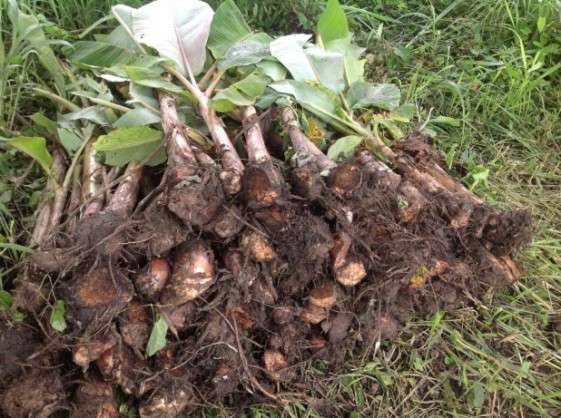
8. Long lifespan: Plantain has a long lifespan. It can last for 25 years or more. For a single one planted, about six suckers sprout around it in less than five months.
9. Numerous uses: Other parts of the plantain plant are also used for numerous purposes. For example, its peels can be used for the production of biogas and organic fertilizer.
10. It is less prone to pest and disease attacks compared to other crops. It requires little or no irrigation.
Comments