


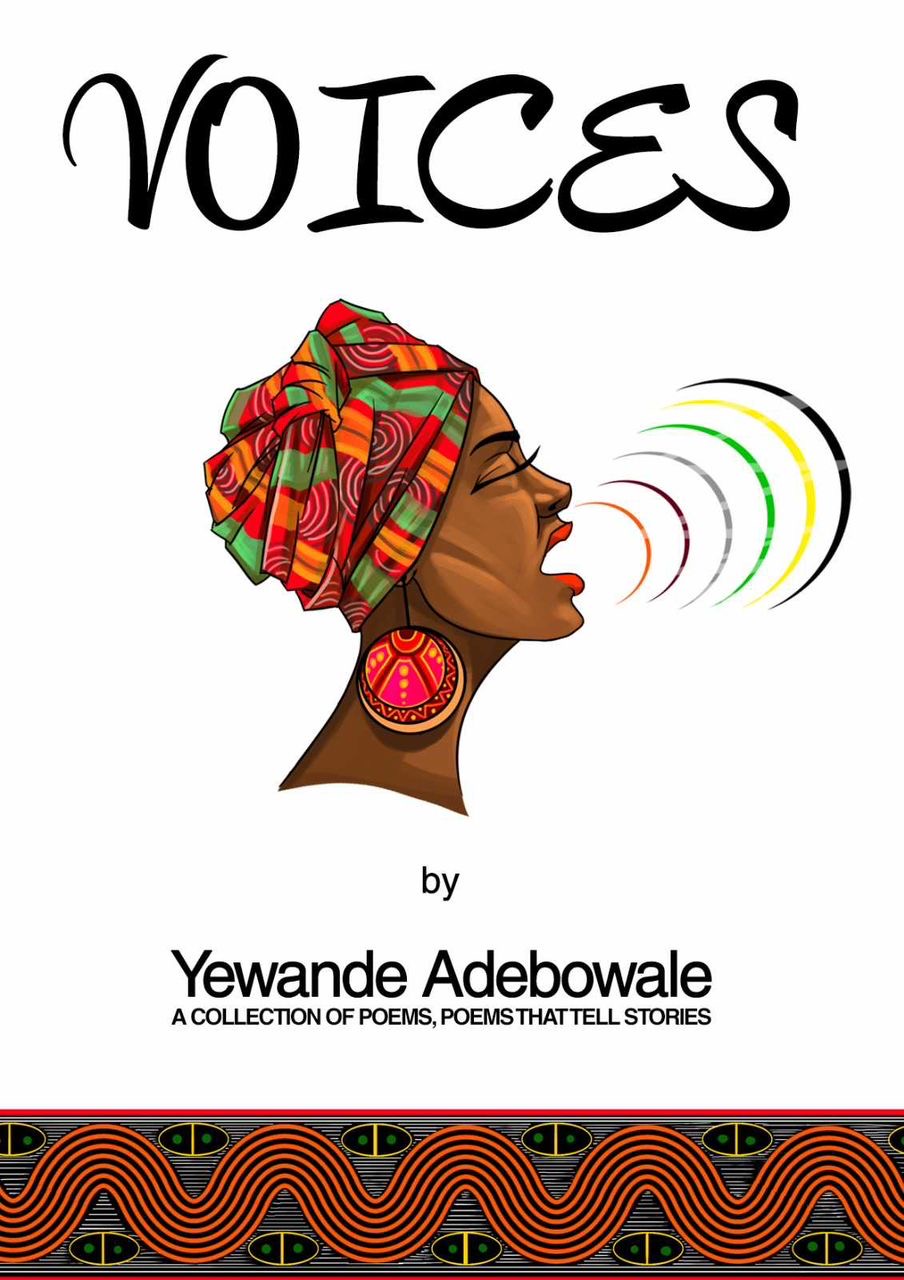
Exploring depths of emotion, experience in Yewande Adebowale’s collection of poems “Voices”

 Quick Read
Adebowale’s adept use of imagery and metaphor allows the reader to visualize the weight of these struggles, evoking powerful emotions that linger long after the poem concludes.
By Dayo Okeowo
In her debut poetry collection, Voices: A collection of poems that tell stories, which was published in 2016, Yewande Adebowale One of the standout pieces, “Voices from the Abyss,” encapsulates the feeling of despair that often accompanies the experience of living in a country grappling with systemic challenges.
Adebowale’s adept use of imagery and metaphor allows the reader to visualize the weight of these struggles, evoking powerful emotions that linger long after the poem concludes. Her ability to articulate the complexities of these experiences without resorting to overt sentimentality is a hallmark of her style, making her work both poignant and relatable.
As the collection progresses, Adebowale transitions from the broader societal issues to more personal reflections. Poems like “Infatuation Gone Sour” and “Silent Conversation” delve into the intricacies of relationships, exploring themes of love, loss, and self-discovery.
These pieces are marked by a vulnerability that invites readers into Adebowale’s inner world, revealing her own battles and triumphs. The shift from public to private experiences mirrors the journey many individuals take as they navigate their identities amidst external pressures.
In “Oshodi,” Adebowale paints a vivid portrait of a bustling Lagos neighborhood, capturing its chaos and beauty. The poem serves as a microcosm of the Nigerian experience, highlighting the juxtaposition of struggle and vibrancy that defines life in the city. Through her keen observations, Akinse transforms the mundane into the extraordinary, reminding readers of the power of perspective in shaping our understanding of the world.
The collection is not without its moments of levity. “Owambe,” a poem that celebrates the cultural richness of Nigerian festivities, showcases Adebowale’s ability to blend humor with poignant social commentary. This balance of tones throughout “Voices” enriches the reading experience, allowing for moments of joy alongside the more somber reflections.
Adebowale’s talent has not gone unnoticed; her work has garnered numerous accolades, including The Guardian Newspaper poetry prize and the Fidelity Bank prize for creative writing. Recently, she was awarded The World Bank YouthActonEDU spoken word prize and the Project Knucklehead Prize for Creative Rebellion, further solidifying her status as a significant figure in the literary community. These honors reflect not only her skill as a poet but also her commitment to addressing issues that resonate with a wide audience.
“Voices” is a culmination of Adebowale’s journey toward self-discovery and artistic expression. The collection serves as both a personal diary and a broader commentary on the human condition, inviting readers to reflect on their own experiences. The progression from societal concerns to personal narratives is not just a structure; it is a reflection of how interconnected these realms are. Adebowale’s work encourages readers to recognize the narratives that shape their lives and the lives of those around them.
In her exploration of trauma, hope, and resilience, Adebowale invites readers to confront uncomfortable truths and celebrate small victories. Poems like “Hope” and “Keep On” serve as reminders of the strength found in perseverance, urging readers to persist in the face of adversity. This message is particularly relevant in today’s world, where many grapple with feelings of hopelessness amidst overwhelming challenges.
The collection culminates with “To My Unborn Child,” a poignant meditation on legacy and the future. Here, Adebowale reflects on her hopes and dreams for the next generation, capturing both the weight of responsibility and the beauty of possibility. This closing piece resonates deeply, leaving readers with a sense of introspection and a renewed commitment to fostering change.
In conclusion, Yewande Adebowale’s “Voices” is a remarkable collection that transcends the boundaries of poetry. It is a testament to the power of words to heal, inspire, and provoke thought.
Adebowale’s ability to navigate the complexities of both personal and societal narratives reveal the depth of her versatility encapsulated in this timeless work of art.
Comments