


From Maiduguri to the next disaster: Nigeria’s environmental policy failures

 Quick Read
In conclusion, the flooding in Maiduguri should serve as a wake-up call for the Nigerian government
By Taiwo Mustapha
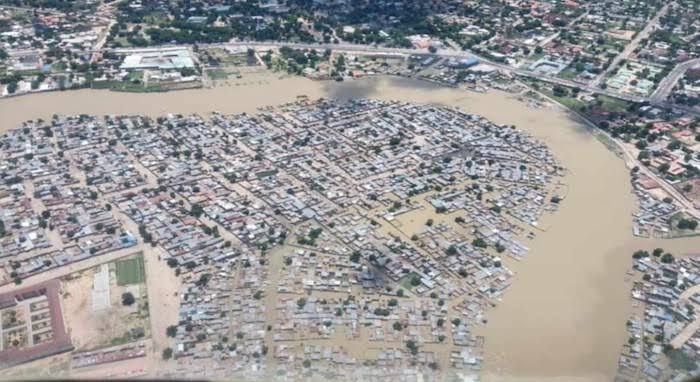
The recent flooding in Maiduguri is yet another reminder of Nigeria’s chronic inability to address environmental challenges effectively. This disaster, in a city already grappling with conflict and economic instability, reflects a larger systemic failure in governance and disaster preparedness.
In this piece, I aim to highlight the shortcomings of Nigeria’s environmental policies and underscore the need for urgent reform.
The National Policy on the Environment, established in 1989, was designed to protect Nigeria’s natural resources and promote sustainability. However, its implementation has been largely ineffective. Despite decades of commitments to climate action, environmental degradation continues to worsen, as evidenced by deforestation, illegal mining, and oil pollution. The issue is not the absence of laws but the lack of enforcement. Regulatory agencies are either underfunded or entangled in corruption, rendering environmental protection policies toothless.
In addition to weak enforcement, Nigeria’s approach to environmental management is fragmented. Policies like the Environmental Impact Assessment Decree (1992), the establishment of the Federal Ministry of Environment (1999), and the creation of the National Emergency Management Agency (NEMA) have not been integrated into a cohesive national strategy. Instead, the government’s response has been reactive, responding to disasters after they occur rather than preparing for them in advance. Initiatives to promote renewable energy, for example, remain piecemeal and overshadowed by the country’s continued reliance on fossil fuels.
A significant part of the problem lies in the government’s mismanagement of public funds. Rather than investing in critical infrastructure and environmental protection, much of Nigeria’s commonwealth is funneled into maintaining the lavish lifestyles of politicians and elites. Billions are spent on private jets, luxury vehicles, and opulent homes, while ordinary Nigerians suffer the consequences of poor governance. The government’s priorities are misaligned, focusing more on personal gain than on the welfare of the citizens they are supposed to serve. This diversion of resources away from vital sectors like environmental protection and disaster management has exacerbated the country’s vulnerability to crises like the Maiduguri flooding.
My experience as a Nigerian student at the University of Florida during Hurricane Helene in 2024 offers a striking contrast. In the U.S., agencies like FEMA mobilized resources before the storm hit, ensuring that communities were prepared and equipped for both immediate and long-term recovery. This proactive approach stands in sharp contrast to Nigeria’s handling of the Maiduguri flood, where disaster response efforts were slow, uncoordinated, and insufficient to meet the needs of the affected population.
Flooding in Maiduguri is not an isolated incident. It is part of a broader pattern of environmental mismanagement that leaves Nigeria vulnerable to the impacts of bad governance. It is not the first time an entire city has become submerged in Nigeria without warning. It is Maiduguri now, but who knows where is next? What is the government doing to be prepared for the next one? What disciplinary measures have been taken against establishments responsible for laxity during previous floods, and what will happen when the next one occurs? Without stronger policies, better urban planning, and improved disaster preparedness, these events will continue to escalate in frequency and severity.
Public engagement is another critical area of concern. Many Nigerians remain unaware of how environmental degradation impacts their lives and livelihoods. For any policy reform to be effective, it must include public education campaigns and greater community involvement in environmental protection efforts. The government, civil society, and private sector all have roles to play in fostering this collective responsibility.
In conclusion, the flooding in Maiduguri should serve as a wake-up call for the Nigerian government. It is time to move beyond rhetoric and take concrete action to reform environmental policies. Strengthening the regulatory framework, enforcing existing laws, improving disaster preparedness, and fostering public awareness are essential steps toward creating a more resilient and sustainable future. If the government continues to delay, Nigeria will face even greater disasters, with devastating consequences for both its people and its economy. The time for action is now.
Taiwo Mustapha writes from Florida.
Comments