


Shettima: Nigeria determined to join top 80 countries on Human Capital Index

 Quick Read
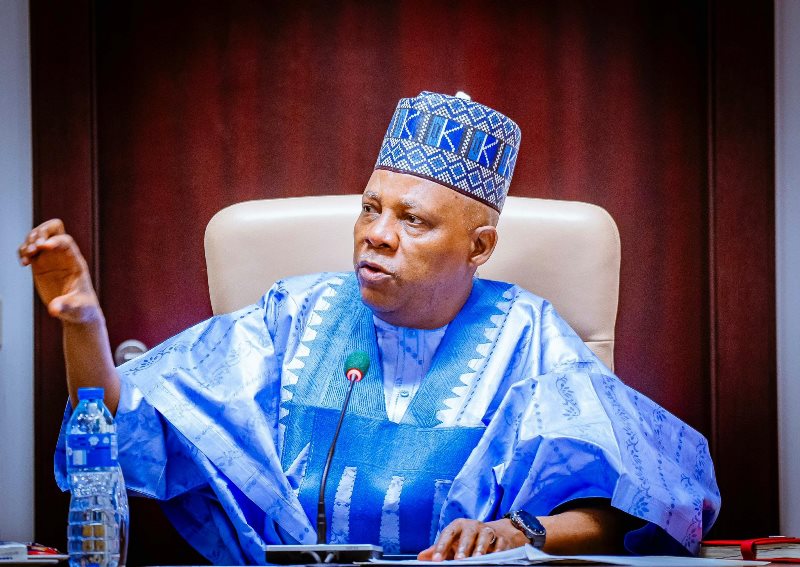
The Vice President stated this on Friday while inaugurating the HCD 2.0 strategy at a meeting of the steering committee of the Human Capital Development Programme at the Presidential Villa, Abuja.
By Salisu Sani-Idris
Vice-President Kashim Shettima has expressed the determination of President Bola Tinubu-led administration to build a healthier, better-educated, and empowered Nigerians to position the country among the top 80 countries on the global Human Capital Index (HCI).
The Vice President stated this on Friday while inaugurating the HCD 2.0 strategy at a meeting of the steering committee of the Human Capital Development Programme at the Presidential Villa, Abuja.
According to Shettima, the task is ambitious but achievable.
Shettima called on Nigerians, including policymakers and community leaders, to embrace the human capital development programme.
“Our targets are ambitious, yet achievable. We aim to position Nigeria among the top 80 countries on the Human Capital Index, reaching a score of 0.6 by 2030.
“These metrics represent more than just numbers; they signify the real change in the lives of our people, access to quality healthcare, and improved educational outcomes.
“Others are expanded opportunities for meaningful employment and a society that remains resilient in the face of global challenges.
“As we inaugurate HCD 2.0, I call on every Nigerian — policymakers, community leaders, and citizens alike — to recognise the stakes and embrace the promise of this initiative.
“Building a healthier, better educated, and empowered Nigeria relies on each of us contributing to a legacy of progress and possibility,” he said.
Shettima recalled how Nigeria had faced a situation, in 2018, when the nation’s ranking on global human capital indices showed critical gaps in health, education and employment.
The urgency to address the situation, he said, compelled the government to prioritise human capital development.
According to him, this led to the launch of HCD 1.0 to build a healthy, educated, and productive Nigeria by 2030.
He described the launch of the HCD 2.0 as the beginning of a new phase.
“We have laid a strong foundation, and now, we officially launch the second phase of the Human Capital Development strategy—HCD 2.0.
“This initiative represents far more than a programme. It is a national commitment, a promise to the well-being, empowerment, and productivity of every Nigerian.
“It embodies a vision that speaks to the aspirations of each citizen and affirms our shared goals – a healthier, more educated, and more inclusive Nigeria,” he said
He explained that the goal of the HCD 2.0 strategy was to make sure that no Nigerian was left behind in the nation’s efforts toward a more inclusive and sustainable society.
Shettima listed the core pillars of the strategy to include equitable and modern healthcare, an inclusive, functional education system, and promotion of financial inclusion nationwide.
“One of the core pillars of HCD 2.0 is equitable and modern healthcare. We envision a system that reaches every Nigerian, regardless of location or economic standing.
“Through digital health platforms, innovative financing, and climate-resilient practices, we aim to create a healthcare system that serves all.
“Alongside healthcare, we are transforming our approach to education. We are committed to fostering an inclusive, functional education system that prioritises digital literacy, gender equity, and financial accessibility,” he said.
The vice-president explained that HCD 2.0 was targeted at bridging the digital divide and promoting financial inclusion across Nigeria.
“By advancing fintech solutions, online banking, and digital payment systems, we are creating pathways for every Nigerian to actively participate in the economy,” he said.
Earlier, Special Adviser to the President on National Economic Council (NEC) and Climate Change, Rukaiya El-Rufai, said the new programme aimed to enhance human capital outcomes by focusing on education, health, and workforce development.
According to her, it will be building on the progress of its predecessor, HCD 1.0.
“The HCD 2.0 Programme is designed to elevate Nigeria’s Human Capital Index (HCI) and ensure our country is equipped to face both national and global challenges, including climate change and digital transformation,” she said.
She also highlighted the importance of robust Monitoring, Evaluation, Accountability, and Learning (MEAL) processes to ensure transparency and effectiveness in tracking progress.
“We are committed to closing critical gaps in health, education, and labour force participation while promoting sustainability and inclusivity in all our efforts,” she added. (NAN)
Comments