


Women urged to embrace education in fight against gender-based violence

 Quick Read
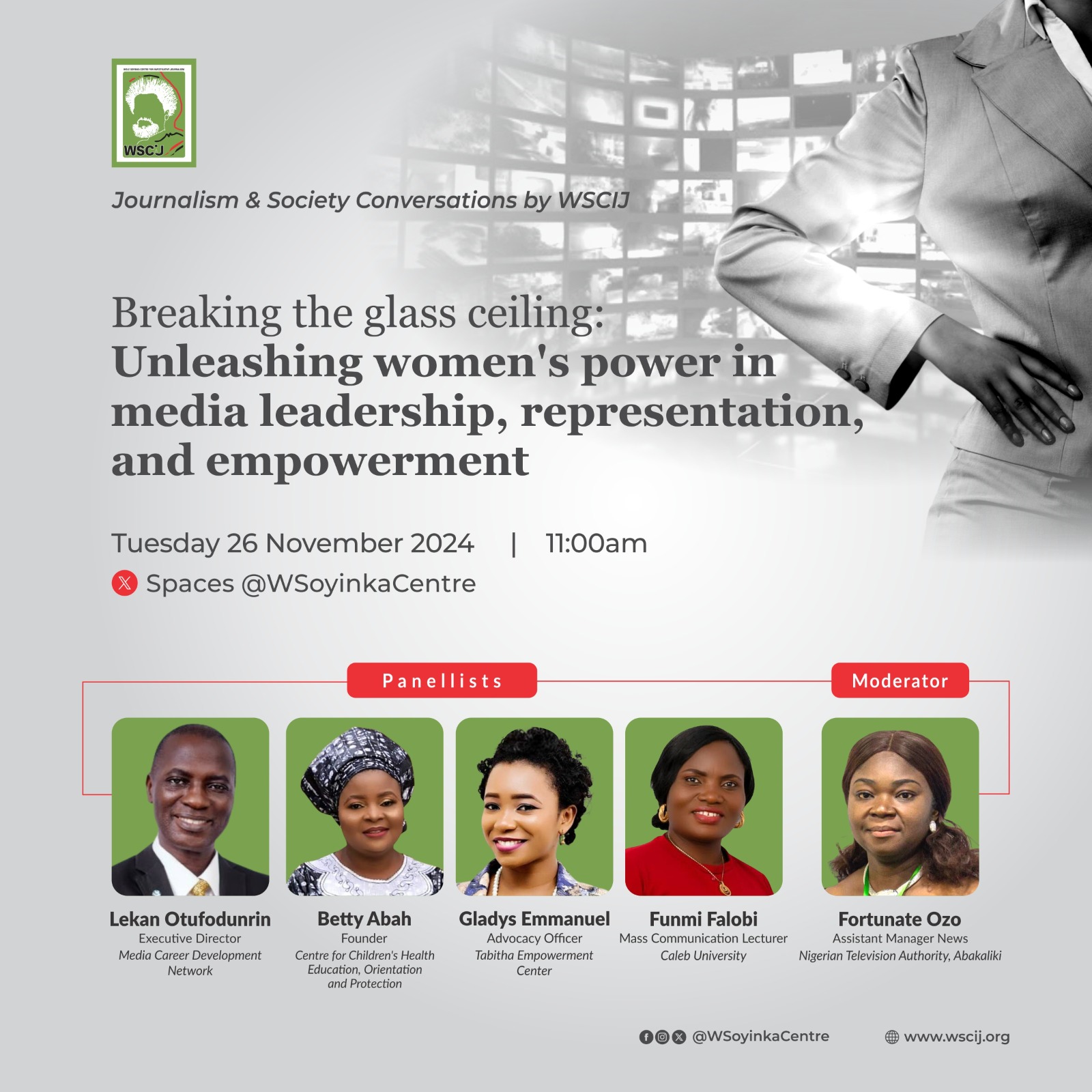
This message resonated during a recent discussion hosted by the Wole Soyinka Centre for Investigative Journalism (WSCIJ), aptly titled “Breaking the Glass Ceiling: Unleashing Women's Power in Media Leadership, Representation, and Empowerment.”
Jimoh Elizabeth Oluwaseyi
As the world unites for the annual #16DaysOfActivism campaign against gender-based violence, a clarion call echoes through the digital realm for women to prioritize education, self-development, and professional training to forge paths of equity and empowerment.
This message resonated during a recent discussion hosted by the Wole Soyinka Centre for Investigative Journalism (WSCIJ), aptly titled “Breaking the Glass Ceiling: Unleashing Women’s Power in Media Leadership, Representation, and Empowerment.”
During the discussion, experts emphasized the critical role that education plays in dismantling systemic barriers and fostering societal change.
Gladys Emmanuel, an advocacy officer at the Tabitha Empowerment Center, highlighted the importance of education from various legislative perspectives, referencing key documents such as the Universal Declaration of Human Rights and the Nigerian Constitution.
She underscored that workplace harassment remains a significant obstacle to achieving gender equality, yet education can serve as a powerful tool for transformation.
“Education is a superpower,” Gladys proclaimed. “It transitions us from ignorance to knowledge, equipping us with essential skills like critical thinking and decision-making.” She illustrated how education not only enhances confidence but also opens doors to mentorship and networking opportunities, empowering women to challenge stereotypes and advocate for their rights.
Funmi Falobi, a Mass Communication lecturer at Caleb’s University, passionately urged women to rise above societal constraints. “Don’t let your gender define your potential!” she asserted, calling for women to embrace their roles in shaping the media landscape.
Lekan Otunfodunrin, Executive Director of the Media Career Development Network, brought a male perspective to the conversation. He emphasized the necessity of equity in media representation, sharing insights from his mentorship experiences. “Equity ensures that everyone has a fair chance,” he stated, reflecting on the stark gender disparities evident in many media organizations.
Betty Abah, founder of the Centre for Children’s Health Education, Orientation and Protection, addressed the deep-rooted patriarchal structures that persist within the Nigerian media. She encouraged women to cultivate supportive networks and collaborate with men rather than viewing them as adversaries. “You can’t climb the ladder by burning bridges,” she advised, promoting the importance of social currency in professional advancement.
The discussion revealed alarming statistics: men are represented in media roles seven times more than women. This underrepresentation underscores the urgency for women to strategically position themselves to claim their rightful place in the industry.
Participants left the session inspired to apply the insights gained, embracing education and professionalism as pivotal tools in their pursuit of gender equality.
As we commemorate the fight against gender-based violence, let us rally around the truth that empowered women can change the narrative.
In the words of Advocate Gladys, she urged women everywhere that “With education, we can challenge norms, advocate for change, and rewrite our own stories. Together, let’s break the silence and shatter the glass ceilings that hold us back.”
Comments