


Exclusive interview: Details of how Isaac Boro was killed – Gen Alabi-Isama

 Quick Read
Yes, whether you like it or not you will end up with it. Whether you like it or not. You will have your own local government police, state police. Even school police, you will have. To have security in this country, you need state police. They say governors will use state police to rig elections, and so what? Are they not using the federal police to rig elections? All these things we keep adjourning, if you don’t put them in place we would continue to experience what we are experiencing.
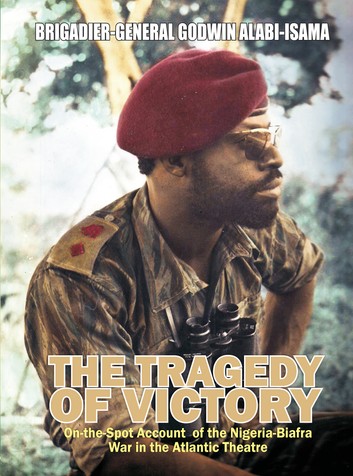
On 24 December 2024, Retired Brig.-General Godwin Alabi-Isama, a Civil War veteran who was the Chief of Staff of the 3 Marine Commando Division (3MCDO) of the Nigerian Army throughout the 30-month war between Nigeria and the secessionist Biafra Republic, clocked 84. He was born by an enterprising Muslim Yoruba woman in Ilorin, Kwara State to a Ukwani Christian father from Delta State on Dec. 24, 1940. He attended Ibadan Boys’ High School (IBHS). An ardent athlete whose sporting competition activities brought him in contact with the army was enlisted in the Nigerian Army in 1960. A graduate of the Mons Officer Cadet School in the UK and Senior Tactics School and Staff College in Quetta, Pakistan, he was tactics instructor at both the Nigerian Military School in Zaria and at the Nigerian Military Training College (NMTC) at Kaduna. The audacious Alabi-Isama and his inseparable friend and brave officer, Retired General Alani Akinrinade and a few other officers were the engine room of the army division that fought the toughest battle of the Nigerian Civil War and took the surrender of the Biafran Army. He was the master strategist in the division effectively commanded by the Charismatic army officer, Col. Benjamin Adekunle, a.k.a Scorpion and later, towards the end of the war, Col. Olusegun Obasanjo. After the war, Alabi-Isama acted as the Governor of the then Mid-Western Region and received the first set of the National Youth Service Corps (NYSC) in 1973. He later became the Principal General Staff of the Army Headquarters in Lagos where he served until his retirement in August 1977. He later relocated to the United States of America where he ventured into the blossoming telecommunication industry and recorded huge success. He returned to Nigeria in 2010 only to be confronted with what he described as a pamphlet of distorted history titled, My Command, written by the latter Commander of the 3 Marine Commando Division and former president, Gen. Olusegun Obasanjo. According to him, the shock he had at seeing the falsehood and half-truths in the book prodded him to write THE TRAGEDY OF VICTORY: On-the-Spot Account of the Nigeria-Biafra War in the Atlantic Theatre to set records straight. The book is a detailed war narrative with about 500 photographs and maps that abundantly buttress his account. Former Head of State and Commander-in-Chief of the Armed Forces of the Federal Republic of Nigeria, General Yakubu Gowon (GCFR), wrote in his foreword to the book: “I read through the manuscript parts 1 to 3 and I was fascinated and impressed. I felt proud that the army which I presided over at the time as Commander-in-Chief produced such brilliant and courageous officers as the author. He wrote in a style that made the book a compelling read from start to finish. Tragedy of Victory is one of the very few books written by frontline combatants from both sides that I have had the privilege of reading. Alabi-Isama, I am proud to say, is a worthy representative of the qualitative officer cadre Nigeria had at the time. That he kept such detailed records and even accompanied them with numerous properly captioned photographic shots is highly commendable.” In this exclusive interview conducted by PMNEWS Journalist ISA ISAWADE at the elder statesman’s country home in Ilorin to, in a way, mark the widely respected General’s purposeful four scores and four years on earth, the Civil War veteran with an incredibly retentive memory elucidates some significant events that shaped the outcome of the internal war whose history will be eternally told of Africa’s most populous nation including the circumstances surrounding the death of another sterling army officer, Isaac Adaka Boro, in the war front. A video clip of his graphic explanation of the Dilemma Strategy implemented by his command to capture the very crucial Obubra is inset. Enjoy the interview.
Q: During the Nigerian Civil War prosecuted by you and some other senoir military officers, What do you think gave Captain Duke the audacity to do the funny thing he did while he was in your detention?
A: When the team came to me, the pictures are in the book two things were important at the time- building culvets and the roads. So, people organised themselves and with map we looked ahead, in 15 days I will get to that place and I want to cross the bridge, in ten days I will get to so so place and I will like to go through the culvet, I will like to put a pontoon on the Opobo River. So, we went to work. Captain Duke was an engineer recruited from Calabar, he said a pontoon across Opobo River was not possible. As far as I was concerned, I would not accept the word ‘impossible’. I am not an engineer but this river, I will cross it and I have twenty days to go, I will cross this river. We got everything put together. Luckily for us, there was Opobo Boat yard, people building boats at Opobo. They had killed their leader, and when we got to these people there, some of them ran away, some of them stayed. We said yes, the pontoon will be possible. What do we need? We started looking for everything. Within the twenty days they had gathered some planks. I had the list and documents of how many nails we used, how many planks we used, drums we used. I had records. There is a picture in the book with a lady that was recording everything that we used. Anyway, finally we built the pontoon. Because Captain Duke had said it was impossible, I said they should lock him up in my tent. I think he liked that. He drank all my beer, a carton of beer that was there and slept off (laugh). But you see, he was right he just didn’t put it well. Because we did it well, the pontoon was good and I said ha, why don’t we turn it into a bridge across the river, almost a mile. The belief out there was that there was nobody who could build that in the Nigerian Army, that it must be the British engineers that built it. By the time they realised that I was the person that was handling this thing, they were shocked. But at night, the high tides broke my pontoon into two. The picture is also in the book. Then, we now realised what Captain Duke was talking about. But my troops and vehicles had gone across. So, I said they should go and release him only to discover that he had drunk all my beer (laugh). We became friends afterall. He did well, he did well.
Q: I have read a book titled ‘My Name is OKORO’ written by Dr Sam Omotseye where he reports an encounter between a woman entrepreneur called ‘Madam Onitiri’, a supplier of kolanuts to some merchants in the North including ‘Chief Subomi’. She came all the way from Ilorin during the unrest that preceded the Civil War to see her son who was serving in the Nigerian Army in the North. This courageous woman told the story of “a lovely Ukwani couple” she met in the commercial vehicle that conveyed her to Kaduna, and who were executed along with other passengers suspected to be from the Southeast of Nigeria by Northern soldiers. The story reads like that of Mama, Alhaja Ajiun Alabi-Isama of blessed memory. Did Omotseye adapt that aspect from THE TRAGEDY OF VICTORY?
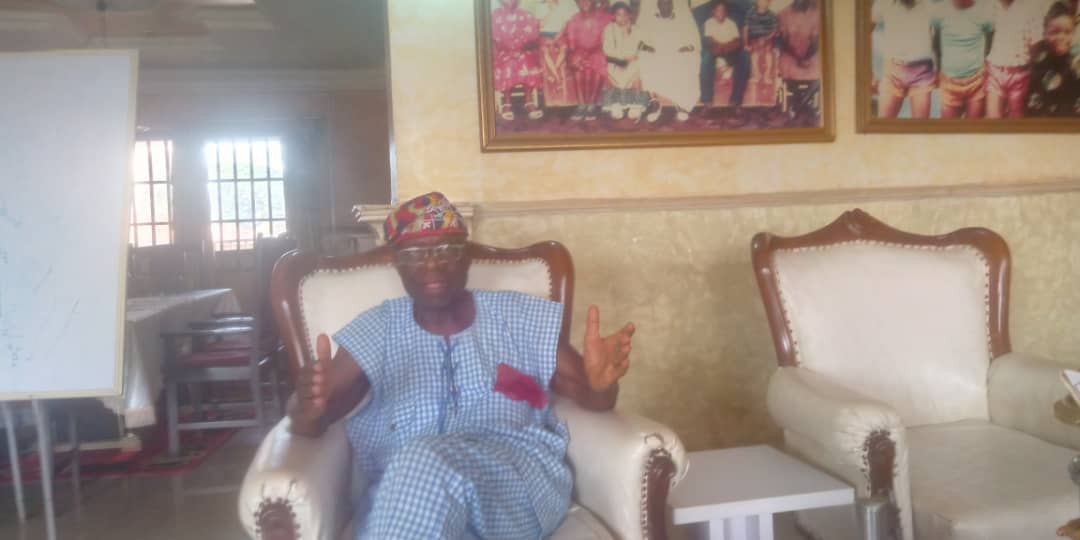
A: Yes, I think Sam Omotseye was trying to write about my mother. The story of my mother going to Civil War, my mother believed they were killing the Ukwani people. You see, in those days if you were not Hausa or Yoruba people, whether you are from Warri or Sapele or whatever, you were Igbo. So, as far as she was concerned, the soldiers were killing her husband’s people because coming from Zaria to Kaduna during the coup, she sat by a couple who were speaking Ukwani and my mother could speak the language. They were surprised that a Yoruba woman with tribal mark could speak the language. The story is in the book. They got to a road block where soldiers said ‘Everybody come down!’ They came down. ‘You this way, you that way’. In front of my mother, they shot these people. Soldiers shot these people at the road block! If not because of the tribal mark and the way she dressed, they probably would have shot my mother too. The story is a long one but finally my mother was able to arrange to see the Emir. Emir took us to the Governor, from the Governor they announced her to arrange for people for NMTC, Nigerian Military Training College where I was an instructor. All the people who were not Hausa speaking, we got a train for them, we got a coach for them. Civilians in town were told to go to railway station, Kaduna North. At the park, the train took them away. That even affected me because they felt I arranged for Igbo people to escape, they were looking for me. They wanted to kill me for that. That was one of the ways Gowon saved my life, I wrote it in the book and in my tribute to Gowon in his book as well. So, Sam Omatseye was writing about my mother. Back to the South, my mother then said that she was going to my father’s village, if they would kill her in that village, they should kill her. I said Alhaja, you want to go to the village? Well you can speak the language, I am not going there with you. You go there. When war get to the place do no go across this river. When refugees are going across the river, you don’t go across the river. You want to die here, you are welcome. But if you die there I will bury you, so you stay here. Biafran troops were withdrawing and they saw my mother and greeted her, “Alhaja, what are you doing here? How did you get here? Anyway, they quickly crossed the river and ran away. Nigerian troops arrived. “Ha! Mama Alabi, what are you doing here? Rabo, Baba Aliyu and Capt. Ilori. They were with Alhaja. They said “we’ve heard your story, you stay here”. They gave her one cow, they gave her bag of rice, beans, corn, fish and so on. So, Alhaja was there. I went to war. Biafra and Nigeria fought at the place. Finally, Alhaja was alone in the whole village and when the refugees came back, they survived on Alhaja’s foods.
Q: How come that the two opposing parties in the war were at home with your mother, especially the Biafran soldiers?
A: They all recognised Alhaja. Many of them were from military school there. She was very kind to them when they came around, she would bring food, she would bring drinks, we would prepare pounded yam for everybody. In fact, in my book this is told, when I was captured by the Biafra at Benin, the officer, Captain Ochei said Alabi you that your mother used to cook for us, that your mother used to give us pounded yam and drinks and all that. If not because of that I would have shot you now. Anyway, the three Nigerian officers who arranged food for my mother were finally transferred to Calabar and they told me “we saw your mother”. Adekunle and the officers looked after my mother well. I said you saw my mother? Immediately they mentioned that, I picked up an helicopter and went to the village. Alhaja was already at home, she was singing with the people. They were feasting. They had food, cow, goat, fish, rice and so on. When they saw me arrive ha! It was more feasting. That was the story Omotseye was trying to write in his book.
Q: Are other information about Madam Onitiri in My Name is Okoro, such as her proficiency in Hausa, Yoruba and Igbo languages; having a large farm in an ousket of Ibadan, and being the biggest supplier of kolanut to the North true about Alhaja?
A: Yes, well that was how she met my father. She was selling kolanuts and in every part of Ilorin, my father was called Chief Joi. I was thinking the name was Joy. It was when I got to the village that they told me the correct name. It’s Chief J O I (Jeremiah Okoro Isama). So, my mother was selling kolanuts and when she finished selling to the people, they said do you have some more? She said yes. Then, she brought some more, then they realized that what she brought was even better. They asked: “how did you get this?” She said “My parents have a kolanut farm.” They asked: “Will you take us there?” She said yes, and they went to the village in Owode about 25 miles from Abeokuta called Owode-Egba. When they got there and saw the large kolanut farm they asked: why are you selling it at torokobo? So, my father resigned from PZ to support that kolanut business. He rented three coaches at 12 shillings per coach at the time and one coach would go to Kaura Namoda. One would go to Nguru. The one from Kaura Namoda would bring fish. The one from Nguru would bring tinko (dry meat) and so on. They made good money, and of course my father died. So, she continued the business. That was why I was able to go to school. That is the story of the kolanut business. Of course, she had problem in the family house. A Muslim woman that married a Christian, they couldn’t do the wedding in Ilorin. They had to go to Owode. The story is in the book, and of course, at Owode, Muslims and Christians intermarried. When she later entered family house and they were not looking after her very well, she started moulding blocks here we are today in the centre of market (his house where this interview was conducted).
Q: The Dilemma Strategy worked so well for you during the war that you are able to capture a long distance of 480km to land and capture Port Harcourt (cut in).
A: Now, capturing Port Harcourt by walking 480km was the scorpion strategy, not the Dilemma Strategy. The dilemma strategy was the capture of Obubra. But if you were talking about the capture of Port Harcourt, that is a different issue. Which one do you want me to talk about?
Q: The capture of Obubra.
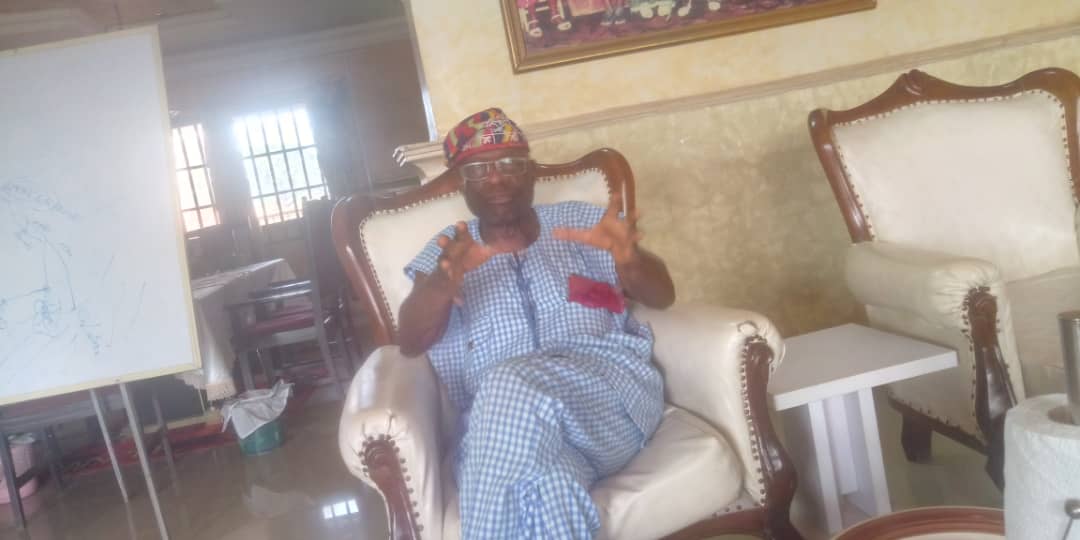
A: In the capture of Obubra, two things happened. Number one, we wanted to close the land border at Ikom. Number two, we wanted the whole of Cross River State captured so that the governor could take over at Calabar which would be a victory for the federal government that had just established a state to be called Cross River State. Once you installed the governor there, the administration would start immediately. Now, the point on Obubra. When we got to a place called Ugeb, they told us they were killing Okoi Arikpo’s people. That we should go there. Okoi Arikpo was a minister in Gowon’s government. I didn’t know about that and nobody told me about Afrikpo. But I was told to capture Obubra in three months. Can I show you on the map? ( He stood up and within a view minutes drew the map of the area comprising comprehensive labelling of towns and villages along the axis extempore- towns such as Calabar, Mbebu, Oban, Nsakpa which he said was Biafran link with Cameroon through Nsakpa, Ikom and Obubra).
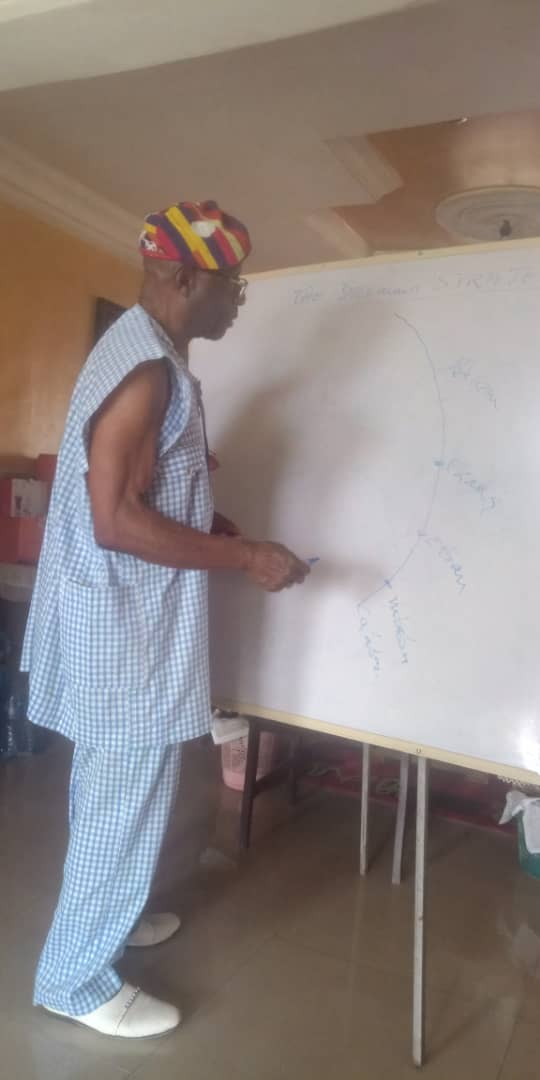
See the video here
Q: While you were feeding and clothing the Biafrans you captured, Biafran soldiers on the contrary were beheading your men. Why do you think they were not reciprocating?
A: Well, again the Biafran plan and strategy were about revenge. They would capture a soldier, they would kill him and move on. I was lucky that they were not able to capture any of my troops to be able to behead anyone. We fed those we captured, the picture is in the book. We captured 300 people at Opobo, we fed them and recruited them into the Marine Commando. They were all documented, the pictures were in the book. The soldiers would say oga, these people will kill us in the night and I said then we will kill them in the morning. I made one of them, Amaechi, my orderly. He died about two years ago. Amaechi at night while I was away on patrol, took the only lorry we had but you see he couldn’t drive in the night. So, he had an accident and I caught him up there. I said haa! you are in trouble. I picked him up and said you will still be my orderly, follow me. We recovered our vehicle. I think God in His mercy saw our mind and our building of trust. That was how the war ended. Many of them deserted Biafra to come to us because we were feeding them. 1 and 2 Divisions did not do that. So, their surrendering to Marine Commando was because we didn’t kill them. And they saw that. You know, we had defeated them mentally before they were defeated physically. Mentally they would just surrender. In fact, there was a situation in which we captured some of them and I would say those who want to join Marine Commando come this side (he demonstrated), those who want to go back to Biafra stay this side and if you want me to shoot you stay this side. Some of them would joke and put their legs there and come back. Then, people like Mike Ajegbo decided they were going to go back. He is the owner of Minaj, a television station. He later became an attorney. He went to University of Nigeria, Nsukka. He registered my company called Satcom.
Q: At that capture scene, did he go back to Biafra?
A: Oh yes! He went back to Biafra. There were many of them who told me stories. In fact, my son wanted an admission into Ebonyi University to do medicine and a friend of mine was to help us get the admission and we didn’t see him again. My son said the University will resume on Monday, are we not going there? I said well, let’s go. He said: ‘Who do we know?’. I said don’t worry, when we get there we will find a Samaritan because our intention is genuine. So, we got there. As soon as we got to the gate, one man looked at me and said: “Oga, I know you. I said how can you know me? I am coming all the way from Lagos. He said “you are Alabi-Isama”. I said how did you know me? He said during the Civil War you told me to go home and you gave me some money. He said what are you looking for here? I said my son is looking for admission into the school here because of my office at Enugu. He said I am the Registrar, let me take you to the Vice Chancellor. He took me to the Vice Chancellor and then my son was admitted into the university. I guess one good turn deserves another. So, the 300 troops we captured with their Commander and deputy battalion commander were fed. We looked after them. We had no officers mess. So we ate the same food with our soldiers. The picture in the book shows Obasanjo eating chicken bone and Lt. Col. Ayo Ariyo eating. They didn’t go to officers mess to eat because we didn’t have any officers mess at the war front. I couldn’t see myself eating chicken leg and drinking palmwine without my soldiers. That was how we ran Marine Commando. We had no officers mess in Marine Commando. So, it’s very sad that my soldiers were discredited. Many of them are late now but I know that one thing is very important- whatever was hidden, whatever is evil, whatever is good, we will still meet a better judge and the Almighty God will judge all of us.
Q: What became of the Biafran soldier who killed Isaac Adaka Boro?
A: Two things that pain me actually about that was the fact that Isaac Boro had just gotten his order to the final battle and that was at about 6am and Boro died at about 6:30, thirty minutes from leaving my office. What would have happened was that Isaac Boro would have said ‘that building where they locked up everyone, you orderly go and have a look, what is there?’ But he himself went and opened the door. The soldier had only one bullet in his riffle and as soon as the door was opened, he just fired and it was Isaac Boro. He was just going back to his unit. It was at Okrika for the final battle. We had to capture Port Harcourt that day and the way the soldiers rained battle at Biafra, I got to stop and I did not let 15 Brigade and 19 Brigade of Isaac Boro to enter Port Harcourt. I diverted them to Elele and Egrita but at 12 ‘O’clock we captured Port Harcourt. My mother told me, anyone that looks you in the face don’t kill him. Number two, I didn’t even remember to take his name. All I said was look just tie this man up and take him to Calabar to go meet the Commander, I don’t want to kill anybody, that they should put him in the prison. I think I should have gotten his name but my photographer was there. He took pictures and all that. The soldier’s photograph is in my book. I wanted to slap him, but I was too annoyed, I just said this man just go. We were trying to revive Isaac Boro, but he shot him in the chest. Again like my mother used to say, “T’Oluwa o ba fe bee, ko le ri bee” meaning if God had not destined it to happen that way, it would not be.
Q: The chase after Azuatalam on the water by Lt. Col. Akinrinade was scary. Was Akinrinade alone while chasing the skilful Biafran soldier? What if the brave Akinriade was overpowered?
A: Well, two things happened there. We had captured Port Harcourt. But you know, the Biafran soldiers were from that area, so they knew the creeks and the corners and all that. We didn’t know many of these creeks. So, they counter attacked Port Harcourt. They wanted to retake Port Harcourt from us. At the same time, they captured Ikot Ekpene. Ikote Ekpene was more important to us and do you want me to show you on the map? (He walked to the white board in his spacious living room and graphically analysed the terrain and its strategic importance: See video inset). So, the Biafran officer was on a small boat. He started running around the creeks. He knew the area. Akinrinade, also with a boat, chased him. Akinrinade’s amunition got finished. Azuatalam’s ammunition also got finished. They went on chasing each other. But finally his fuel finished and Akinrinade was able to capture him. But we recruited him into Marine Commando and sent him abroad for military training. He became a captain. That’s how we looked after the Biafrans we captured. So, all the news about Adekunle killing this and killing that, Adekunle killed nobody. It was when they saw Adekunle carrying a little baby in my book that many of them called me to say what many were talking about Adekunle was not true, I said I told you. He was not even there, he was sick. He was in Lagos. But every plan even people like Segun Osoba when they wanted to interview me or interview Akinrinade I said no no no, the Commander told us what to do and they would go and ask Adekunle some questions and all that. That’s why nobody heard about Alabi-Isama during the Civil War. But we were planning the strategies and tactics, now we have a book that reveals all that.
Q: It’s amazing how you have been able to maintain relationships with fellow war veterans from both sides decades after the Civil War. Are you and Mike Ajegbo still together till now?
A: Mike later became a Senator. I haven’t seen him for about ten years now. But he was my consultant, he registered my company. We became friends after the war. All these people rallied round me in my later engagements in life.
Q: In the copious illustrative images that are the hallmark of THE TRAGEDY OF VICTORY, Lt. Col. (now retired General) Alani Akinrinade is seen always on your left throughout the war. What’s the reason for that?
A: Okay, that happened to be the only military officer I will call my rare friend right from when we were cadets. You know like in secondary school, you are not allowed to go out if you are in boarding school. So also in the training school. But we ran out in the night, chasing ladies, going to night club and all that. Then we would sneak back at night. We were just good buddies and some officers joined us in going out at night, many were caught but we had a way out and we had a way in. We had escape route and how to come back. I will tell you a story of when we went to the Miss Nigeria show at Zaria from Kaduna and we took some ladies from Kaduna. We didn’t know that some of these ladies were friends to Capt. Maimalari at the time before becoming Gen. Maimalari. Maimalari was our mentor, an equally nice, sharp officer. He was unfortunately killed during that first coup. So, Maimalari went to a lady’s house to pick the lady to the Miss Nigeria Show at Zaria. Then the mother said some cadets came to pick them to the show in Zaria. Cadets? How did they get out of the compound? You see, in everything you should go back to the error- what was the problem, how did you get to where you were? Instead of Capt. Maimalari going to the compound to confirm which cadets went, he went to Zaria. We knew our escape route, we had studied the windows and where to escape from. Akinrinade was always on my left and I was always on the right and that was how we escaped. By the time Capt. Maimalari came back in the morning, he asked which cadets went to Zaria yesterday? He would have caught us if he had gone back to the error. The same thing applies to the Boko Haram or Maitatsine, you must go back to why it happened. Once you can understand what happened, what caused it, the solution is simple.
Q: I believe you also used that strategy during the war. Right?
A: Even, during the war, it was the same thing. It worked. You would see where he (Akinrinade) came to help me. He was at Bonny during the Scorpion Strategy to capture Port Harcourt. He was on my left. That was our strategy. The point is once he was on the left, he would have studied his escape route, I told him my own escape route. We were always looking, we would look left and look right and if it’s okay we would leave each other. We knew where to meet.
Q: During an event in the war front, your Mercedes Benz breaking down was providence at work, right?
A: Exactly. You see, we captured a lady coming through a town called Creek Town and a town called Afia Isong. How did you get to this area? There is a major route, a bush path they followed, that’s even where Biafran troops used to penetrate into Calabar area. When we captured this lady, after interrogation and so on we realised that this woman was the catering officer at the University of Nigeria, Nsukka, Mrs Ekpeyong. I had her picture but she told us not to take her picture because once they knew, they would kill her. She had to go back to work, we had no work for her in Marine Commando and I was even happy to let her go because she became our spy. When Nsukka was captured she worked at the state house as the Chief catering officer for Ojukwu. So we had a spy even by Ojukwu’s hair. She had two girls. The picture of the two girls is in the book too. One became our Ambassador to Swizaland and the other one became deputy governor at Calabar. The one that became an Ambassador got a scholarship to go to the University of Ibadan but we had a blockade. There was no flight, there was no ship and she didn’t know the road. She couldn’t go but as soon as we captured Calabar, she came to meet me. At the time we were recruiting ladies into the Army, she said she had a scholarship to go to the University of Ibadan and first of all she did not have money and they didn’t know how to get to Ibadan. Of course, because of the strategy of trust- we wanted to be nice to the people in the area. So, we allowed her to go in our military transport. I gave her a letter to my sister in Lagos and my sister met her at the airport, took her to the University of Ibadan, paid all her school fees and everything and then the mother came and said we have no way to pay you, that she had an old Mercedes in the garage. Our troops should just commandeer it or Biafran troops would take it. It was there for almost a year. We got our mechanic to repair and clean it up. I started using it. Then Adekunle issued an order that I should come with Akinrinade to see him in Port Harcourt. I was at Uyo. To drive at night we couldn’t use light. To be at Port Harcourt at 7 am on the bad road with the enemy on the road, we had to know the password of entry into each unit on the road. The Password name could be Jack. If you say Alabi, then they would just shoot.
Q: Is that the reason you and Gen. Akinrinade call each other Jimmy?
A: We started calling each other Jimmy even as cadets. We trusted and were fond of each other. He gave me confidence because there was no way I could have convinced my mother that I was going to join the Army, in Ilorin you must have been a complete dropout or an idiot to go and join the Army. You don’t want to be a doctor or engineer. Who would join the Army or Police in Ilorin? It was a taboo. So, about the Mercedes, Adekunle then called us to come. Not quite 200 metres from the point of ambush, the bonnet lifted up. We went and closed it. We moved again, the same thing happened. Then, I told Akinrinade if we get to Adekunle late, he will have a reason to quarrel more with us. We abandoned the vehicle. We went to pick Landrover. We got to Port Harcourt quarter to 7 in the morning. Adekunle was sitting by the window waiting to here that we were ambushed and killed. How did you get here? he asked. But you told us to come. He said alright, alright, I will talk to you one by one. Akinrinade, you go out I will talk to Alabi. Roy Chicago, the Nigerian Band leader was there. They were at the venue, waiting to hear that Alabi and Akinrinade had been killed, the battle has been serious and all that kind of things. Then, Ambush Commander, Capt. Richard despatched a note through a motorcycle rider to go to Uyo for me not to pass through Uwaza and not to pass through Afam. But I had left earlier and picked up Akinrinade at Asa. They knew that both of us would be in the vehicle. The rider went to Uyo and did not meet us there. He came back to Port Harcourt and since Akinrinade was standing outside, he saw Akinrinade and gave him the note. Akinrinade read the note, saying please don’t pass through so so place, there is an ambush to kill you. Akinrinade just opened the door and said look o, they wanted to kill us. There was an ambush that we missed where our vehicle broke down. That’s how we escaped from Adekunle. He apologised later.
Q: Were it not for the Commanding Officer of 1 Division in Enugu, Col. Bisalla’s resistance, the new 3 MCDO General Officer Commanding, Col. Olusegun Obasanjo would have implemented the very destructive Operations Pincer 1. Why did you, in the first instance, include it as an option?
A: In the military, what we were taught, you give suggestions and recommendation. If Nigeria would want to exterminate the Igbo (Pincer 1), 1 Division would move; 2 Division would move; 3 Division would move at the same time and crush them. But that was not what we wanted. It was an option. In planning, you have to give options. Pincer 2 has a lot of assumptions. We were in control of the Atlantic Ocean, starting from Lagos to Calabar. We were in control of the air because we had downed the Biafran cargo carrying weapons and foods. We had closed the border at Ikom. So, we controlled the air, we controlled the sea and we controlled the land, the road to Cameroon. Because we had the control of all these, the fourth one was difficult, if we had control of currency that means we would stop Biafra from using Nigerian currency. We asked government to send for Chief Awolowo to explain our strategy and plan to him, and I think Chief Awolowo saw that it was a very good idea. He took it to the Supreme Military Council and they implemented it. What really ended the Civil War was the change of the currency. And you see Biafrans had this old idea, the orthodox way we were all trained. They held on to Umuahia, they held on to Owerri, they held on to the big cities- Aba, Oguta, Afrikpo, Uzu Akole, Abakaliki, Enugu, and so on. Because they were in the big cities, refugees went to villages and because of that, we were able to go between Umuahia and Owerri, 80km. That was why Akinrinade was able to attack fifty thousand Biafrans with only about six thousand troops because Obasanjo had given an order to Major Innih to attack Arochukwu, they killed all the battalion at Arochukwu including their commander, Capt. Gagara. And we had told him that when a troop are in the city like Lagos, Like Accra, like Calabar, like New York backing the river, if you attacked them frontally they would kill you. That is a frontal attack. We had told him. You would see a picture in the book, I made my hand like this (he demonstrates), we would divide Biafra into two. On the Eastern side would be the Arochukwu enclave, we would just demoralise them. On the Western side is going Ihiala. We did not need any other place than to go to Uli Ihiala and Obasanjo also wanted me to capture Umuahia. We didn’t need Umuahia, I could capture Umahia in two weeks and I would end the war in thirty days. But Obasanjo was there for six months, soldiers were dying. We did not know that he didn’t know what to do and he was too shy to tell us: hey, what do you think? You, what do you know? like Adekunle would do. He just sent Innih to Arochukwu. We had an officer called Lt. Col. Obeya who had been there for two years with 18 Brigade, holding on to Arochukwu because Arochukwu is a part of 3MCDO Centers of gravity to Calabar. That’s our center of gravity- Calabar/Oron axis. So, Obeya was there. Obasanjo just sent Innih there, of course they killed the entire 18 Batalion with their commander. Pincer 3 was if the situation was so bad that because we were in Biafra heartland, the children, the women, the men, everybody holding a cutlass and wanting to kill anybody that was Nigerian and passing through the place, Pincer 3 would lead us to link up with Umuahia. Our troop from Afrikpo would have attacked from Okigwe. I can tell you this story, I know the 45km from Umahia to Uli Ihiala. It’s like you have an office, selling maybe chicken and you have a poultry farm somewhere. If you attack the office, all you would do is to cancel the office and relocate your typewriter or computer to another office. But you need to capture the factory. The moment you do that, the office will collapse. Uli Ihiala was the factory and Umuahia was the office. You see, it’s a long story. That was why Obasanjo was annoyed with us, they had agreed with Murtala Muhammed that it was his own division that would take the surrender from Biafra and Adekunle refused. But because Akinrinade suggested Obasanjo, Adekunle thought we were on Obasanjo’s side for 1 Division to take the surrender and not the Yoruba to take the surrender. Adekunle refused. They starved him of supply. They made sure that we quarrelled with him. They told lies against him, and with the benefit of hindsight and my research now, gathering intelligence here and there, Obasanjo had agreed with Murtala for 1 Division to take the surrender, not 3 Marine Commando. They didn’t tell us that. We wanted to finish the war in thirty days and go home. So, all the rigmarole of six months that Obasanjo was doing was because he was waiting for the 1 Division to capture Umuahia and I told Adekunle that capturing Umuahia was not going to end the war. So, 1 Division captured Umuahia, the war continued. When our troops were passing through to Umuahia to link up with 1 Division, they said but were are coming from where you are going. I said yes, you are coming from where we are going but you missed the point. You captured Okigwe and came to Umuahia. We didn’t need Umuahia, we needed Uli Ihiala. And it was when Akinrinade captured Uli Ihiala that the war ended. Biafra just surrendered. All our assumptions, planning, strategies, and tactics worked exactly the way we envisaged. If you look at page 52, I think, of Obasanjo’s book, My Command, Obasanjo knew that there were about fifty thousand troops in there while he ordered Akinrinade to lead only six thousand troops to go and attack about sixty thousand Biafran troops. They knew that they would kill all of them. But you see, thank God our strategy worked and Akinrinade got the surrender which annoyed Murtala and Obasanjo, and they took it on me! I didn’t know Obasanjo enough to quarrel with him. Quarrel with him for what?
Q: But Commander Obasanjo was later called upon to take the surrender?
A: Well, he got the glory. Then, he demonised me. He demonised me that I was a looter, I was a crook and this and that. In the whole of this country, there is no town where I have a plot. In the entire country, there is no state governor that will say he gave me a plot. Even in Lagos, (Mobolaji) Johnson gave us plots, I didn’t take any. I just distributed them. Officers, Danjuma and the rest of them have plots in Lagos. In Ibadan, I didn’t have. Port Harcourt, Calabar, Zaria, Kaduna, Ilorin where we worked I didn’t have. In fact, the land in Ilorin, the GRA was planned by Bamgboye and myself. We got an estate valuer and quantity survior to map out the whole place and I have no land in GRA in Ilorin. In the whole of this country, there is no governor that will say he gave me a piece of land. I don’t have it.
Q: Would it have been out of order if Akinrinade had taken the surrender? Why Obasanjo who was no where near the scene?
A: You see in the military, you have to have a commander. It’s like where you are working as a journalist you have an editor, the CEO and all that. So, you could not have taken certain desisions without your Commander. We had briefed Gen. Gowon that the war would end in thirty days. Gen. Gowon then said okay what do we need. We don’t need anything. We already had what we wanted. We didn’t need troops, we didn’t need amunition, we didn’t need weapon, we didn’t need anything. We were ready. We only needed a commander since Adekunle had been removed. Among all Yoruba officers, Akinrinade just suggested Obasanjo. That was how Obasanjo got there. Obasanjo was not in anywhere near the scene. He even missed his way because he didn’t know the place. Akinrinade just radioed to say Biafra had surrendered to him and that he (Obasanjo) should come and see. Obasanjo didn’t know the place. He wrote that in his book that when he got to a place, he didn’t see his officers. If you were my commander you won’t know where you sent me? You know, he said that ‘I didn’t see my officers and I saw a soldier standing there and I asked, hey, where are my officers and he said if you go under that tree, turn right, turn left, then you will see them there.’ My Commander does not know where to find me? Where did he send me?
Q: Major Utuk, who passionately begged you to help liberate his home town of Ikot Ekpene from Biafran soldiers, which you did, died penniless years later without any form of support from his state government. What does that tell about us as a people?
A: All Marine Commando Officers- Ayo Ariyo, Alabi Isama, Akinrinade, Tomoye, Iluyomade, Anifowose, all the officers were demonised by Obasanjo that we were crooks. And he was the only angel that ended the Civil War. They shot him in the bottom, he was not there. There is a picture in my new book where Adekunle was ambushed, he just took a riffle from his orderly and started firing. Obasanjo ran away and was shot in the bottom. In fact, before Iluyomade died, he gave an interview to Sam Omatseye on how that happened. Everybody in Marine Commando was a crook except Obasanjo!
Q: You had a rare privileged background. As an Army officer in Lagos you rode a private boat to and from work. You also had bought a car by 1960. No wonder Gen Obasanjo described you as ‘flamboyant’in My Command. Could the displayed envy towards you at different times in your career have stemmed from that?
A: First of all, I don’t know why he would envy me. He is older than I am. He was two years ahead of me in the military. So, what could be the reason for the envy? What was it that it was going to benefit him if he envied me. Envy me for what? When he took over from Adekunle, the same thing that took Adekunle away brought him to Marine Commando. There wasn’t a handover between commander and commander and I was the Chief of Staff. If they looked for a pin they called me. If they looked for ammunition they called me. If they looked for weapon they called me. So, I was there. There is a picture in the book where I was greeting Obasanjo. This was how we fought, this was how we got here, this is the ammunition, this is the weapon, it remains only thirty days to go home. He said he was going to attack Owerri! We don’t need Owerri, I want to finish the war in thirty days. For six months, he was still there rigmaroling, completely confused about what to do. He was going from one unit to the other saying that he was visiting units. That’s abnormal.
Q: Perhaps, you were too brilliant for his liking?
A: God in his mercy has given everybody his own brain and the way to use it and all that, some are doctors, some are lawyers, some are engineers. I am just a strategist and I spent all my money buying books. I have all the books here (shows his library of books on war strategy which littered his living and bedrooms). Some on how to win a war without fighting, without killing anybody and without your people being killed. I have over twenty Chinese books on that here which I have been reading ever since I was a 2nd lieuftenant and I was lucky to be an instructor at the military school teaching thirteen-year-old children- David Mark, Ogbeha, Adisa and that group and those in the secondary school that were recruited- Babangida, Buhari, Gumel, Abdulsalami, Abacha. Because I was an instructor at the military school and at the Nigerian Military Training College where I had done many of these things, teaching captains and majors and so on, I was able to practicalise them during the war. I would take them to Rigacikun for instance in Kaduna, you do not attack troops that are backing a river, that is a frontal attack, their machine gun will be on you. That was what Obasanjo did at Arochukwu and troops were killed. So, what is the envy about? What is it that I had that he didn’t have? I was showing him, the picture is in the book, how we wanted to do it- this is how in thirty days the war will be over. We spent six months, soldiers were dying! In fact, there is a new book where he was trying to blame Gen. Gowon. They sent him 8,000 troops, 6,000 died! Throughout the Marine Commando, we never had 8,000 troops at the same time. The story is in that book. 6,000 soldiers died! From Calabar to Port Harcourt I lost only eight soldiers and two officers. One was Capt. Fashola and the second one was Isaac Boro. With superior strategy we were able to capture Port Harcourt, I explained everything.
Q: Do you think if Capt. Bamidele had known that he would still be framed and killed, he would have revealed names of the ‘senior officers’who pressured him to do the wrong memo to you?
A: Capt. Bamidele was my officer. He was a sports officer. I transfered him to Army Headquarters to help me organise sports. I went to a war military shooting competition in which Nigeria won. When I came back, I was smiling from ear to ear that Nigeria won the championship. The first person that met me at the airport was Irubor, my secretary, he died last year. He said Oga trouble dey o. What trouble? He said there was a rumour that Abisoye and Akinrinade were organising coup. I said forget about such stupid rumour. As soon as I got to Army Headquarters to tell Danjuma that we had finished the shooting competition, that the next thing in two weeks time, there would be Military sports competition and Units 1, 2, 3 Divisions were ready and that it’s going to be at Calabar, we have already gotten our money ready, about three hundred thousand naira with the paymaster. We were in April and the competition is in May and that the paymaster advised us that we could cash our money ready for the sports in May because the financial year will end in April and the money may lapse to revenue in April if not cashed in April. The next thing Danjuma said was that I didn’t get permission to travel. What! I, Alabi-Isama did not get permission to travel? I designed the form. I went to my secretary asking for the form. My secretary told me that Danjuma’s secretary tip him off him that he overheard them saying they would come and ask for the file so as to remove the document from the file and they did. But my secretary took the document they were looking for, made a hundred copies before they came for the file, the story is in the book. Nobody has denied any of the stories in my book since 2013 that I wrote the book. No one including Obasanjo has denied anything revealed in my book. The next person that came to meet me was Capt. Bamidele, Oga, they told me to sign a paper which will implicate you that the money which you told us to go and cash, you would be paid a part. He said “they told me to sign a paper but you will see that the paper was paymaster’s letterhead instead of my own letter headed paper.” Then, Danjuma said I was on house arrest! That same morning, Gen. Olutoye saw me and said Alabi, why are you in civil dress? I said we just came back from a shooting competition and that we won and all that. He said you people promoted twenty officers from the North, making them senior to officers from the west. I said, oga I just arrived from a shooting competition, the paper you are showing me I have not seen it, can you give me today to look into it and I will give it back to you tomorrow? He said no, he was going to meet Obasanjo. He went to Obasanjo. He told Obasanjo about the promotion that people like Ola Oni, Adeniun and the rest of the Yoruba officers were not promoted, and that these officers that have been promoted have now become seniors to all these Yoruba officers. Obasanjo just pressed the button and asked Yar’Adua to come and he said okay Olutoye, tell Yar’Adua exactly what you told me! He said this is between us, Obasanjo said no, no, tell him. He repeated the story and before he got back to his office, they had retired him on radio. And then, Bamidele said they wanted to robe me and others with the paper he signed. They said all this while I knew about this. I said me, Alabi-Isama? My secretary said Oga, don’t worry I have that document, I did a hundred copies, I am keeping some in the barracks and I have distributed others to all my people all over Nigeria. He said, “I told them that my boss will be in trouble when he comes back from abroad, keep this document for us because without that document it means he went abroad to plan a coup.” So my secretary brought a copy to me and I went to Dajuma and said this is what you are looking for. He said who signed it? Then they published a fake gazette that I was court martialed. Where did the court martial take place? Who were my lawyers? Who was the judge? They just lied. So, why would you lie? I don’t know why you have to be jealous of Alabi. What is it that I have that they don’t have? Except that I had a good mother who took care of me well. My mother bought a car for me even when I was a cadet. I rode a car before any of them. Even my Limousine, my mother bought my Limousine for twenty-one thousand naira, completely new from Leventis and paid cash. Because I had six children at the time, anytime I was going out with my wife and children, we had to take two cars, my mother didn’t like that. She didn’t like us to ride Volkswagen with Danfo. So, Alake and Alaafin came to Lagos for a meeting with General Gowon. During the meeting they didn’t want to eat with everybody at the buffet that Gowon had arranged for them. They came to meet me for pounded yam. Then, I called my mother to come and pay homage to the Alake of Egba, Oba Lipede and the Alaafin of Oyo. My mother saw and admired the Limousine Alake and Alaafin came with. Where is this type of car sold? The driver said that it’s at Leventis Motors at Apapa. My mother did not even enter to greet Alaafin and Alake, she went straight to Leventis and asked “Do you have a car with six doors?” They said yes, they brought the catalogue. My mother pointed to it and said yes, it’s this one. I want white, how long would it take to arrive? They said if you pay in full you can get it faster, depending on how much you pay. They asked: You want radio? She said yes, you want television? Yes. You want this and that, she said yes. My mother paid N21,000 cash down to Leventis. I was riding a Limousine with my children while in the Army. Even my boat, I went to Danjuma to tell him that look, I will not like to be waiting for staff car, if you give me a boat it’s okay. That in case there will be traffic I can come by boat. That Falomo Bridge was not there then. So, they didn’t get a boat, saying no it’s not possible. What’s not possible? I told my mother and then she went to Charlse Harden who was the MD of First Bank at the time. He was my friend, my mother knew him. So, they went to Apapa boatyard, there was no one for sale. They went to Ikoyi Boat Club, there was one for sale. My mother paid for it. And it was that boat on the day of Dimka’s coup that saved us. There was so much traffic. Danjuma came to my house with Domkat Bali and Navy Commander Adelanwa. They came to my house to go by boat, so we missed the traffic. They would have shot all of us. And then, Rabo who was charged with duty to shoot us was standing by the roadside and reported back to Dimka that he did not see us. Dimka then said maybe they went with Alabi by boat. But if Alabi was there, don’t shoot them we will come and deal with them in the office. That was how we missed the coup. And there is an intelligence report that said that I told Babangida to go and get the armour, I told Maiyaki to go and get the infantry, go to radio house and bring me Dimka who was announcing dusk to dawn. Danjuma said they should level the whole place. I said they will not level the whole place, that will be a tragic military exercise. They will not level anywhere. It will be a surgical military exercise. There is an intelligence report on that which I have a copy, and then Babangida went there and Danjuma went to Bonny Camp to stop the remaining coup plotters. They refused to put down their weapons and the intelligence report said until Alabi-Isama, the Principal General Officer arrived, the coup plotters did not put down their weapons. These are some of the military school boys, as soon as they saw me they said ha! Oga. The story is in the book and nobody has denied it. I was able to control the coup plotters and the radio house was not blown up. But Babangida allowed Dimka to escape. He collected his weapon and allowed him to escape. That’s a court-martial offence. Untill recently, some few years back when Babangida and Danjuma had a misunderstanding and Danjuma now started talking about how Babangida allowed Dimka to escape and took his weapon. All these are nonsense.
Q: How was Dimka finally captured?
A: Well from newspaper reports, they were captured at Afikpo area. He was at Afikpo when I captured Obubra during the Civil War. He was at Abakaliki and he knew Afikpo area when he said Oga, you captured Obubra because it’s a friendly area. He said that they had been trying to attack Afikpo for the past three months without success. I said give me your map, he gave it to me. I looked at it and said how would you be attacking like that. I said that’s a wrong tactics and I told him that I would have breakfast at Afikpo the following morning. He said it’s not possible. I did not attack Afikpo frontally. I crossed the river with Major Aliu and we captured a town behind Afikpo called Opom Uwana which is the town of the former Governor of Eastern Region, Sir Akanu Ibiam. We captured the town and Afikpo and ate breakfast at Ibiam’s house. I called Dimka and said look I am eating my breakfast at Afikpo now, Biafra soldiers have run away.
Q: You feel amused by Gen. Obasanjo’s claim that he was entertained by APP in the war front with cold drink and fried meat with “rebels within earshot”?
A: When General Akinrinade brought me a pamphlet, I asked who wrote the pamphlet? He said that’s Obasanjo’s book, My Command. Like the normal thing you would do when you are given a book, I opened it, the first sentence I saw, he said ‘I was dodging bullets’. Ha! Obasanjo was dodging bullets? Then, I opened another one, he said, ‘I went to APP’. I gave APP that name- all his clothes had torn here and there, then I called him African Patch Patch (APP). Obasanjo said ‘I went there, saw APP, he gave me cold drink and fried meat’! Which Fulani was there at 3 Marine Commando? The only fried meat I ate was at Obubra, it was Biafran human meat! We had finished eating before we knew that all the kidney, liver and the tongue we were eating were Biafran. And the chief said that’s what we eat here. Everybody looked at each other, I said I’m not going to vomit here o, I have eaten (laugh). And then we got to Calabar, Adekunle said I heard you people ate human flesh, yah! He said how was it in your mouth? I said it was tender (laugh). The story is in the book.
Q: Mama was definitely an enigma, an extraordinary human being to have courageously been with you in the war front and taught you and your colleagues many lessons and strategies that became very useful both during and after the war. How did she come about the idea that you should rather feed and kindly handle deserters than punish or kill them, as the military wont to do, an advice which actually gave you wonderful results?
A: First of all, my mother could not read or write. Her name was Jeminatu. She was only able to write Jemi throughout her life. But when she came to the war front, she said we should open girls schools, boys’schools and markets, etc. We were like, ha! There is no money, let alone somebody having pepper, oil, rice and so on. But she insisted and ensured that markets were opened, hospitals were opened for women and children. International observers were surprised at the brilliant idea. 1 Division didn’t do that, 2 Division didn’t do that. And then we were feeding the people, even the soldiers were almost mutinying but by the time I explained that if we don’t feed these people they would fight us and if they fight us, some of you would die, finally it worked. What my mother went there to do was to say, my only son left, for one bullet to hit him, the second one must hit her, so let’s go. And she dressed up as if she was going to a party, her picture is in the book. She dressed up holding a hand bag, that if she was going to die, God would see her well dressed. And everytime she would pray for us and all that. She taught us so many things. I told her that Obasanjo had just authorised the killing of soldiers that escaped from the war front and that was what we were taught in military school. If you shoot one, the rest would sit up and nobody would try to escape again. My mother said no, we are not going to do it that way. We will put some foods and things at a junction, put a soldier that is sick or wounded or something. Soldiers that escaped from war must look for food and if they entered a town, you would be fighting yourselves. Some of them would want to rape some women and married women and with their weapons the husbands of the women would not be able to do anything. So, let us make arrangement for foods, water and other needs at a strategic point and put soldier there. That in a week or two, they would even be up to ten. Alright Alhaja, if that is what you want, we won’t kill anybody. We will do as you say. I then organised those things and sent a nurse to go and treat the soldier that I put at the junction. The nurse came back to say they were already over fifty! When they saw me coming, they wanted to run away. The sergeant said we no dey run from our Commander o. Es obey and everybody would say Commando and all that. So, what happened there? The sergeant told me the story, all of them including women. They started cooking for themselves. And many of them were people who could read and write. So, I got another sergeant to teach them map reading. Anytime I wanted to go on patrol, some of them accompanied me. These are some Biafrans, some soldiers and Nigerians from other places. We didn’t stop Biafrans. The Biafran and Nigerian soldiers were together there eating. And anytime I wanted to go on patrol, they showed us the way. So, all that my mother taught me I implemented and they worked. She didn’t have to go to school. She couldn’t read and write. She always said anybody that looks you in the face, don’t kill him. And that was why I didn’t kill the boy that killed Isaac Boro.
Q: How could Obasanjo have been so confident to claim authorship of the war strategies which had been drafted before he came into the picture? Did he think that you, Gen. Akinrinade and other major participants would never come across ‘My Command’?
A: Well, I didn’t come across it until Akinrinade gave it to me. That’s part of the tragedies of the victory. In My Command, he said I went through Ekang into Obubra. I didn’t do that. That’s why I put my map side by side his own in the TRAGEDY OF VICTORY. He said he did a lot of engineering works with 1 Division. What engineering work did 1 Division need at the time? They were on dry land. We were on mangrove forest. We had to build roads, we had to build culvets, we had to build bridges, we had to build pontoons. We needed military engineering in our sector and since they couldn’t provide that, Adekunle authorised us to recruit engineers and we did. Then, we achieved results. All he wanted was to demonise all of us. In fact, there was a situation he said all the places we had captured which was more than 50% of Biafra was less than ideal. He has been somebody like that. He is like a sadist.
Q: What do you think made Biafra commit the error of trying to overrun the Midwest and Lagos?
A: I don’t know who their strategists were. But they had brilliant officers- Nwawo, Njoku, Ojukwu, Nwajei, Ochei. They had brilliant officers. Madiebo was their Army Commander. I don’t know how they got the idea. If I were Ojukwu, we would not defeat Nigeria but we would have Biafra. It would be like North and South Vietnam or North and South Korea. You didn’t need to cross River Niger. The people of Anioma area, Kwale, Agbor are already on your side. Those are intelligence to tell you Nigerians are coming. You will stay by the River. Awolowo and Tarka were in jail together. So, Benue people were not on the side of the Northern control. So, if I were Biafran Commander, we would go to Benue. When you are at Benue River and you command the Niger river and command the Atlantic Ocean, anybody that will cross any of the rivers must die. But, again they underrated the enemy. During the first coup, they had 37 officers, the North had 8 and the West had 10. They killed the Northern officers, they killed in the West. The coup did not succeed in the East, they didn’t kill anybody there. The second coup led by the Hausa did not succeed in the East either because nobody was killed there. But they had captured Lagos. That was what led to the war. What caused the war was the fact that the Igbo wanted unitary system. Ironsi did the decree and the Nigerian side did not want unitary system. We wanted federalism, so we went to war. Two million people died. After two million people had died we suddenly realised that ha, the unitary system was okay. That’s what we are doing now. We will not get it right in this country until we go back to the error. The error was we didn’t want unitary system, we wanted federalism. Now we are practising feudalism. We are sharing money, we are having monthly allotment. If that monthly allotment is not there, many of the states would not survive because many of them have not even thought of the fact that look if there is no money to share, what would any of the states do to have money. They just get allocation, share it and everybody will go back to bed.
Q: That takes us to the issue of state creation. Does Nigeria need as much as the number of states we have now?
A: Having the number we have is already a tragedy. Again, we must go back to the error. We have had the states, keep the states the way they are. If you want security, you must have state police, local government police. You will even have school police. All these kidnappers, you kidnap and take a ransom of N10m. Which work will he do to get ten million or even get one million? Will he go to farm and plant cassava and get ten million, will he ride okada and get ten million? The thing is not going to stop. Untill you go back to the error, it will not stop. In the North they are killing each other all in the name of Islam. Ha! The Qurán has told you that if you kill one person in a place, you kill the entire neighbourhood. That’s what the Qurán says. And everybody is stealing money left and right. Suratul Al-Imran, Chapter 3, verse 186, “You certainly will be tested in your possessions…”, that’s what the verse says. Verse 185 says “Every soul will taste death”, and even in the Bible, Chapter 12 verse 13, “Fear God and keep his commandments… For God shall bring every work into judgement, with every secret thing, whether it be good, or whether it be evil.” All of us will still face the Ultimate Judge. God knows why He has kept us alive.
Q: What do you say to those still calling for more states to be created in Nigeria?
A: They are calling for more states? Yes, I mean if you let me, I would call for Ipata State (laugh).
Q: What do you think will stop agitations for more states?
A: You need a leader that understands what it takes to be a leader. You will need a National Assembly that knows what they are talking about. For instance, they want Anioma State in the Niger Delta. I would like Anioma State, I don’t care. The reason is they are sharing money. If each state would look for its own money, get its own tax and face its responsibilities you wouldn’t look for Anioma State. Why would you look for Anioma State?
Q: You are recommending fiscal federalism?
A: Yes, whether you like it or not you will end up with it. Whether you like it or not. You will have your own local government police, state police. Even school police, you will have. To have security in this country, you need state police. They say governors will use state police to rig elections, and so what? Are they not using the federal police to rig elections? All these things we keep adjourning, if you don’t put them in place we would continue to experience what we are experiencing.
Q: Gen. Gowon, in his foreword to your book, lamented the use of weight of office by people in authority to hurt perceived personal enemies and recommended that cases of such injustices including the one done to you be reopened and investigated with an aim to righting the wrongs. Have there been steps toward that by concerned authorities?
A: I didn’t care. I went away to the world and I was doing very well. And when Obasanjo heard how well I was doing, he sent his wife, Stella to come to my house in the United States and find out why Alabi was doing well. I don’t know. He must have hated my gut. I don’t know why. But, again T’Oluwa o ba fe ko ri be, ko le ri bee (If The lord did not want it to be so, it wouldn’t be so). There must be a reason for it.
Q: At 84, if you look back, what would you consider as your greatest regret?
A: My greatest regret was having Akinrinade introduce Obasanjo to me and up till today I have the regret. I didn’t know this man, I never met him before. He wanted to marry, he called me. He wanted to visit Baptist Boys High School, he called me. I have nothing to do with him, I never served with him, I never worked with him. He didn’t know me, I didn’t know him. It was Akinrinade who introduced him to me. That’s my greatest regret in my life. Well, T’Oluwa o ba fe ko ri be, ko le ri bee.
Q: What would you regard as your happiest moment?
A: My happiest moment? It was when I left the military. I was so sad. I was completely confused, I didn’t know what to do. I didn’t know any other job. So, when I got abroad I went to a school. I developed an appreciation of the situation in the world and in the country. Number one to ten of the biggest companies in the world were oil companies. Then, the rest were telecom. I looked at it again, again, making a plan like a soldier. Looking at the appreciation of the situation, at that time there were 5 billion people in the world. They would need telecom. If I could only get 10 million of them, I would be a millionaire. So, I went into telecom. By the time I finished my training, today as we are talking the first ten companies are telecom companies, IT companies. So, it was from the school I was recruited to go and build a message filtering system somewhere. I made a complete success of it. I was given a job to be done in 9 months. I told them I would finish it in 6 months but I finished it in 4 months. The man said, no it’s not possible, you can’t finish it in 4 months. Even the 6 months you said you would finish it would be tough. Then, they came to check and recheck. They checked again and were surprised. They paid me for 9 months. But the job was done in 4 months. And so I went and bought a big house, you know Nigerians- once you have arrived (mo ti arrive ni yen), you show it (laugh). So, the news was everywhere that Alabi was doing well abroad and all that. Obasanjo sent his wife to come and find out. This man did not want me to do well at all, for what? I don’t know you, you don’t know me!
Q: At 84, you still look fit and agile, what is the secret of your youthful energy in old age?
A: Well, I think that is the grace of God. There is nothing other men do that I have not done, even I did more. I have 24 children, 49 grandchildren and 6 great-grandchildren now. So, I did everything that a man would do. But I think it’s the grace of God. If you have peace of mind- you came through my gate, did you see any gateman? Then, my doors are open up to my bedroom because I have nothing to hide. As my mother told me: ‘When it’s the time, Yekini o le ye (it won’t pass the time). So, just go about your life and live your life.
Comments