


iCart Africa sparks QSR revolution with Solar-Powered Kiosks

 Quick Read
Dalhatu explained, “We’re simplifying the process for entrepreneurs to tap into the digital food delivery space. These kiosks also streamline inventory management, financial tracking, and decision-making, helping businesses grow efficiently.”
iCart Africa is redefining the Quick Service Restaurant (QSR) landscape across Africa with its innovative solar-powered kiosks, addressing infrastructure challenges and empowering food entrepreneurs.
Established three years ago as part of the Dalsman Group, the company has swiftly risen to prominence by providing sustainable and technology-driven solutions tailored to the needs of small businesses.
Usman Dalhatu, CEO of iCart Africa, described the company’s mission as creating an enabling environment for food entrepreneurs.
“From the outset, our vision has been to equip food businesses with the necessary infrastructure to succeed. Many entrepreneurs face hurdles such as unreliable power supply and limited access to financing. Our solar-powered kiosks were developed to provide a sustainable answer to these pressing challenges,” Dalhatu stated.
The kiosks are not only powered by renewable energy but are also integrated with advanced technology to optimise business operations.
They feature a digital platform enabling online food delivery, allowing small businesses to reach customers far beyond their immediate vicinity.
Dalhatu explained, “We’re simplifying the process for entrepreneurs to tap into the digital food delivery space. These kiosks also streamline inventory management, financial tracking, and decision-making, helping businesses grow efficiently.”
A standout feature of iCart Africa’s offering is its AI-driven location selection tool, designed to help entrepreneurs identify optimal locations for their kiosks. The tool analyses data such as foot traffic and local demand to provide evidence-based recommendations, eliminating guesswork and enhancing the chances of business success.
“This is crucial for entrepreneurs who might lack market insights. Our technology ensures their businesses start on a strong footing,” Dalhatu added.
Sustainability remains at the heart of iCart Africa’s operations. The solar-powered kiosks reduce dependence on erratic power grids, cutting operational costs while promoting environmental sustainability.
Dalhatu remarked, “In a rapidly growing QSR market, we aim to bridge the gap for local businesses by providing reliable, cost-effective solutions that support both entrepreneurs and the environment.”
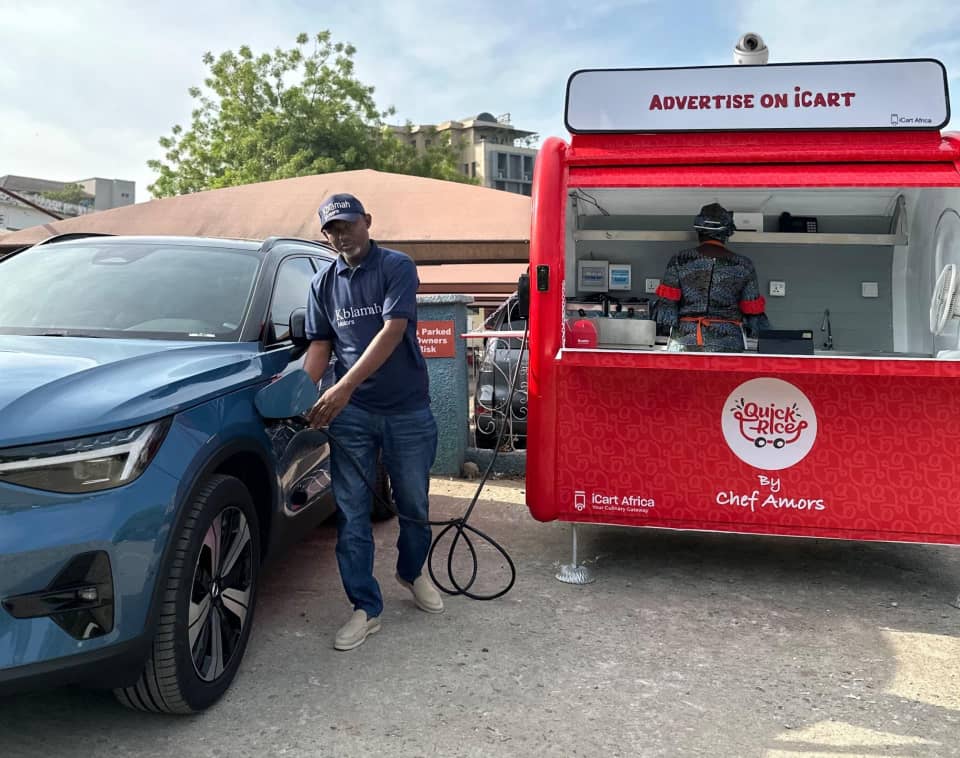
In a bid to address Africa’s evolving transportation needs, iCart Africa has incorporated electric vehicle (EV) charging stations into its kiosks, supporting the continent’s shift towards sustainable mobility.
“The lack of reliable EV charging infrastructure is a challenge we’re helping to solve. By integrating fast EV charging stations into our kiosks, we’re contributing to a greener future for transportation in Africa,” Dalhatu explained.
While the company’s foundation lies in Nigeria, its ambitions extend across the African continent. “Africa is a land of immense potential,”
Dalhatu said. “Every kiosk we set up creates opportunities for growth and development. Our vision is to bring innovative, tech-driven solutions to every corner of the continent.”
iCart Africa is actively pursuing collaborations with governments, global organisations, and local communities to enhance its reach and impact.
“We believe in the power of partnerships. Together, we can equip entrepreneurs with the tools they need to succeed and create a sustainable future for the QSR industry,” Dalhatu noted.
Comments