


Eight things you may not know about Pa Edwin Clark

 Quick Read
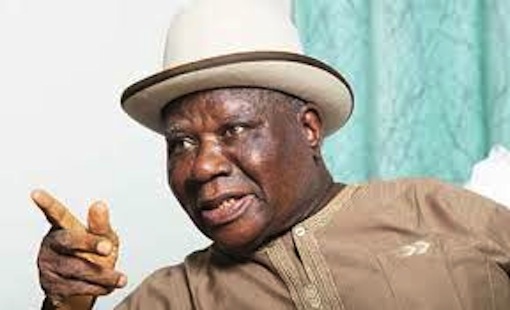
Edwin Clark, a renowned Nigerian statesman and leader of the Pan Niger Delta Forum (PANDEF), passed away on February 17, 2025, at the age of 97.
Edwin Clark, a renowned Nigerian statesman and leader of the Pan Niger Delta Forum (PANDEF), passed away on February 17, 2025, at the age of 97.
Clark was a strong advocate for democracy, equality, and the restructuring of Nigeria, and his commitment to these ideals spanned several decades.
During his 97th birthday celebration in May, he urged President Bola Tinubu to restructure Nigeria to tackle the country’s current security, socioeconomic, and other challenges.
“This country must be restructured. President Bola Tinubu should face the political problems of this country for the development of all regions. This country has to be restructured so that everybody will be equal; so that every Nigerian can aspire to the position he wants to be,” Clark stated.
However, many people recognized him as an elder statesman and an unrelenting voice in the national discourse, but several aspects of his life are not widely known especially by younger generations.
Below are eight things you may not know about Pa Edwin Clerk.
1. Clark was born in Kiagbodo, in the Ijaw area of what is now Delta State. He attended primary and secondary schools at Effurun, Okrika and Afugbene before completing further studies at the Government Teacher Training College, which later became Delta State University, Abraka. Thereafter, Clark worked briefly as a school teacher before traveling abroad to earn a law degree.
2. Clark’s involvement in the political process began during the pre-independence period when he was elected as Councillor for Bomadi in 1953. Clark later joined National Council of Nigeria and the Cameroons (NCNC).
3. Clark worked with the administrations of military governor Samuel Ogbemudia and head of state, General Yakubu Gowon between 1966 and 1975.
4. After the military coup of January 1966, Clark was among a group of delegates from the Mid-West who opposed any ideas of confederation that were raised at an ad-hoc constitutional conference set up by Gowon in 1966. The delegation’s mandate was Nigerian unity and when proposals of a loose federation were tabled, the region’s delegates asked for adjournment. Clark was later appointed Midwestern Commissioner of Education and later, Finance. As commissioner for education, he was active in the establishment of a Mid-west College of Technology that became the foundation of the University of Benin.
5. During the second republic, he was a member of the national executive committee of the National Party of Nigeria (NPN) and was the treasurer of the party in Bendel State (now, in part, Delta State and previously the Mid-Western Region province). In 1983, he was an elected senator for three months at the twilight of the Shagari administration.
6. Beginning in 1996, Clark has been a self-described leader of the Ijaw nation. He supported the Ijaw ethnic group in Delta State during an ethnic crisis in Warri and has led Ijaw leadership delegations to meet political leaders.
7. Clark later became an unofficial advisor to President Goodluck Jonathan.
8. Clark was a philanthropist who founded the Edwin Clark Foundation and established a university in his hometown in 2015.
Comments