


Why I risked everything to show the Nation what was really happening under Abacha – Ojudu

 Quick Read
He was a mentor to me in terms of what he stood for. And coming back home, someone like Soyinka, someone like Fela Anikulapo Kuti, someone like Beko Ransome-Kuti, Alao Aka-Bashorun.
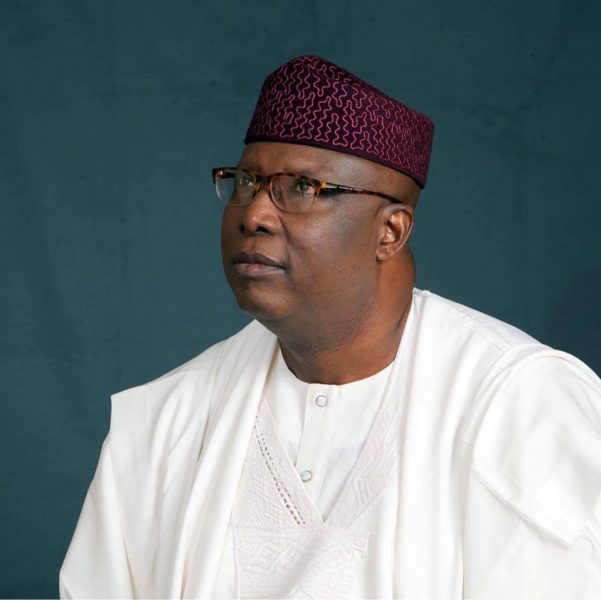
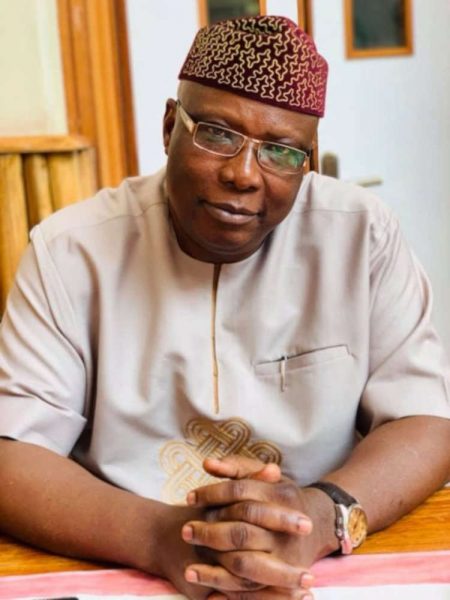
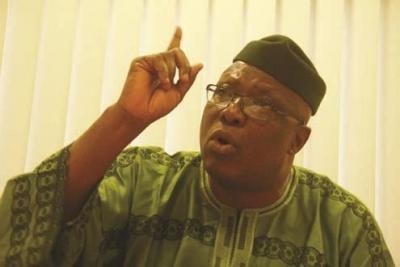
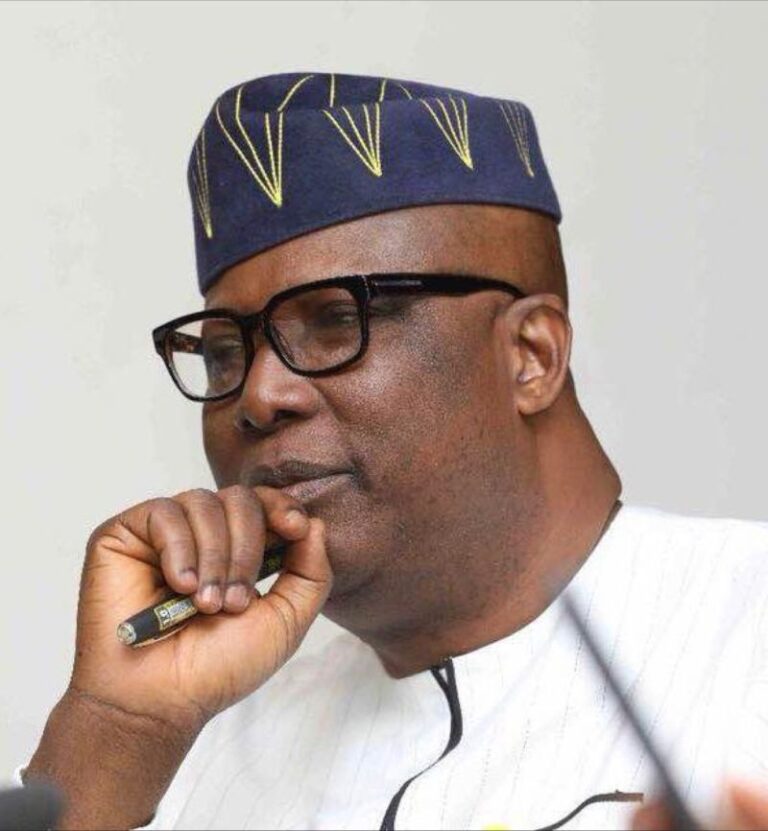
Senator Babafemi Ojudu is not just a journalist par excellence, he is also an activist who took so many risks, even to the extent of almost losing his life during the struggle for the entrenchment of democracy in Nigeria. And he was also a jailbird because of his activism and daredevil escapades. He recently released a memoir, the critically acclaimed The Adventures of a Guerrilla Journalist, where he recounts his activism as a journalist during the military era and the many risks he took. In this interview with Nehru Odeh, the former Special Adviser on political matters in the office of Vice President speaks about the book, his childhood, his struggles during the military era and how he fought for the entrenchment of democracy in Nigeria.
Congratulations on your new memoir, The Adventures of a Guerrilla Journalist. What is the book about?
As you know, it’s a memoir of my journalism years. I try to tell the story of how I found myself in journalism, what prepared me for journalism and all of the struggles that my colleagues and I embarked on as journalists during the military era, from the early 80s to 1999 when the military finally left the scene.
What inspired the book?
The inspiration is that we fought for democracy. And it does appear that many who do not know the hassles that we went through, who have found themselves in positions of authority, are toying with that democracy. And I think that there is a need for us to remind them of what it was before democracy and the kind of sacrifices that people made to fight for democracy; so that it would be a cautionary note to them—the way they are playing with the existence of the country, with the life of the people and all of that.
Secondly, it is the fact that I have looked at journalism now and I’m not satisfied with what I‘m seeing. If you look at history, journalists have played prominent roles in this country in the course of the fight for independence. You have people like Herbert Macaulay, Nnamdi Azikiwe, Tony Enahoro, Obafemi Awolowo. These were people who were journalists. They started their careers as journalists, they wrote opinion columns, they wrote stories, they published newspapers to campaign for the independence of Nigeria.
Before and after independence, some of them became politicians and they planned how to run the country. They did their best before crisis set in and the military came in, and the conflicts of that period led to the civil war. Again, a lot of journalists also participated in ensuring that Nigeria was kept one. Many went to report on the war front. Many also got hurt, arrested, and detained in the course of that struggle to keep Nigeria one.
And of course, then began the fight for the return of democracy. Democracy came in 1979. The military came back again in 1983. And the battle again to restore democracy began. So, journalists have been at the forefront of this fight. When in 1999 there was a return to democracy, what I expected was Nigerian journalists to take the baton from us and then begin to fight for development under democracy. It does appear that they abandoned that battle. That has taken us to where we are—that nobody again is investigating, people are not writing sharp and poisonous editorials, nobody is speaking truth to power any longer. It’s like journalism has become just regular and ineffective.
So, I felt that for these two reasons, let me bring out these books. One, to instruct journalists on their role in a democracy and within society. The other one is to let the politicians who are mismanaging this now know where we are coming from, know that people fought for the system that they are participating in, and that they should not mess it up. And that if they do mess it up and unfortunately the military comes back, we are all going to suffer for it.
Given the sacrifices journalists, human rights activists, unionists and lawyers put in during the struggle, can you say what we have now is true democracy?
No, certainly not. Certainly not. It’s not even about not being true democracy. This is no democracy at all. In a democracy, you are supposed to have an independent executive, independent legislature and independent judiciary. We can’t see that anymore. Elections are predictable. Whoever is in power, who has the police, the military, the electoral commission, wins elections. And they will tell you, “Go to court”. If you go to court, they are there. You can predict what the court would say before even anybody hears the case.
Now, lawyers, no matter how brilliant or intelligent you are, you do not go to court to argue a case anymore. You just look for a nice, beautiful bag that you will use to take money to those who are going to preside over your case. And then you win your case. That’s where we are in. That’s not democracy. That’s not what we fought for. What we have right now is not going to take us to any development at all. No.
In your book, you spoke so much about your childhood. Could you tell me how your childhood led to what you are now?
Yes, as I try to show in the book, I come from a very political family. My grandparents, both my grandfather and my grandmother, were members of the Action Group. They were very vocal members of the Action Group. They attended meetings weekly. They paid their dues and they participated actively. In fact, in 1965–66, my granddad was arrested and locked up in the prison that is just about 200 metres from here, for almost about the same time as I was locked up by Abacha.
My dad, a young man in the 50s and early 60s, was a Zikist. Zikism was the radical arm of the NCNC. And he had participated actively, travelled across Nigeria, joining others to propagate Zikism. So, I grew up in that situation. By 1978, I had to go and live with a professor in Ife who later joined politics, campaigned around Ekiti State and Ondo State, and became elected as a senator. So, I had all of these political trajectories.
What prepared you for journalism?
What prepared me for journalism? I’m naturally very inquisitive. I want to know what exactly is happening. I want to know what is happening behind closed doors. I want to know what you are keeping inside that locked cupboard. So, right from secondary school, I had a principal who early enough saw this talent in me and called me one day and gave me a radio set to listen to VOA, BBC every morning and then write down the news items and paste them on the notice board. That was how I began to fall in love with journalism. And right from secondary school, I started writing letters to the editor. The day my first letter was published, my father brought a copy to me in school. And it was like I found gold. And from there on I moved on to the university. In the university, I joined the Association of Campus Journalists immediately. I joined Cobra, the famous campus journal then. From there I moved on to start my own campus paper, which was Parrot. And I edited and published it till I left the university. It ran for many years before it later died. So, that has been it. I have always been a lover of journalism. Even as a politician, as a senator, as a special adviser to the president, I kept writing on a daily basis. And I still write every day.
Would you say you were destined to be a journalist? Why didn’t you choose another juicy career like law, for instance?
Honestly, my dad wanted me to become a lawyer. It took a lot of struggle to get my dad off my back. The other profession which I was passionate about was soldiering. I wanted to be a soldier. I went as far as obtaining the Nigerian Defence Academy, NDA form. I completed the form, sent it to my dad to help fill the column for traditional ruler or the Chairman of the Local Government Area in my place. I was in Lagos, my dad was in Ekiti here. And after some time, when I didn’t hear from my dad, I sent a message to him to find out what went wrong. He said no, that I should not worry, he had sent my form directly to NDA in Kaduna. I didn’t know that my dad had kept the form. In 1990, after the Orkar coup, I came visiting him in Ado-Ekiti here. He went to his bedroom and brought out that form and said, “That is the form of that day that you wanted me to send to Kaduna so that you could become a soldier. I know your temperament, I know who you are. If you had gone to NDA at that time, you probably would have been one of those involved in this coup and you probably would have been shot.” We just laughed over it. So, my father was the one that prevented me from becoming a soldier.
In the book you also spoke about how your being a campus journalist at Ife prepared you for your journalism career. Could you shed some light on that?
Yes. I first experienced victimisation as a journalist when I was at Ife. As I said in that book, when you work on a campus journal, you are a reporter, you are a writer, you are a producer, you are also a vendor. So this particular morning, I carried Cobra and was screaming, “Buy Cobra.” That is how we did it from 4 a.m. till about 6 a.m. We read out the major news in the paper. So, this particular morning I went to Moremi Hall, which was the female hall, and I was shouting “Buy Cobra” and I mentioned the name of a lady whose story was in the paper. I didn’t know that the lady was waiting for me with water. As soon as I got to her doorstep and I shouted “Buy Cobra”, she just poured water on me (laughs). And I ran, never to come back to that place that day. That was my first baptism of fire as a campus journalist.
The second one was when I did a story on the group called La Cle. La Cle means The Key in French. It was a popular female elite club on campus. There was this time when Osogbo Steel Rolling Mill was going to be commissioned. And all the big wigs of NPN, including the President, came over to Osogbo to declare the steel rolling mill open. And one of the lecturers on campus hired a campus luxury bus, carting those girls to Osogbo to go and use them to entertain those politicians. They were showered with gifts, money, and all sorts of things. One of the roommates was the one that gave me the tip-off, that that was what happened. So, I wrote it in Parrot. It became a cause célèbre on campus. A couple of petitions, I think by that lecturer and some of the students, were written against me. And I was put on trial by the committee that was set up by the university authorities for that purpose. I managed to scale through, to escape being either suspended from school or expelled, through the intervention of some of my lecturers and, I learnt, also Professor Soyinka at that time. So that was it. But I had a good time. Even as at then I was writing opinion pieces for The Guardian. And I would travel all the way from Ife to Lagos to go and collect 25 naira, which was the honorarium for contributing to the Op-ed page of The Guardian.
Could you shed more light on how Professor Soyinka intervened?
Honestly, I never even knew. I was never called by him. But I just picked that information that it was some lecturers, including Professor Soyinka, that intervened, that said we should not be expelled for expressing ourselves.
What was it like being on the same campus with students like Femi Falana and others who later became activists on the national scene?
Yes, it was great. We had a very sophisticated, very enlightened students’ unionism, not like now when people are carrying placards, collecting money. We had Femi Falana, brilliant chap, as our PRO at the time. We had Wole Olaoye, another brilliant chap, who was our president. We had Femi Taiwo, who made a first class in Philosophy and is a professor of Philosophy now in Texas, as our Secretary General of the Students’ Union. At the time we had Obong Oshotshe, a Political Science student, who was also a member of the Executive, who also made a first class. Bright chaps were the ones that were in student unionism. We had the parliament on campus. We operated as if we were real parliamentarians. We had all manners of associations. We were responsible, very, very responsible. We were radicals, Marxists and all of that. So it was a great preparatory ground for what we would later do in the larger society. We had lecturers who were very progressive. They never put on airs. We challenged them in the classroom, in seminars and in tutorials. And they mentored us. They were friendly with us. They never harassed us in any way, whether sexually or for money or whatever. It was a good time to be in the university. And I keep telling people that my four years as a student at Ife are my best years in life. And my four years as a senator in the National Assembly are my worst years in life.
Why are your four years as a senator the worst years of your life?
Because I went there with the feeling and hope to help solve problems. And I later found out that that was not a place to help solve problems. People were just there for personal aggrandisement, what they could make, massage their own ego. Things were not looked at thoroughly. Problems were not looked at thoroughly for the purpose of solving the problems. It was just about people who were looking for money, who were looking for power. And each time I woke up and was going to the National Assembly in those days, it was like, why am I doing this? What is this for? It was boring for me. It was depressing. At a point I regretted even making that attempt. And if you remember when my colleague, Mr Bayo Onanuga, wanted to go to the Senate, I strongly advised him not to do it. He thought I was being selfish. He later got midway and abandoned the project, that he didn’t know I was sincere when I advised him not to.
You were once a special adviser and a senator but you like being referred to as a journalist and not the others. Why?
Because journalism is my life. Journalism is my being. Honestly, if I had a prior understanding of what serving in the Nigerian government, of what participating at that level was, I wouldn’t have tried that at all. I am more fulfilled as a journalist than as a politician.
Who are your mentors?
I want to divide them into two. There were those I saw and met, and there were those I never met but yet mentored me by virtue of who they were and their legacies. Take, for example, Bob Marley. I listened quite a lot to his music when I was very young. With Peter Tosh, for example, too. I listened to his music. I never met the two of them. But their music, their lyrics really influenced me a lot. And you take someone like Mandela too. He was a mentor to me in terms of what he stood for. And coming back home, someone like Soyinka, someone like Fela Anikulapo Kuti, someone like Beko Ransome-Kuti, Alao Aka-Bashorun. Those also were my mentors. I knew a lot about Soyinka, having read almost everything he had published. I saw a bit of him as a student and also outside the university. Beko Ransome-Kuti — there was a time no day I didn’t meet with him. I learnt hard work from him. I learnt stubbornness from him. I learnt how to be courageous from him. I learnt how not to take yourself seriously from him. I learnt contentment from him. I learnt how not to lead a life you cannot sponsor from him. I learnt how to live within my means from him. There was a particular thing that happened to Beko, immediately after Babangida took over power. He looked at the government. He looked at its policies and reasoned that it might get to a point where his income might not be able to buy him a car. You know what he did? At that point he had money. I think a Volvo car was still selling for less than 500,000 naira at that time. He bought two Volvo cars. And everything that would be essential to his survival, he bought them in pairs and kept them at home. He once told me when he bought the Volvo that by the time he isn’t using the second one, he would be on his way to the grave. He had just started using the second one when he fell sick and died. Such meticulousness, such ability to look at things and say this is how things would turn out to be. This is what would happen.
You were very close to Beko. You said so many things about him in your book. Could you speak about your relationship with him? How did both of you become so close?
Again, he was a veritable news source when I was a reporter. You went to him, he would give you a hint or two about something that was going to happen, something that had happened or whatever it was. So, I became close to him. I became close to his brother, Fela Anikulapo Kuti. That was how we developed this affinity. And also Femi Falana, a friend of mine, an ex-Ifite like myself, also in the radical movement. All of us moved closer to them. He then saw a hardworking person in me. So we had to collaborate on so many projects. When he was arrested, I participated in struggles for his release. I reported things about the campaign for his release. And when he came back and more and more people were being arrested, I then joined him to establish the Committee for the Defence of Human Rights, which is known as CDHR. And later we established Campaign for Democracy. So, I studied him closely. I still hope that one day I would be able to write a book on him. He deserves a book. Nigerians deserve to know him, his person.
You took so many risks during the military era. Where did you get that bent, that inclination from?
Honestly, when I look back at those risks I took, I still keep asking myself, where? How? I didn’t even see them as risks. I just saw duty. Something had to be done. I went in and I did it. If the house is on fire and I have to rescue someone, I would jump into the fire and attempt to rescue him. I didn’t see it as a risk. It’s now, getting old and reflecting on those periods, that I began to say that these truly were risks that I took.
Would you still want to take those kinds of risks again?
You never say never because if you are passionate like myself, if you are conscientious, if and when the situation of oppression, the situation that demands for risks to be taken arises, the energy would come. You will not even know where the energy is coming from. If I could take a risk when I had young children, my wife and my parents to take care of, what about now? Now, my parents are dead, all my children are adults, they are out of school, they are living their own lives. The only person I consider now if I want to take a risk is my wife. So I may be tempted to take a risk, even at this age (laughs).
Your book is a memoir. But it’s not just a personal story. It’s about how we came this far as a country. Could you shed some light on your days at the Concord Newspapers, M.K.O. Abiola and how it led to the founding of TheNEWS? What really happened?
I was at The Guardian. I worked for Guardian Express as a young reporter. And suddenly Oshoffa, the head of Celestial Church, died. I was asked to go and report the burial in Imeko, in Ogun State. It was in the course of carrying out that report that I met Bayo Onanuga. He saw my hard work. Because at that place I had to file a report to Lagos about what was going on. And he saw that enterprise in me. When he got back to Concord, where he used to be a reporter there too, he mentioned me to people there and that was how I was hired. And in a short period of time I rose from being Staff Writer, Senior Staff Writer, Assistant Editor. Week in, week out I was bringing exclusive stories, taking risks, suggesting headlines etc. And the paper’s function kept rising until 1990 when we did a story on Babangida that led to the place being shut down. And when Abiola wanted to compel us to apologise, we threw our letters of resignation at him and left. I thought I was done with journalism. But again, the pull kept coming, that this is what you know how to do best. We then began to look at the possibility of setting up a magazine that was independent. And that was again the beginning of trouble. It didn’t take so long for us to embrace trouble.
Could you share some of the problems you experienced?
Quite a lot. We were hardly four weeks into publishing TheNEWS, when we ran into rough waters again. Dapo Olorunyomi, Seye Kehinde and Bayo Onanuga were arrested and locked up in Ikoyi Prison. I managed to escape that. We just kept rolling from trouble to trouble until again Babangida annulled the June 12 election and we now found ourselves having to fully wear the gown of trouble. At a point we were not able to run the paper again after we attempted publishing an edition on Muhammadu Buhari, on why he was toppled, all of that to when Abacha took over power. We had to take on Abacha too until my final arrest and detention in 1997. It lasted almost nine months before Abacha and Abiola died. So, looking at it, the arrests, the detentions, the harassments — between 1993 and 1998 I must have been arrested about 15 times, for one reason or the other, either for a day, two days, a week and so on.
There is another intriguing aspect in the book, how you disguised as a printer…
Yes. The story about when they raided the Acme Press House. I had to quickly put on the overall of a printer (laughs). Those are days, you know.
How did you become so close to Fela? Could you recount some of your experiences with him?
A remarkable man. As I wrote in that book, my first encounter with Fela was on the streets of Ado Ekiti. As young men entering secondary school, there were three spots in the whole town where Fela’s music was played in the night. It wasn’t a time when the record player was common. No. As young people, we loved the music of Sunny Ade. We loved the music of Ebenezer Obey. We loved the music of Orlando Owoh and that of Fela. So, after having our dinner in the night, we would gather in those record stores and listen to those records. We were talking about who was abusing who and all of that kind of thing. That was the period when Fela’s Jeun Koku came out. Then it was topped up with Zombie. So we would be jumping up and down. We had not met him. We didn’t know him. We had only known him through his music. We had a big compound in the centre of the town. My dad used to tell me at the time when Fela’s mother visited in the ’50s, while campaigning round Nigeria, she stayed in our compound. That again fascinated me about Fela. So, I got to the university. There were organisations that brought Fela to the campus to come and perform. During the day, he would deliver a lecture. The place would be jam-packed and Fela would come with some big books — books about Egyptology, traditional medicine and all sorts of esoteric things, astral travel (laughs). He would lecture us, declaim western medicine, declaim western culture, talk about civilisation starting from Africa, about Egypt and all that kind of thing. Those were the times he was experimenting with names — Africa 70, Egypt 80. So we got fascinated. And as soon as we left the university, I started visiting the Shrine to see him. I started reporting about his events, started meeting other journalists and lawyers, social critics at his place. Gradually I fell in love with him. Then we became associates.
Despite the negative public perception of him, what attracted you to him?
The music. The message. The lifestyle. I don’t smoke, either cigarette or Indian hemp. But I loved that he gave expression to his feelings without fear or favour. Yes, he was ready to stand for the consequences of his actions. That I admired quite a lot. He was brilliant. And he was very kind, very genial and very loyal to his friends.
Could you speak about the Shaki experience after the Gideon Orkar coup?
Again, those were dangerous times. It was when Babangida was at the height of his powers in Nigeria, when every important person was eating from his palms. Suddenly we woke one morning to the sound of martial music and the announcement of his overthrow and excision of some states. Everywhere was silent like a graveyard. People wanted to know who and who carried out that failed coup. So, it was in the quest of knowing the minds behind the coup that we decided to go and search out Orkar, who broadcasted the coup speech. We eventually got to know that he was married to a woman from Ilesha. So we sent a reporter to Ilesha to go dig out the background of that woman. By then, myself, Bayo and Seye Kehinde had decided to go to Ibadan where we eventually learnt that he was serving before he was arrested. We got to Ibadan and we were told that no, it was Shaki and not Ibadan. We went on a very rough drive to Shaki, the northern part of Oyo State. We arrived Shaki very late in the night, around 8 o’clock. And we went to the mammy market, believing that when we went to the mammy market, we would sniff around for information about Orkar. We got to mammy market, everywhere was quiet, deserted because of the fear since the man who led the coup was from that place. So, we then decided to go and find somewhere to sleep. It was a rural town at that time, hotels were not many. We got a place, just about six rooms bungalow that was called a hotel at that time. We decided to sleep there overnight. In the morning we woke up early, frustrated that we were not able to get much. Coming out of the hotel was the young man who was Seye Kehinde’s classmate at Ife. We beckoned on him and told him our mission. He said, “Oh yes, I know the man. We used to play lawn tennis together in the barracks.” He gave us snippets of information about him, how disciplined he was, how taciturn he could be and whatever. The task was now we wanted to put a face to the information we had about the man who was strong enough to knock out Babangida. We then asked him. He said he never had his photographs. But that on each Army Remembrance Day he used to go to lay wreaths. So there must have been one photograph or the other who had his photographs. So we started looking for a photographer in town who could have gone to take photographs on such occasion. So that was how we got to this photo shop where we met a young lady probably about 14 or 15 years old. We asked about the boss. We were told the boss travelled. We told her the boss took some photographs on our commission and we wanted to see if they were ready. We asked her to bring out what they have. We started looking at it. We couldn’t find the photograph printed. We now asked, could you give us the negatives? Those were the days of negatives. As we were looking at it, we now saw some things that looked like people wearing army uniforms. It quickly occurred to me that we should distract this lady. I said, “Come young lady, is there a place where they sell soft drinks here?” She said yes. “Okay, take money. Go and buy Coke for us.” While she was away I quickly stuffed some of those negatives in my pocket. She came back, brought a Coke. Not cold. “Oh, can’t you find somewhere where we can get something cold? Return again.” I gave her money again and she left. By the time she returned, we had pocketed enough negatives. So we left. We came back to Lagos.
Before we left, we saw that guy again — an ex-student of Ife — and showed him the negatives. He said, “Oh yes, that’s Orkar. That’s Orkar.” We got back to Lagos and had the negatives developed into positives. Then we saw Orkar clearly and used the photographs in National Concord. So we ran the story the following day. That was how the nation saw the photograph of Orkar.
The next one they were going to see was Orkar in handcuffs and leg chains, waiting for judgment to be delivered. So that’s it. As a journalist, if you are resourceful, you have to do what you have to do to get your stories, to get your photographs.
Some people believe that act wasn’t moral and ethical enough…
Yeah, for me it is not about whether it was moral or amoral. What is amoral? We didn’t steal for our benefit. It was a monumental incident that could have affected the fate of millions of Nigerians, and people needed to understand what that was, who was behind it. And we, as journalists, were the ones positioned to provide that necessary information. And if we could sacrifice a little to get things done, why not? It’s like what I did during the SAP riots. Many people were mowed down in Lagos. And the military authorities said nobody was killed. We were claiming that people were killed. People were actually looking for their wards who went out protesting on that day. Abacha gave the order, “Shoot anybody at sight.” They shot and killed many people.
Now, trying to prove our claim, I ran to Beko. Beko said, “That is very easy nau. These dead bodies are in the mortuary. How do we then get photographs of the mortuary? Just tip the fellow there.” And that was exactly what I did. I went to the mortuary on Lagos Island, tipped the mortuary attendant, told him that since the riot took place I had not seen my younger brother who went out to protest and that I had searched all police stations and other mortuaries, we couldn’t find him. “Please take this money, let me see if I can see his body here.” Gladly, he took me inside. I went with a photographer. We went in, but the photographer kept his camera inside his bag.
We got there — piles of dead bodies on the floor, some bloating, some with gunshot wounds. The cabinet could no longer take the bodies. That was the first time in my life I saw dead bodies in that manner. So, I then thought quickly, what can I do for me to get the photographer to take the photos? Then I came up with the idea of pulling the bloated bodies. After I had done pulling about four dead bodies, I screamed, “This is my brother! This is my brother.” While I was screaming, I ran out. And they ran after me. The attendant ran after me, thus allowing the photographer to take the pictures — as many shots as possible.
When you were pulling those bodies, what was going on in your mind at that moment?
We were feeling that we were meeting the needs of the people. We were helping to tell the truth of what happened. Photographs would not lie in those days, not now (laughs). And when we published it, the military authorities shut up their mouths about not killing people. Where would you get all of that mass dead? There was no accident anywhere. So, these were the kinds of things we had to do as journalists. I have pretended before. I have asked to be locked up in a cell so that I could interview some convicts or some detainees in that cell. I was locked up overnight without the subject of my interview knowing that I was a journalist. And I kept talking to them all night, chatting with them, asking questions without their knowing. And this was in Jos, after a riot. I came back and did a beautiful story, which other papers culled from our magazine and used.
Do you think journalists can take those kinds of risks anymore?
That is what journalism is about — whether yesterday, now or tomorrow. That they are not doing it now is what is leading us to disaster in this democracy. There are a lot of stories out there. I will tell you. When I was in the Senate, I saw a lot of stories flying here and there, things that I got to know because of my privileged position. And I invited a few journalists into my office and told them, “Come, you guys are journalists. These things that are happening here, they are not good for our democracy. They are not. I am willing to be supplying this information.” And they left.
A few days after, one of my colleagues called me and said, “Senator, all the things you told journalists in your office, they have gone to tell the principal officers. Be careful so that you don’t kill yourself.” From that moment, I never related with any journalist in the National Assembly. No, I never did. I ran away from them.
You also narrated some risks you also took for Gani Fawehinmi…
Yes, in Gashua, on the streets of Lagos and everywhere. I was not strictly a journalist then, I was a journalist. Yes. I was also an activist, and I was a campaigner for Gani Fawehinmi’s freedom. So, I had to go to Gashua. I did graffiti on the streets of Lagos: “Free Gani.” It was risky. But that was what one had to do.
What would you say are your happiest moments as a journalist?
When we were able to set up our organisation. Because we knew we were going to be thoroughly independent. We were not beholden to anybody. And working with patriots of Nigeria, thoroughbred journalists. We were lucky. We recruited young men who were fantastic, who were brilliant and who were loyal — viscerally loyal — to us. We were not betrayed at all in the course of all those risks we took. And today, many of them are professors.
What are your worst moments?
Did I have? Even the day Abiola asked us to apologise, I knew I wasn’t going to apologise. Each time I was arrested, I was always smiling and confronting the security people. If they abused me, I would abuse them. If they spat at me, I would spit at them. There was a day in detention, when they went to buy fried yams and akara for me. And it was wrapped in newsprint. And after eating, I chose to read what was on it, and I saw this story about five parties adopting Abacha to become civilian president of Nigeria. Ha! I felt like something should just take me out of this world. That was the day I reasoned that life was not worth living again. I lost hope. I cried that night. How could people, with all of this thing that is happening, submit their freedom and independence to a military man who has destroyed the country?
But shortly after that, there was May 1 and riots everywhere that signalled that the end was coming for Abacha. And that is why people are always claiming that when you think hope is lost in Nigeria, something would just happen.
This interview is not complete without you talking about your wife…
Great woman. Great woman. I came in contact with her in a miraculous way. By the time my first marriage failed after two years plus, I made up my mind I was not getting married again. And just suddenly, one day at Ibiyemi Street in Isolo where we had our office, the receptionist brought a note for me that there was a woman from Republic Bank who wanted to see me. And I asked her to let her in. She came and told me about this story that we were supposed to be working on and that she had come to give her bank’s side of the story. At that point, we were not working on any story like that. “Okay, give me your side of the story.”
While I was working on it, a friend just popped in and said, “Femi, where did you find this Igbo woman?” The lady said, “I’m not Igbo. I’m Yoruba.” So that was how we started talking about something different from the story. We found out that she was from Ekiti. One thing led to the other. And three months after we met, we got married (laughs). Now, this year is the 31st year of our marriage. And she went through all of that struggle stoically. I never knew she could be that strong because she looked fragile.
You also made mention of how the guy she wanted to marry had forewarned her…
“That you want to go and marry a journalist. You will be going from one police station to the other.” And that was exactly what happened. I’m not sure she had a respite for up to three months.
Could you speak about your visit to former military president Ibrahim Babangida?
We got a message from one of his guys in Minna, who is a chief now, that Babangida would like to see us. We were wondering what it was about. We tested his sincerity. We tried to check through other sources, and we found out that he truly wanted to see us. Bayo Onanuga and I decided to go. And we took Muyiwa Adekeye, a reporter/researcher then. So that if there is any lie against us — about taking money or whatever — we have somebody who will be our witness.
We flew to Abuja, then drove from Abuja to Minna and waited for the 8 p.m. appointment that night. We got there. He came in in his ebullient self, smiling. When he saw us, he said, “Where is Bayo Onanuga? Where is Femi Ojudu? So you guys are this young?” That was it. That was how we started. We started gisting and gisting. He was free — very, very free — with us. We went through a range of topics…
How do you see him, given his controversial statements in his latest book?
I think it’s a very complex situation. He tried to explain to us why he annulled that election. From his explanation, we could see that he didn’t want to go. He was just asking Abiola and Tofa to come and contest. It was a game that he was playing, but a game that turned awry. Inside his own game were other games. And Abacha, who was his saviour during the April 22, 1990 coup, also had been told by a soothsayer that he was going to be president of Nigeria. So also was Gusau.
While he was playing the game of staying back or finding a way of becoming a civilian president, those guys were plotting on how to succeed him. And that was what brought all of the crisis that transpired in 1998.
Having been in the trenches as a journalist and activist, what advice do you have for young journalists?
The few of you who are trained and well-equipped to do the job, go out and do it — not caring about risk, not caring about remuneration. A journalist is not in journalism to be a rich man. Neither is a journalist in journalism to avoid risk. If this country is going to be set aright, it has to be the handiwork of journalists.
Comments