


Lagos set to unveil Africa’s largest Food Hub to shake up N14trn Market

 Quick Read
Olusanya said the project is being executed under a Public-Private Partnership (PPP) using a Design-Build-Finance-Operate-Transfer (DBFOT) model, aimed at ensuring its long-term viability and professional management.
The Lagos State Government is set to complete its Central Food Security Systems and Logistics Hub in Epe, a mega facility designed to transform the state’s food supply chain and unlock opportunities in the N14 trillion food market.
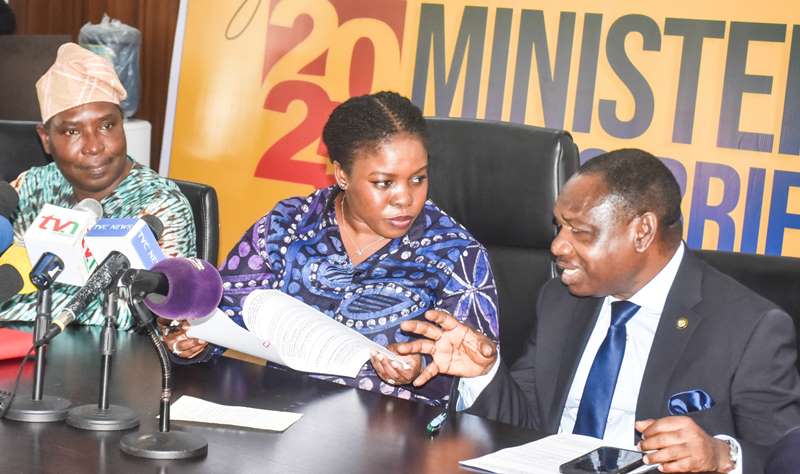
Commissioner for Agriculture and Food Systems, Ms Abisola Olusanya, disclosed this on Tuesday during the ministerial press briefing marking the second anniversary of Governor Babajide Sanwo-Olu’s second term in office.
Describing the hub as a flagship project under Sanwo-Olu’s food systems transformation agenda, Olusanya said the infrastructure would be the largest of its kind in sub-Saharan Africa, equipped to handle over 1,500 trucks daily.
“This is a game changer for Nigeria’s food sovereignty,” she said.
“Phase 1 will be completed in a few months, and Lagosians can expect significant reductions in food prices, thanks to integrated facilities such as cold and dry storage, a 14,000-capacity abattoir, and a dedicated jetty to ease transportation,” she added.
“The hub spans 400 hectares, with the first phase occupying 100 hectares. Once fully operational, it will process, store, and distribute more than 1.5 million metric tonnes of food annually, ensuring uninterrupted food supply for over 10 million Lagos residents during emergencies or lean seasons,” she stated.
Olusanya said the project is being executed under a Public-Private Partnership (PPP) using a Design-Build-Finance-Operate-Transfer (DBFOT) model, aimed at ensuring its long-term viability and professional management.
She projected that the initiative would create over five million income-generating opportunities across agriculture and logistics — including for farmers, transporters, retailers, and cold chain operators — while helping reduce food transportation costs and post-harvest losses, which currently account for 30–50 per cent of food waste in Nigeria.
“The hub is already attracting interest from other states and West African cities seeking to replicate this model,” she noted.
“It will also serve as the foundation for developing smaller satellite hubs across all 57 Local Government and Council Development Areas in Lagos.”
Olusanya added that the state’s Middle-Level Agro Hub at Idi-Oro, Mushin, has already facilitated food transactions worth over N2.6 billion. She also revealed plans to build three additional hubs in Ikorodu, FESTAC Town, and Lekki Phase 1.
Comments