


U.S. unveils Visa ban for foreign officials who censor Americans

 Quick Read
“It is unacceptable for foreign officials to issue or threaten arrest warrants on U.S. citizens or residents for social media posts while they are physically present on American soil,” Rubio said.
By Kazeem Ugbodaga
The United States has announced a new visa restriction policy targeting foreign nationals who attempt to censor Americans or pressure U.S. tech platforms into suppressing free speech.
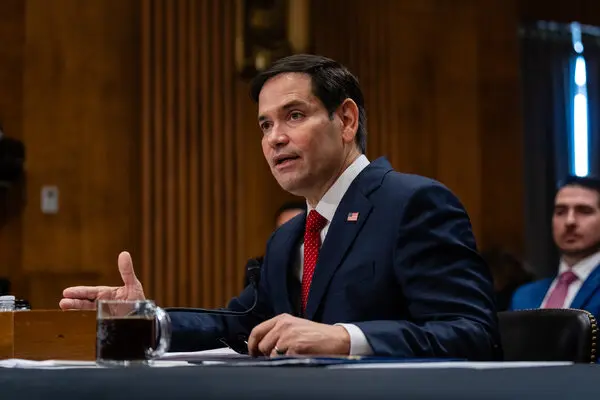
Secretary of State Marco Rubio unveiled the measure on Wednesday, declaring it a firm stand against what he described as “flagrant censorship” by foreign officials aimed at U.S. citizens and residents.
The policy specifically addresses efforts by foreign actors to punish Americans for online speech protected under the U.S. Constitution.
“Free speech is among the most cherished rights we enjoy as Americans,” Rubio said.
“It is unacceptable for foreign officials to issue or threaten arrest warrants on U.S. citizens or residents for social media posts while they are physically present on American soil.”
The new policy will be implemented under Section 212(a)(3)(C) of the Immigration and Nationality Act, which permits the U.S. government to deny entry to any foreign national whose presence could have “potentially serious adverse foreign policy consequences.” Certain family members of offending individuals may also face restrictions.
Rubio criticised foreign governments for attempting to extend their reach into American digital spaces, noting instances where officials sought to coerce U.S.-based tech companies into enforcing content moderation policies that align with their political or ideological agendas.
“We will not tolerate encroachments upon American sovereignty, especially when such encroachments undermine our fundamental right to free speech,” he stated.
The policy signals Washington’s growing resolve to counter global censorship efforts that threaten American constitutional principles, particularly in the digital age where transnational influence over online expression is increasingly contested.
Comments