


Stakeholders vow to build community resilience against violent extremism in northwest

 Quick Read
He advocated for good governance and judicious use of resources to human and infrastructural development in the nation.
By Habibu Harisu
Stakeholders in the Northwest have pledged to strengthen their partnership and collaboration to address violent extremism and build community resilience against all forms of reactiveness.
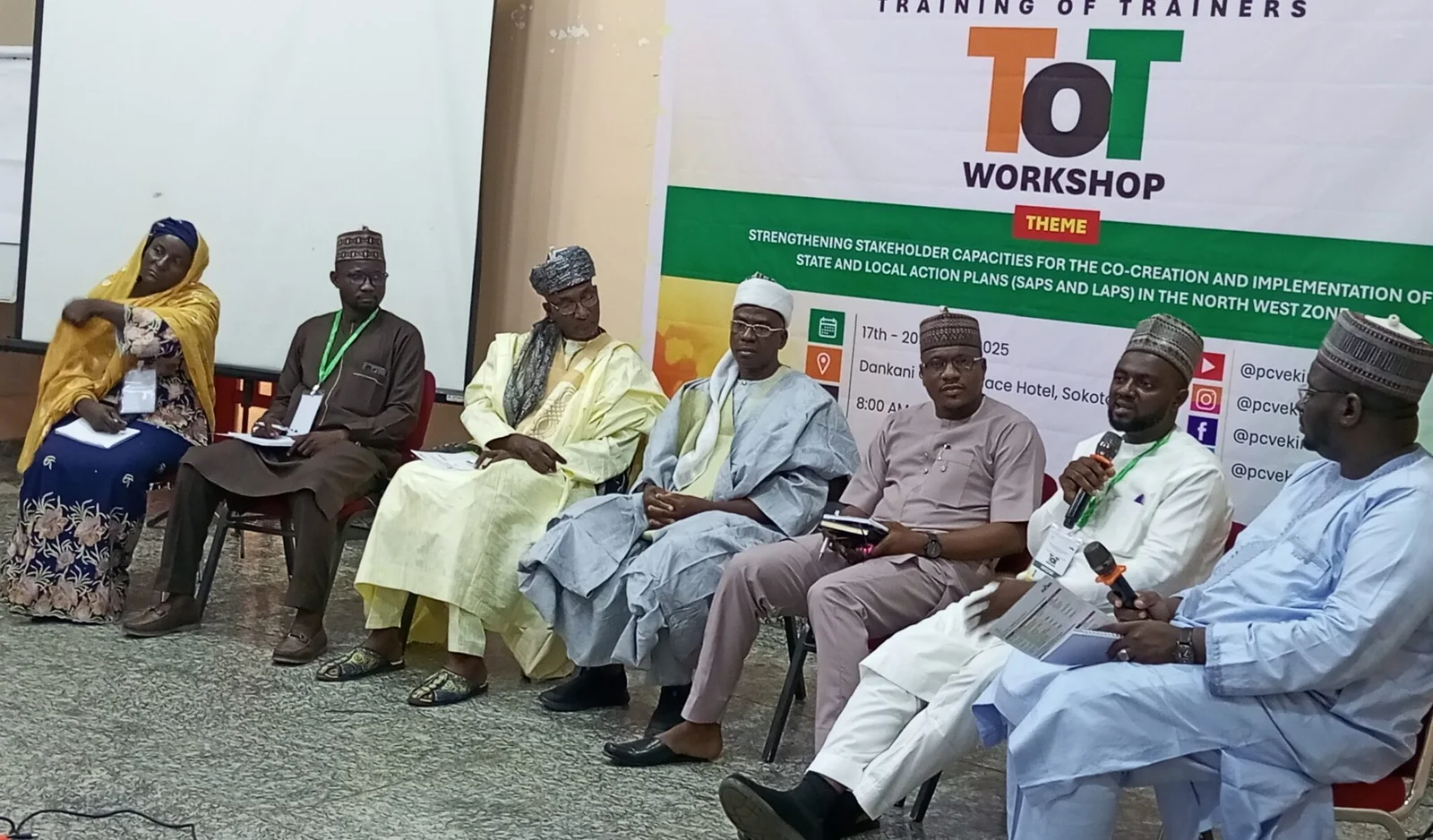
They made the commitment during a four-day Training of Trainers (ToT) workshop with theme: ” Strengthening Stakeholders Capacities for Co-creation and Implementation of State and Local Action Plans” in Sokoto.
The training was organised by Partnership Against Violent Extremism (PAVE) Network and Preventing and Counter Violent Extremism-Knowledge Innovation Resource Hub (PCVE-KIRH) supported by Actionaid and Global Community Engagement and Resilient Fund (GCERF).
A participant, Wazirin Gwandu, a traditional ruler from Kebbi, Alhaji Abdullahi Umar, described the engagement as relevant to unraveling the root courses of conflicts and fine-tuning mitigation process.
Umar said with the calibre of participants which included representatives of security agencies, government officials, civil society organisation, community leaders and groups who were directly affected by conflicts would provide a roadmap for lasting solutions.
He explained that conflicts in the northern states have roots in farmers/herders clashes which metamorphose to different forms such as banditry, kidnapping for ransom and others.
The traditional ruler stressed that involving community inhabitants and government officials in solving lingering conflicts would serve as best solutions.
He urged the participants to ensure right stepdown trainings in their respective locations in order to achieve the desired impacts.
A lead facilitator and member of PCVE, Prof. Lanre Aladeitan, said the capacity building was designed on multidimensional approaches providing action plans that would be usable to prevent divers conflicts in the affected areas.
Aladeitan noted that content of the action plans catered for local needs and local solutions to challenges toward preventing conflicts with needed skills.
He underscored the importance of living in peace and harmony as catalyst of every development, and called for increased synergy among government and non government actors to actualize the blueprint.
According to him, rehabilitation and reintegration processes were involved in the strategies. He emphasized the needs for deploying non kinetic approach to resolve conflicts.
He also highlighted the need for reactivation of traditional institutions’ roles, implementing meaningful fights against poverty and economic empowerment schemes along with enhancing education systems at all levels.
Dr Ahmad Surajo, the regional manager of Northeast Youth Initiative for Development (NEYIF), said peaceful initiative should be a collective responsibility of all citizens and urged stakeholders to implement the community approaches on finding solutions to conflicts.
Surajo said states in the Northwest of Nigeria, are currently experiencing increased activities of violent extremist groups with worsen socio-economic situation.
In his presentation, Dr Dauda Gombe, said peace and security are two important components that individuals, groups and governments at all levels deserved to support all efforts aimed at addressing insecurity.
Gombe, who is the Executive Director of NAYIF said mainstreaming action plans, security and development policies and desired partnerships would surely yielded positive impacts on ensuring lasting peace and safer communities across the country
He advocated for good governance and judicious use of resources to human and infrastructural development in the nation.
The News Agency of Nigeria (NAN) reports that the training witnessed presentations from the Director International Corporation in Sokoto State Ministry of Budget and Economic Planing, Mr Musa Wamakko, Prof. Madgeline Igbolo, among others while participants were drawn from Sokoto, Kebbi and Zamfara.
(NAN)
Comments